How to store spinach so it keeps longer and stays fresher
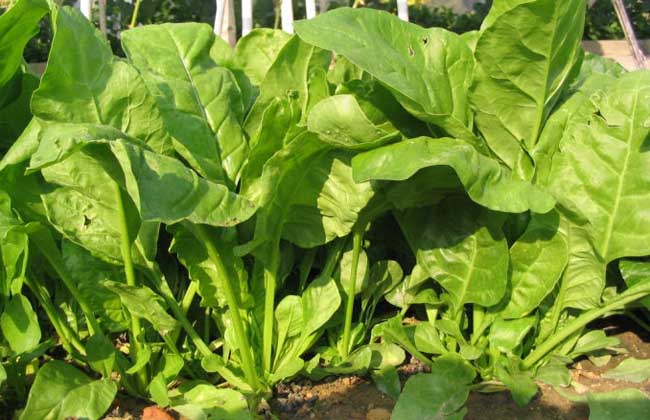
Spinach is rich in nutrients and is especially tender and tasty in spring, but in fact, from harvest to the dinner table, spinach can lose nearly half of its nutrients due to improper storage. So how should spinach be stored? Let's take a look together at how to store spinach!
How to choose spinach
1. Choose spinach with short red stems and fresh, springy leaves.
2. Choose spinach with thick leaves that spread out well, a wide leaf surface and short leaf stalks; if the leaves show discoloration, discard them.
How to store spinach
Spinach spoils very easily. As long as it is kept above freezing (close to 0°C), the lower the temperature, the longer the storage period. Stored close to 0°C, it can be kept for about three weeks. As storage temperature rises, the storage period shortens rapidly.
During transport, crushed ice can be placed on top of the spinach to achieve rapid pre-cooling. In addition, attention must still be paid to maintaining humidity to prevent dehydration, but condensed water must not cling to the leaves, as this increases the rate of spoilage. Spinach can be stored in perforated plastic bags, which not only reduces water loss but also reduces physical damage. Storage in an atmosphere of 10-40% carbon dioxide and 10% oxygen can prevent leaf yellowing and maintain quality.
How to store spinach in winter
1. Ordinary frozen storage method: Spinach that needs cold storage is generally harvested when the ground freezes at night and thaws again at noon. At harvest, leave about 1.6 cm of root, shake off the soil, sort and tie into bundles of about 2 kg each, place in a cool place to let the dew dry off and the plants cool down, and store frozen once the weather turns cold. The storage site should be chosen in a shaded place, the ground leveled, and several trenches 3.5 cm wide and 3.5 cm deep dug, with 10-15 cm between trenches. Place the spinach into the trenches with the roots facing down, in a total thickness of about 25 cm. In severe cold seasons, straw mats, etc. can be added on top to keep the temperature inside the trench at -8 to -5°C.
2. Spinach frozen storage method without ventilation channels: Within the shaded area on the north side of a house or shade barrier, dig several trenches parallel to the shading object, with a trench width of 25-30 cm, a depth the same as the height of the spinach or slightly shallower, and a distance of about 20 cm between trenches. Place the pre-stored bundles of spinach upright in the trenches with roots facing down, and sprinkle dry soil over the bundles, with the soil thickness just enough to cover the spinach. As the temperature drops, cover with soil in stages; the soil covering should be flat and free of gaps to block wind and retain moisture. The principle is to keep the temperature in the bundles at -4 to -6°C as much as possible, so that the spinach is in a slightly frozen state.
3. Above-ground frozen storage method: 5-6 days before harvest, level the site and splash a layer of water, just enough to ensure the surface soil does not thaw. When storing the vegetables, first spread some vegetable leaves or tree leaves as a base, then place the bundles of spinach one next to another on top, and then cover around the vegetables with vegetable leaves or tree leaves to a thickness of 10-12 cm. When the spinach freezes internally, cover it with 10 cm of semi-dry sand to prevent the leaves from losing water.
4. Bagged self-generated modified-atmosphere cold storage method: After harvest and sorting, bundle the spinach into bunches of 0.5-1.0 kg. After heat dissipation and pre-cooling, put them into polyethylene film bags 0.06-0.08 mm thick and 110×80 cm in size, with leaves facing each other and roots toward the two ends of the bag, about 15-20 kg per bag. Send them to the cold storage shelves and lay them flat, leave the openings uncovered and pre-cool for another full day and night, then insert a round rod about 2 cm in diameter into the bag opening and tie it tightly, then pull out the round rod, or loosely tie the bag opening, and leave a relatively large gap inside the bag. After sealing the bag, place it in cold storage at -1 to 1°C and 90%-95% relative humidity. Relying on the spinach's own metabolic activity inside the bag to absorb oxygen and release carbon dioxide, a gas environment with lower oxygen and higher carbon dioxide can gradually form. At the same time, the internal humidity conditions are good, and it can be kept fresh for 2-3 months with little loss.
5. Combined-bed frozen storage method: Choose a plot where spinach grows vigorously and a combined-bed frozen storage combination. Each combination has three beds, of which the left bed and the right bed are the harvesting beds, and the middle bed is the frozen storage bed. Before frozen storage, first use an iron shovel to cut off all the roots of the spinach in the frozen storage bed, with a depth of about 1.5 cm into the soil; do not disturb the plants when cutting everything. In the same way, lift the spinach from the left and right beds and lay it upside down over the middle frozen storage bed, with leaves facing down and roots facing up, so that the spinach from the three beds becomes one bed. On the day of storage, cover the surface of the combined bed firmly with soil and pat it lightly so that the upper and lower layers of spinach fit closely together to prevent cold wind from entering. When the temperature is too low, cover with another layer of fine soil 7-10 cm thick. With this method, it can be stored until the Spring Equinox of the following year.