Introduction to Chinese Cabbage Seed Varieties and Detailed Explanation of Sowing Methods
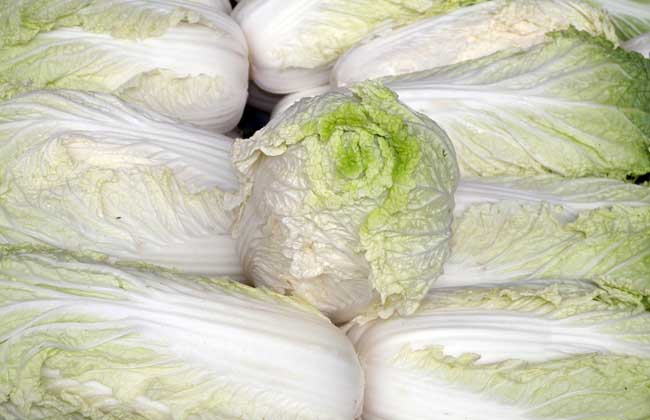
Chinese cabbage is eaten for its tender leaf heads, rosette leaves, or flower stalks. It can be stir-fried, made into soup, or pickled. Together with bok choy, it has become an indispensable delicious vegetable on the dining tables of Chinese residents. In the winter of northern China, napa cabbage is even more of a regular on the table. Now let us take a look at Chinese cabbage seed varieties and sowing methods!
What are the Chinese cabbage seed varieties?
Chinese cabbage is the vegetable crop with the largest cultivation area, highest yield, and best quality in northern China. The selected varieties or first-generation hybrids mostly have a growth period of about 85 to 110 days and belong to the mid-to-late maturing type. Common ones include Beijing 106, Beijing New No. 1, Beijing New No. 2, Beijing New No. 3, Beijing New No. 4, Beijing New No. 5, Fushan Baotou, Shandong No. 4, Qingza Zhongfeng, Taiyuan Erbaotou, Taiyuan Erqing, Jinqing No. 9, Yuqing, Ji Cabbage No. 2, Jin Cabbage No. 3, Yu Cabbage No. 1, Zhengzhou Erbaotou, Zhongbai No. 4, Qingmaye, Lianfeng, Liaobai No. 1, Jiabai No. 2, Chengyangqing, Anyang Dabaotou, and others.
Chinese Cabbage Seed Treatment Methods
1. Sun drying: To improve seed germination vigor, the seeds can be sun-dried for 2 to 3 days before sowing, for 2 to 3 hours each day, and after drying placed in a cool place to dissipate heat. This method can improve the vitality of seeds after long-term storage.
2. Hot water seed soaking: To prevent seed-borne bacteria, hot water seed soaking can be carried out. The specific method is to first soak the seeds in cold water for 10 minutes, then place them in warm water at 50 to 54°C for 30 minutes, immediately move them into cold water to cool, then remove them and place them in a ventilated place to dry before sowing.
3. Chemical seed dressing
① To prevent seed-borne diseases such as downy mildew and black rot, seed dressing can be done with 0.3% to 0.4% of the seed amount of chemicals such as ridomil, thiram, or mancozeb.
② To prevent soft rot, seed dressing can be done with 1% to 1.5% of the seed weight of Nongkang 751 or 0.2% of the seed weight of 70% DTM wettable powder.
Chinese Cabbage Seed Sowing Methods
Timely sowing of Chinese cabbage is very important. Choosing a suitable sowing period and maximally meeting the needs of Chinese cabbage for environmental conditions at each stage is the key to obtaining a bumper harvest. Sowing methods are divided into direct sowing and seedling raising.
1. Direct sowing: Direct sowing is the main cultivation method. Direct sowing involves drawing furrows about 1.5 cm deep in prepared ridges or beds, sowing by hand along the furrows, then covering with soil and pressing down, with a seeding rate of 150 to 200 grams per mu.
2. Seedling raising: The seedling bed should be selected on a plot with high terrain, fertility, and good drainage. The autumn sowing period can be 3 to 5 days earlier than direct sowing, and the seedling stage is 20 to 25 days. In winter and spring, temperatures are low and seedlings grow slowly, requiring a seedling age of 40 to 50 days. In late spring and hot summer, temperatures are high and seedlings grow rapidly, requiring a seedling age of 25 to 30 days. When raising seedlings, appropriate protective facilities should be adopted according to local seasonal and climatic characteristics. For winter-sown early-maturing cultivation, because the severe winter season is cold, it is advisable to use high-efficiency energy-saving solar greenhouses for sowing, seedling raising, and cultivation. For spring-sown early-maturing cultivation, because early spring temperatures are low, it is advisable to use ordinary solar greenhouses for sowing, seedling raising, and cultivation. For late spring and summer planting, because late spring morning and evening temperatures are low, it is advisable to sow and raise seedlings in plastic arch sheds and transplant in open fields. For summer early-maturing cultivation, because the summer climate is hot and rainy, it is necessary to use shaded sheds to lower temperature for sowing and seedling raising, or after direct sowing cover with grass and water to lower temperature and protect seedlings for cultivation, and attention should be paid to drainage after rain.
3. Temperature control: Chinese cabbage generally undergoes vernalization at 2°C to 13°C over 10 to 25 days to form flower buds and then bolt and flower. Therefore, the minimum temperature of the seedbed in spring should be kept above 15°C, and after transplanting, low temperatures below 10°C should be avoided as much as possible. During the high-temperature period in summer, attention should be paid to shading and cooling for seedling raising, and watering to lower temperature and protect seedlings. When sowing, water thoroughly to keep the bed soil moist to facilitate seedling emergence. When pricking out and transplanting, water promptly. Especially during the high-temperature period in summer, after transplanting, water 1 to 2 times continuously for seedling recovery, and afterward water once every 5 to 7 days. Flood irrigation should not be used, and during the rainy season attention should be paid to drainage and waterlogging prevention to prevent the occurrence of soft rot.