Where are the main producing areas of Chinese cabbage (napa cabbage) distributed?
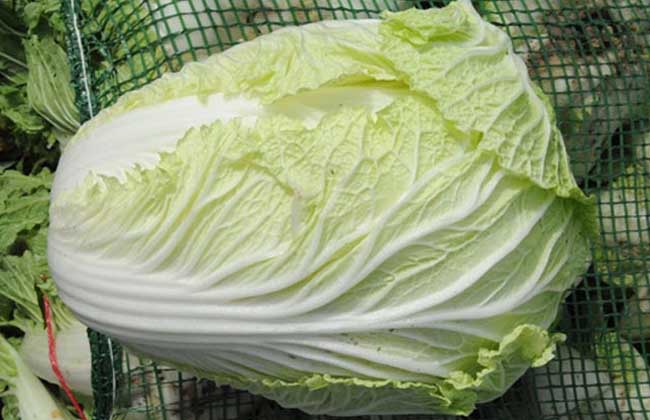
Chinese cabbage (napa cabbage) is a leafy vegetable of the genus Brassica in the family Brassicaceae, native to China, also known as “heading cabbage”, “hearting cabbage”, “yellow bud white”, “Jiao cabbage”, and so on, and called “Shao cabbage” in Cantonese; it is cultivated in both the north and south of our country, so let us take a look together at what the producing areas of Chinese cabbage are!
Producing areas of Chinese cabbage
Chinese cabbage is widely cultivated throughout our country, with North China and the area south of the Yangtze River as the main producing regions, and its planting area accounts for 40%-60% of the sown area of autumn, winter and spring vegetables.
Classification of Chinese cabbage by time
According to morphological characteristics, biological characteristics and cultivation features, Chinese cabbage can be divided into autumn-winter cabbage, spring cabbage and summer cabbage, each including different types of varieties.
1. Autumn-winter cabbage: widely cultivated in southern China with many varieties. The plant type is upright or waist-bunched, mainly cultivated in autumn and winter, and divided by petiole color into the white-petiole type and the green-petiole type. Representative varieties of the white-petiole type include Nanjing Aijiaohuang, Changzhou Changbaigeng, Guangdong Aijiaowuye, Hefei Xiaoyecai and so on. Representative varieties of the green-petiole type include Shanghai Aiji, Hangzhou Zaoyoudong, Changzhou Qinggengcai and so on.
2. Spring cabbage: the plants are mostly spreading, with a few upright or slightly waist-bunched. Strong winter habit, cold-resistant, high-yielding. According to the early or late bolting and the supply period, it is further divided into early-spring cabbage and late-spring cabbage. Representative varieties of early-spring cabbage include the white-petiole Nanjing Liangbaiye, Wuxi Sanyuebai, and the green-petiole Hangzhou Wanyoudong, Shanghai Sanyueman and so on. Representative varieties of late-spring cabbage include the white-petiole Nanjing Siyuebai, Hangzhou Canbaicai and so on, and the green-petiole Shanghai Siyueman, Wuyueman and so on.
3. Summer cabbage: cultivated in the high-temperature season of summer and autumn, also known as “fire cabbage” and “dog-day cabbage”; representative varieties include Shanghai Huobaicai, Guangzhou Maerbaicai, Nanjing Aiza No. 1 and so on.
Classification of Chinese cabbage by morphology
Chinese cabbage is divided into four varieties, among which the heading variety is further divided into three ecotypes.
1. Loose-leaf variety: the loose-leaf variety is the primitive type of heading cabbage, with leaves spreading out and not forming a head. It has strong stress resistance, more fiber, and poor quality; the edible part consists of the rosette leaves, and it has gradually been eliminated. The representative variety is Shandong Laiwu Bo cabbage.
2. Semi-heading variety: the semi-heading variety has a loose head, with the top of the head open, in a semi-heading state. It has relatively strong cold resistance and is not strict in its requirements for fertilizer and water; both the rosette leaves and the head are used as the product. Representative varieties include Liaoning Xingcheng Dacuocai, Shanxi Yangcheng Damaobian and so on.
3. Flower-heart variety: the head leaves of the flower-heart variety are folded and wrapped into a firm head, but the top of the head does not close, and the leaf tips curl outward, with the curled parts being yellow, pale yellow or white. It has relatively strong heat resistance, a short growth period, and poor storage tolerance, and is mostly used for early-maturing cultivation in summer and autumn. Representative varieties include Beijing Fanxinbai, Shandong Jinan Xiaobaixin and so on.
4. Heading variety: the heading variety is the advanced type in the evolution of Chinese cabbage; the head leaves wrap together to form a firm head, with the top of the head bluntly pointed or round, closed or nearly closed. It is widely cultivated, requires relatively high fertilizer and water conditions and careful management, has high yield, good quality and good storage tolerance, and is divided into three basic ecotypes:
① Oval type: also called the “maritime climate ecotype”, with an oval head, and a head shape index (the ratio of head height to cross-sectional diameter) of about 1.5. The wrapping pattern of the head leaves is folded or closed. The number of head leaves is relatively large, belonging to the “leaf-number type”. It requires a mild, humid environment with no drastic changes. The central cultivation area is the Shandong Peninsula in China; representative varieties include Shandong Fushan Baotou, Jiaoxian Baicai, Liaoning Youdaxiaogen and so on.
② Flat-top type: also called the “continental climate ecotype”, with an inverted-conical head, a head shape index close to 1, a flat top, fully closed, and overlapping wrap. The head leaves are relatively large and fewer in number, belonging to the “leaf-weight type”; it requires a mild environment with a relatively large temperature difference between day and night and plenty of sunshine, and has a certain adaptability to drastic temperature changes and dry air. The central cultivation areas are central Henan, western Shandong and southern Hebei. Representative varieties include Henan Luoyang Baotou, Shandong Guanxian Baotou, Shanxi Taiyuan Baotou and so on.
③ Cylindrical type: also called the “transitional climate ecotype”, with a slender cylindrical head, a head shape index of about 4, a bluntly pointed top, nearly closed, and twisted wrap. The head leaves are long obovate. The central cultivation area is the area near the Bohai Bay in eastern Hebei, which is basically a maritime climate, but because it is close to Inner Mongolia it is often affected by continental climate, which has given this ecotype the characteristic of strong adaptability to climate. Representative varieties include Tianjin Qingmaye, Hebei Yutian Baojian, Liaoning Hetou Baicai and so on. Crosses among these three ecotypes and between them and other varieties have also given rise to secondary types, such as flat-top cylindrical, flat-top oval, cylindrical, flower-heart cylindrical, flower-heart round and so on. China began research on the utilization of heterosis in Chinese cabbage in the mid-1960s and used it in production in the mid-1970s; the first-generation hybrids with relatively large planting areas include Qingza Zhongfeng, Shandong No. 4, Beijing 106 and so on.