When is the best time to plant Chinese chives?
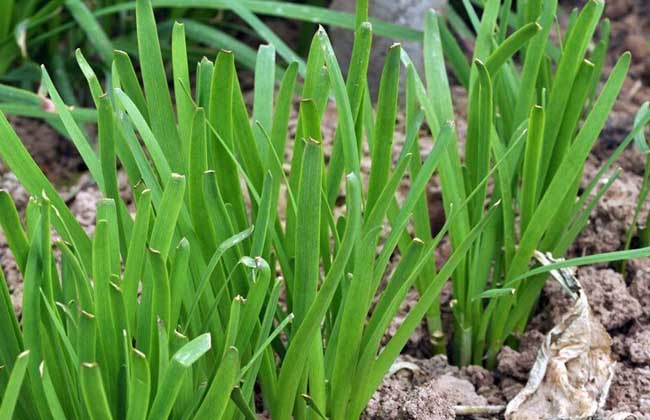
The leaves, flower stems and flowers of Chinese chives are all eaten as vegetables, and the seeds and other parts can be used as medicine, with effects such as tonifying the kidney, strengthening the stomach, refreshing the mind, and stopping sweating and astringing. Chinese chives have strong adaptability, resist cold and tolerate heat, and are cultivated everywhere across the country. Let's take a look below at the planting time and planting conditions of Chinese chives!
Chinese chive planting time
Chinese chive sowing time can be divided into three types: spring sowing, summer sowing and autumn sowing:
1. Spring sowing: It is better to sow early than late. In spring, when the local soil temperature stabilizes at 5-10°C, you can sow. At this time the ground has not completely thawed, the returning-moisture period has not yet arrived, and the surface is relatively moist, making it very easy for seedlings to emerge. This sowing method also avoids weed damage, because after sowing the Chinese chive seedlings emerge relatively quickly, while the temperature at that time is not yet suitable for weed germination, creating a time difference. Therefore, everyone is recommended to use this sowing method as much as possible.
2. Summer sowing: Generally carried out after cucumbers and tomatoes are cleared from the garden. At this time the temperature is high and drought and waterlogging are likely to occur. The sowing rate should be about one third greater than in spring, the soil covering should not be too thick, and the soil should be kept moist to help full seedling emergence.
3. Autumn sowing: Generally carried out around the Start of Autumn. The sowing rate should be twice that of spring, and management should mainly follow the principle of seeing dry and seeing wet. In the later period, attention should be paid to weed damage. Autumn sowing is generally not recommended.
Chinese chive planting conditions
Chinese chives belong to the Liliaceae family and are a perennial root vegetable with strong adaptability, resistance to cold and tolerance of heat, and are cultivated everywhere in China. In many areas of the south they can be produced year-round. In the north, although the aboveground part dies in winter and the underground part enters dormancy, it sprouts and grows after the surface soil thaws in spring.
1. Temperature: Chinese chives prefer coolness, tolerate both cold and heat. The suitable temperature for seed germination is above 12°C, the growth temperature is 15°C to 25°C, and the underground part can withstand relatively low temperatures.
2. Light: Medium light intensity, with strong shade tolerance. However, if the light is too weak, photosynthetic product accumulation is low, tillering is few and thin, yield is low, and premature aging easily occurs; if the light is too strong and the temperature too high, there is much fiber and poor quality.
3. Water: The suitable relative air humidity is 60-70%, and the soil moisture should be 80-90% of the field maximum water-holding capacity.
4. Soil: Chinese chives have strong adaptability to soil texture, and the suitable pH is 5.5-6.5. They have a high fertilizer requirement and strong fertilizer tolerance.
Classification of Chinese chive varieties
China has very rich Chinese chive variety resources. According to the edible part, they can be divided into four types: root Chinese chives, leaf Chinese chives, flower Chinese chives, and leaf-and-flower dual-purpose Chinese chives.
1. Root Chinese chives: Root Chinese chives are mainly distributed in Yunnan, Guizhou, Sichuan, Tibet and other places in China, and are also known as pie chives, broad-leaf chives, large-leaf chives, mountain chives, chicken-foot chives, etc. The roots and flower stems are mainly eaten. The root system is thick and strong, fleshy, with a pungent aroma, and can be processed by pickling or boiled for eating. The flower stems are plump and tender and can be stir-fried, and the tender leaves can also be eaten. Root Chinese chives mainly reproduce asexually, have strong tillering ability, vigorous growth, and are easy to cultivate. They are mainly harvested by digging in autumn.
2. Leaf Chinese chives: The leaves of leaf Chinese chives are broad and thick, tender, and have a low bolting rate. Although they can also bolt for food during the reproductive growth stage, the leaves and leaf sheaths are mainly used for food. They are commonly cultivated throughout China. This type is mainly used for blanching cultivation.
3. Flower Chinese chives: Flower Chinese chives are grown specifically to harvest the flower stem part for food. Their leaves are short and small, coarse and hard in texture, with strong tillering ability and a high bolting rate. The flower stems are tall and thick, crisp and tender in quality, shaped like garlic stems, and especially good in flavor. They are cultivated more in Lanzhou City, Gansu Province and Taiwan, China. There are also scattered introductions and cultivation in Shandong and other places. Flower Chinese chives have many varieties, such as the small-leaf type: strong bolting and tillering, narrow and short leaves, darker color, thin leaf sheaths with a slightly green color, relatively hard leaves and leaf sheaths, early maturing, dual-purpose for leaves and flowers, medium quality; Nianhua Chinese chives: especially strong bolting, long and large flower stems, medium-wide and long leaves, dark green, large leaf sheaths with a slightly yellowish-red color. The leaves and leaf sheaths are relatively hard, the bolting period is long, and they can bolt throughout the year. The leaf part is not suitable for eating, and the main purpose is to harvest stems; Nianhua No. 2: thick and large flower stems, excellent quality, tolerant of low temperatures.
4. Leaf-and-flower dual-purpose Chinese chives: The leaves and flower stems of leaf-and-flower dual-purpose Chinese chives develop well and both can be eaten. At present, most Chinese chive varieties cultivated in China are of this type. This type can also be used for blanching cultivation.
Chinese chive planting techniques
1. Root nurturing: The number of harvests of Chinese chives should be appropriate. Generally, 4-5 harvests are made each year, with 2-3 harvests in June and July in summer, and the rest of the time is mainly for root nurturing, allowing the plants to produce more tillers and laying the foundation for a high yield in autumn. The basic requirement for root nurturing is that when harvesting Chinese chives, the stubble height should be appropriate, generally harvesting about 4 cm above the ground at the rhizome. Each subsequent harvest should raise the cutting point slightly. Within 2 days after cutting, it is not suitable to fertilize or water, so as to avoid infection of the cut by pathogens, causing pests and diseases and root rot.
2. Root clearing: In early spring after the soil thaws and before Chinese chives sprout, use an iron rod to dig a trench about 6 cm deep and 6 cm wide in the soil around the Chinese chive roots, remove the soil between the plants in each clump down to the root depth, expose the rhizomes, and at the same time remove dead root tillers and small tillers. Spread the dug-out soil between the rows to dry, then gather the rhizomes together and fill in fine soil to cover them. When filling soil, it is best to add an appropriate amount of plant ash to prevent root maggots.
3. Root turning: Replanting old Chinese chive roots can restore their production potential, make use of waste roots to reduce costs, be faster than re-sowing, and help maintain variety purity. First use a four-tooth fork or hoe to turn up the Chinese chive roots, select rhizomes that are free of pests and diseases and still have production capacity, trim off overly long fibrous roots, remove rhizomes that have no tillering ability and those that are rotten, and replant them. Both flat beds and furrow cultivation can be used. In-bed hole planting spacing is 8-10 cm, with about 10 plants per hole; planting too sparsely will reduce yield. For furrow hole planting, the row spacing is 60 cm, the seedling band width is 30 cm, and 4 rows are planted.
4. Soil hilling: The root system of Chinese chives "jumps roots" upward every year, forming enlarged root nodes, one after another, called gourd heads. The thicker the root nodes, the more nutrients they store, so in the second year the Chinese chives root earlier and yield more. Therefore, hilling soil and fertilizer around Chinese chives can promote the growth and development of new roots, prolong the life of the Chinese chive plants, and prevent lodging. The time for hilling should be after the soil thaws and before the Chinese chive root system sprouts. The thickness of the hilling should be determined by the height of the "root jump", generally 3-4 cm is suitable.
5. Ash covering: When planting Chinese chives in autumn and winter, after applying sufficient base fertilizer and planting, cover the bed surface with a 2-3 cm thick layer of finely crushed coal cinders, and apply an appropriate amount of water-soluble fertilizer during the growth period. This can make the Chinese chive soil loose, with good permeability, make weeds less likely to grow, reduce pathogens, and provide good heat preservation, moisture retention, fertilizer retention and drought resistance. The Chinese chives grown this way have dark green leaves, grow quickly, and have strong tillering ability. Not only is the yield high and the texture crisp and tender, but when harvesting it will not damage the meristematic tissue and accessory buds in the leaf sheaths, which is even more favorable for the growth and harvest of the next crop of Chinese chives.
6. Sand culture: Continuous year-after-year planting of Chinese chives easily causes a relatively severe outbreak of Chinese chive maggots, and sand culture can solve this problem. Using sand or other substrates as the cultivation substrate and applying nutrient solution has the characteristics of simple management, low investment, quick results and high returns, and is especially suitable for cultivation in courtyards or idle land. The sand culture bed can be made into a square pool, diamond-shaped pool or polygonal pool with equal length and width; the length and width are determined by the site, and the bed height is 18-20 cm; river sand with a diameter of 1-2 mm is preferred.
Chinese chive pest control
The main pest of Chinese chives is the Chinese chive maggot. Chinese chive maggots seriously endanger the growth of Chinese chives, and measures should be taken to control them at the right time according to actual conditions. The main methods for controlling Chinese chive maggots are:
1. Adults: Chinese chive maggots occur in 5-6 generations each year, with the most serious occurrence in spring and autumn. The adult emergence period is generally in April and September. Choose a clear morning from 9-10 o'clock and spray 2000 times diluted 2.5% deltamethrin emulsifiable concentrate per mu.
2. Larvae: Drench the roots with pesticide. Use 500 ml of 2% methyl abamectin emulsifiable concentrate per mu, diluted to 1000 times, for watering.
Chinese chive disease control
In summer there is relatively more rain, so control of damage to Chinese chives should be strengthened. The main diseases of Chinese chives include gray mold, phytophthora blight, purple blotch, etc.
1. Gray mold
[Disease characteristics] In the early stage of gray mold, white or grayish-brown spots appear on the leaves, then expand into prismatic or elliptical lesions, which after merging into each other form large dead patches that cause the leaves to die. When moist, the surface of the dead leaves is densely covered with gray to grayish-brown mold. The pathogen mainly overwinters as sclerotia on diseased residues in the soil and spreads through airflow. Chinese chive gray mold causes damage year-round.
[Control methods] ① 600 times diluted 78% Kebo has a good effect. ② Apply more organic fertilizer, harvest appropriately, drain promptly after rain, and reduce field humidity. ③ Remove old leaves and diseased seedlings promptly.
2. Phytophthora blight
[Disease characteristics] Chinese chive phytophthora blight damages roots, stems and leaves, with the pseudostem and bulbs suffering the most. The affected leaf areas first develop dark water-soaked lesions, after which the leaves turn yellow and soft-rot. The affected stems and roots become brown and soft-rot, and when moist, sparse white mold appears on the diseased parts. The pathogen overwinters on diseased residues in the soil (greenhouse Chinese chives can be affected year-round). It is a high-temperature, high-humidity disease, with a suitable temperature of 25-32°C, and the peak damage period is around August.
[Control methods] In the early stage of disease onset, on cloudy days, spray 1000 times diluted 50% Huihuiwei or 2000 times diluted 40% Junhejing for control, and evenly spray the pesticide after each harvest of Chinese chives. When choosing pesticides, attention should be paid to selecting new fungicides with high efficiency, low toxicity and low residue, and they should be applied in rotation and alternation.