When is the best time to plant pumpkins?
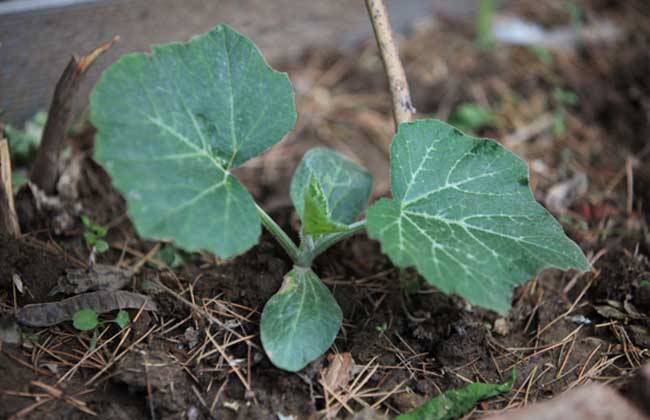
Pumpkins originated in the region from Mexico to Central America and are widely cultivated around the world. They were introduced to China during the Ming Dynasty and are now widely grown across the north and south. In China, they are grown most extensively in the Northeast, and are especially widespread in Hubei Province in central China and Heilongjiang in the Northeast. China is the world's second-largest producer of pumpkins, and with advantages such as abundant raw materials and cheap labor, it has the capacity to capture the international market.
Pumpkin planting time
Under normal conditions, pumpkins are best planted from February to March.
Pumpkin growth habits
Pumpkins like a cool, moist climate and are extremely easy to cultivate. Planted by courtyard walls, on wall tops, or on field ridges and banks, they can all grow well.
Pumpkin sowing methods
1. Land preparation and film laying: Prepare the ditch surface according to the water line and lay the film. Choose 50 cm wide film to cover one side, or choose 140 cm wide film to cover the entire ditch.
2. Seed treatment: The sowing period for pumpkins is from mid-to-late April to early May. Before sowing, remove shriveled and deformed seeds, and sun-dry the seeds for 2-3 days on a sunny day to enhance their vitality. After selecting the seeds, place them in 55°C warm water and stir constantly for 15 minutes. When the water temperature drops to 30°C, soak the seeds for another 3-4 hours, rub off the mucus on the seed coat, wrap them in a damp cloth, and place them at 25-30°C to germinate for 36-48 hours. Once 80% of the seeds have sprouted, they can be sown, or dry seeds can be sown directly.
3. Digging holes and sowing: Before sowing, dig the holes first and water them thoroughly. Sow 3-4 seeds directly per hole, cover with 2 cm of sandy loam, with a hole spacing of 45-50 cm. At 25-30°C, germination takes about 1-2 weeks.
Pumpkin cultivation techniques
1. Transplanting: When there are 3-5 true leaves, select healthy, pest-free seedlings on a sunny afternoon for transplanting, 1 plant per pot, with the planting depth such that the cotyledons are level with the soil surface, and water thoroughly. If sowing directly, thin out weak or diseased seedlings, leaving 1 plant per hole.
2. Fertilizing: About 10 days after transplanting, spray once with dilute organic fertilizer, mainly nitrogen fertilizer. After the plant begins to vine, it grows rapidly. When there are 8-10 true leaves, perform the first topping to encourage more side vines to sprout; at this point, a trellis can be set up in advance. When side vines are longer than 50 cm, the tender stem tips and leaf stalks can be harvested for eating. Be careful to keep about 5 leaves, and press the remaining stems and vines down with a slightly larger clod of soil to encourage aerial roots to sprout. After each harvest, spray once with dilute decomposed organic fertilizer, mainly nitrogen fertilizer.
3. Trellising: After the vine has circled once along the pot on the soil surface, guide the stems and vines to climb the trellis so that the leaves are evenly distributed and the branches do not shade each other.
4. Growth: At a certain stage, the plant enters the flowering period. In the early stage, male flowers are dominant. In the morning, when the flowers are about to open but have not yet opened, the male flowers can be picked together with their stalks and are edible. When female flowers begin to grow, the decomposed organic fertilizer applied as a top dressing should be mainly phosphorus and potassium fertilizer, and the harvesting of tender stem tips should be reduced or stopped. If necessary, hand pollination should be carried out, and it must be done before 8 a.m. Usually, it is enough for each plant to have 3-5 fruits growing normally (keep 1-2 for large-fruited varieties; mini varieties can have appropriately more, depending on the plant's growth vigor). Excess young fruits or female flowers should be thinned out, and the stems and vines should be appropriately topped to avoid insufficient nutrient supply. Larger fruits can be secured in mesh bags and hung in a sturdy place, and fruits close to the ground can be propped up with foam plastic or wooden boards to isolate them from the soil.