What are the prospects for asparagus cultivation really like?
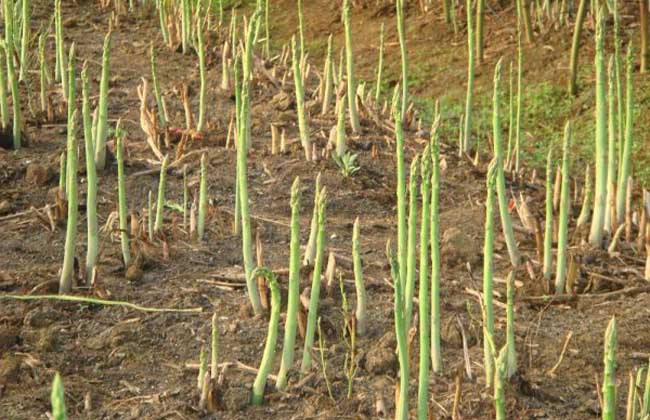
Asparagus is one of the world's top ten famous vegetables, also known as shidiao bai or longxucai, and enjoys the reputation of “king of vegetables” on the international market. Asparagus is rich in various amino acids, proteins and vitamins. Asparagus can be considered a world-famous vegetable, its nutritional value is extremely high, and it also has anti-cancer and cancer-fighting effects, and has always been highly praised by nutrition experts. Let's take a look below at what the prospects for asparagus cultivation are like!
Market prospects for asparagus cultivation
Asparagus enjoys the reputation of “king of vegetables” on the international market. Asparagus is rich in various amino acids, proteins and vitamins, with content higher than that of ordinary fruits and vegetables, especially the asparagine and trace elements selenium, molybdenum, chromium, manganese, etc. in asparagus, which have the effect of regulating body metabolism and improving body immunity, and have a strong inhibitory effect and pharmacological effect in the prevention and treatment of hypertension, heart disease, leukemia, blood cancer, edema, cystitis, etc.
Research by the International Association of Cancer Patients believes that asparagus can normalize cell growth and has the function of preventing the spread of cancer cells. When used as an adjunct treatment for tumor diseases, daily consumption must be ensured to be effective. Asparagus has become one of the health vegetables, which is an important reason why it can be planted on a large scale around the world and sells well without decline.
Asparagus has a delicious and aromatic flavor, and its dietary fiber is soft and tasty, which can increase appetite and help digestion.
Famous asparagus dishes include “Fresh Mushrooms with Longxu”, “Stir-Fried Asparagus”, “Shrimp with Asparagus”, “Sauteed Sliced Pork with Asparagus”, “Asparagus with Fried Eggs”, “Sweet and Sour Asparagus Slices”, “Braised Scallops with Asparagus”, “Asparagus and Abalone Soup”.
Development trends in asparagus cultivation
As the world's largest asparagus-growing country, in 2002 China's asparagus area was 100,000 hectares. From 2003 to 2005, due to “SARS” and natural disasters, it decreased to 60,000 hectares. As of January 2009, China's asparagus area had only recovered to about 80,000 hectares, and with this global financial crisis, China's existing asparagus area may decrease by about another 1/3.
Analysis of the future prospects for asparagus. In 2009, China's asparagus area may decrease by 1/3, or more. With the gradual recovery of the global economy, asparagus after 2010 will enter a new golden period. After the economy warms up, the area has decreased a lot, and prices are bound to rise. It is expected that this golden period will begin in 2010 and continue until after 2015.
Precautions for asparagus cultivation
1. For small-area planting, green asparagus should be the main focus, so that there is a guarantee from the domestic market.
2. For large-area planting of more than 500 mu, whether white asparagus or green asparagus, there needs to be a processing enterprise purchasing as backing, and the distance from the processing plant should not exceed 600 kilometers, so as to facilitate purchasing and transportation.
3. Suitable climate and soil. Climate conditions require suitable temperatures and not much rainfall. In China, from Guangdong and Fujian in the south to Liaoning, Inner Mongolia, ** and other places in the north, asparagus can be planted. However, the south has more rainfall, and high temperature and humidity make disease prone to occur, increasing the difficulty of management. Therefore, the farther north, the less rainfall, the lighter the disease, and the easier the management. But the south has a longer growth period and higher yields. The farther north, the shorter the growth period and the lower the yield. Soil conditions are not strict; sandy loam is most suitable, followed by sandy soil and heavy loam, which can also be planted, but cultivation techniques need to be improved.
4. There must be a certain planting scale and cultivation techniques. There must be many growers, with a minimum scale of more than 500 mu, otherwise the processing plant cannot purchase, and there must be technicians to guide the cultivation process in order to grow well. If it is very close to the processing plant, a smaller scale does not matter, but without technical guidance it still will not work. Only in this way can high quality and high yield be guaranteed, market competitiveness be achieved, and good benefits be obtained.