When Is the Best Time to Plant Asparagus? An Introduction to the Best Planting Time
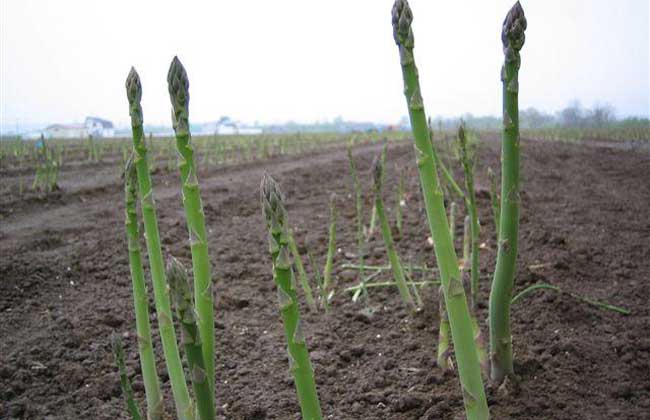
Asparagus is one of the world's top ten famous vegetables, also known as shidiao bai or longxu cai (dragon whisker vegetable - not to be confused with haifa cai, a deep-sea vegetable that also goes by the alias longxu cai). It enjoys the reputation of "king of vegetables" on the international market. Asparagus is rich in various amino acids, proteins and vitamins, all at higher levels than ordinary fruits and vegetables. So when is the best time for asparagus?
The Planting Time for Asparagus
Asparagus is generally planted in spring.
Asparagus sends up new stems 2 to 3 times or more each year. The tender stems that sprout in spring are generally the ones harvested for eating, and their growth depends on the nutrients stored in the roots from the previous year. The growth of the tender stems and the formation of yield are positively correlated with the number of mature stems and the fullness of branches and leaves from the previous year. As the plant ages, the number of tender stems produced and the yield increase year by year. As the rhizome keeps branching, the clump tends to decline, the above-ground stems become increasingly thin, and the yield and quality of the tender stems gradually decrease. Generally, the peak production period is 4 to 10 years after transplanting.
If you want to grow asparagus in the open field, raise seedlings in April and May and plant in July and August. If growing asparagus in a greenhouse, you can also raise seedlings in August and September and plant in October.
The Growing Conditions for Asparagus
Asparagus has a fairly wide temperature tolerance. The suitable temperature for seed germination is 25-30 degrees, the optimal temperature for vegetative growth is 20-30 degrees, growth is slow below 15 degrees with few tender stems produced, above 30 degrees the outer skin of the tender stems tends to become fibrous and the tips easily splay open, resulting in poor quality; growth stops above 35 degrees.
In addition, asparagus is a sun-loving plant that requires strong light and plenty of sunshine for lush branches and leaves, and photosynthesis is closely related to temperature. Of course, high-temperature seasons are unfavorable for asparagus growth, and prolonged rainy weather also affects asparagus yield.
Also, asparagus has deep roots, and the young stems need to be earthed up for shading, so choose a sandy loam with deep soil, loose and fertile texture, and rich organic matter. A pH of 5.8-6.5 is optimal.
Common Problems in Asparagus Cultivation
1. Discoloration of white spears: White asparagus, used as a raw material for canning, is grown by earthing up to blanch it before harvest. Generally, asparagus harvested after earthing up is required to be white or creamy yellow; if it is green or the tips are green-red, it is considered discolored. The causes of discoloration are, first, soil that is too clayey or too sandy - the former tends to crack, while the latter has large pores, creating gaps that let light through and cause the asparagus to discolor on exposure to light; second, high soil temperature and dryness, where the earth covering dries and cracks easily or is too loose, and the soil pores are too large, letting light through. To prevent discoloration, choose sandy loam in cultivation, till carefully, make the soil particles uniform in size, keep moisture moderate, and firm the earth covering evenly. If the ground temperature is too high, water appropriately to increase soil moisture and reduce cracking. If conditions allow, cover with black film instead of earthing up for blanched cultivation, which gives better results.
2. Deformed spears: When harvested, asparagus tender stems that are curved, uneven in thickness, or have a non-round or flattened cross-section are all deformities. The main causes are applying undecomposed organic fertilizer or a single excessive application of fertilizer, which burns the growing point of the tender stem or inhibits its normal development; next is soil with high clay content and many clods, with unevenly firmed earth covering, which hinders the normal growth of the tender stems; and third is pest damage when the tender stems emerge. Control measures: till the soil finely so it is loose and free of stones and clods; in addition, firm the earth covering evenly and pay attention to controlling soil-dwelling pests.
3. Hollow spears: Tender stems whose central tissue is hollow are hollow spears. This is mostly caused by an imbalance in nutrients, a lack of phosphorus and potassium fertilizer, and excessive topdressing of nitrogen fertilizer during the harvest period, leading to excessive vegetative growth. Control methods: pay attention to rational fertilization during the harvest period, especially topdressing with phosphorus and potassium fertilizer; do not apply nitrogen fertilizer alone, to ensure the above-ground parts grow thick and strong.
4. Cracking of tender stems: During the harvest period, tender stems split lengthwise into brown deep fissures and then rot. The cause is a lack of phosphorus and potassium fertilizer in the soil and excessive vegetative growth of the plant; next is a long drought followed by heavy watering, which makes the tender stems expand too quickly and crack. Control measures: pay attention to applying more phosphorus and potassium fertilizer, and water evenly, avoiding alternating drought and waterlogging.
5. Off-flavors: Asparagus has a mild taste, and excessive bitterness or other off-flavors will affect its commercial value. The causes are contamination by pesticides and irrigation with municipal wastewater, or contamination by toxic exhaust gases and industrial waste. For this reason, do not apply inorganic fertilizers when earthing up; before and after earthing up or during the harvest period, the use of pesticides and garbage-based fertilizer and irrigation with industrial wastewater must be strictly prohibited.