Key Technical Points and Methods for Cucumber Pest and Disease Control
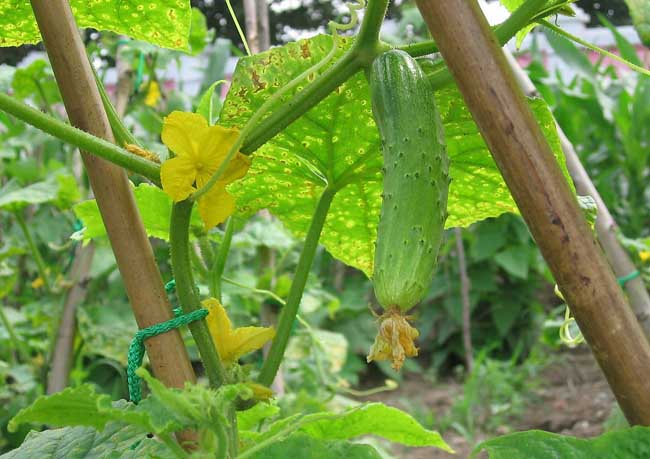
Cucumbers are widely cultivated throughout China and are now extensively grown in temperate and tropical regions. They are one of the main greenhouse products and a common vegetable on the table. During cucumber cultivation, pests and diseases mostly occur as mixed infections. When controlling diseases, be sure to pay attention to the compounding of pesticides and the flexible adjustment of dosage at different stages of disease development. Let's take a look at cucumber pest and disease control techniques together!
Cucumber Disease Control
Cucumber diseases mainly include cucumber downy mildew, cucumber powdery mildew, cucumber anthracnose, and cucumber gray mold. The main cause of these diseases is improper management creating a high-temperature, high-humidity environment as the weather warms up and temperatures gradually rise. Cucumber disease control techniques are described below:
1. Downy Mildew
[Damage Characteristics] Downy mildew causes relatively severe damage in low-lying areas with poor ventilation and excessive watering. It mainly damages leaves, occasionally stems and pedicels. In the early stage of disease, water-soaked angular lesions appear. The lesions do not perforate. When humidity is high, dark mold layers may grow on the underside of the lesions. In severe cases, due to the large number of lesions, rapid expansion, and lesions merging with each other, leaves wither and die prematurely.
[Control Methods] Ecological control: Maintain good ventilation in the greenhouse and control the temperature inside, keeping it at around 25°C during the day and around 15°C at night. Chemical control: When disease occurs, spray with 50% Juncheng diluted 2000 times with water. In severely affected areas, repeat the spray once every 3-5 days.
2. Powdery Mildew
[Damage Characteristics] Powdery mildew damages all above-ground parts of the plant, but leaves and vines are primarily affected. In the early stage, small white nearly circular powdery spots appear on both sides of the leaves, which then expand into large white powdery areas with indistinct edges. In severe cases, the entire leaf is covered with white powder. In the later stage, the white mold spots turn gray as the mycelium matures, and diseased leaves turn yellow and wither with small black dots.
[Control Methods] Field management: Choose disease-resistant varieties as much as possible, ensure light penetration, rational irrigation, reduce air humidity, and apply sufficient organic fertilizer. Chemical control: In the early stage of disease, spray with Tiannuo Granule Feng fungicidal type diluted 1000 times with water, once every 5-7 days, repeating 2-3 times.
3. Gray Mold
[Damage Characteristics] Gray mold not only harms cucumbers but also damages green peppers, eggplants, green beans, etc. Gray mold mainly damages cucumber leaves, fruits, and flowers. The gray mold pathogen invades from faded female flowers, grows a gray-brown mold layer, then invades young fruits, causing top rot, softening and shrinkage. When large fruits are affected, the diseased area first turns yellow until it rots and falls off.
[Control Methods] Field management: Raised bed cultivation, reduce field humidity, rational irrigation, water in the evening, and properly ventilate to remove moisture, promoting healthy growth. Chemical control: In the early stage of disease, spray with 50% Sumilex wettable powder at 1500-2000 times or 50% Duomeiling wettable powder at 800-1000 times dilution.
4. Anthracnose
[Damage Characteristics] Anthracnose mainly damages stems and leaves. Initially, water-soaked small spots appear. Leaf lesions are nearly circular, reddish-brown, with a halo around them. When dry, the center of the lesion ruptures. Fruit lesions are dark brown and the fruit tends to bend and deform.
[Control Methods] Soil treatment: Implement crop rotation with non-cucurbit crops for more than 3 years. Disinfect the soil, select disease-resistant varieties, rotate crops, remove diseased plant debris, and increase phosphorus and potassium fertilizer. Chemical control: Spray 1:2:100 Bordeaux mixture, or 65% mancozeb at 500-800 times dilution, 80% Anthracnose Fumei wettable powder at 800 times dilution, 70% mancozeb wettable powder at 400 times dilution, or fumigate with 45% chlorothalonil smoke agent at 250 grams per mu. Use once every 7-10 days, for 3-4 consecutive applications.
Cucumber Pest Control
Cucumber pests mainly include leafminer flies, whiteflies, and melon aphids. In the control process, emphasis should be placed on strengthening field management. Cucumber pest control techniques are described below:
1. Leafminer Fly
[Damage Characteristics] After the larvae hatch, they tunnel through the leaf mesophyll, leaving winding feeding tracks. During the seedling stage, plants with 2-7 leaves are most affected. In severe cases, the tunneling marks are densely distributed, causing leaves to turn yellow, wither, or fall off. The terminal end of the tunnel does not noticeably widen, which is a distinguishing feature of this pest from Liriomyza sativae, Liriomyza huidobrensis, and Liriomyza trifolii.
[Biological Control] Release parasitic wasps such as Diglyphus, Dacnusa, and Opius. These three parasitic wasps have a high parasitism rate on leafminer flies. Apply insect growth regulators, which can affect adult reproduction, egg hatching, larval molting, and pupation.
[Chemical Control]
① 5% Fipronil suspension concentrate, 50-100 ml per mu; 40% Qixingbao emulsifiable concentrate at 600-800 times dilution. Time the control during peak occurrence periods, once every 5-7 days, for 2-3 consecutive applications.
② Insect growth regulators: 5% Yitaibao at 2000 times dilution, 5% Cascade emulsifiable concentrate at 2000 times dilution. These have a sterilizing effect on adult leafminer flies, and the hatching rate of eggs laid by adults after treatment is low.
③ Use 50% phoxim emulsifiable concentrate at 1000 times dilution, spray during peak occurrence periods, once every 5-7 days, for 2-3 consecutive applications. Stop using 7 days before harvest.
2. Whitefly
[Damage Characteristics] Secretes large amounts of honeydew, severely contaminating leaves and fruits. Leaf symptoms: Adults and larvae cluster to feed and secrete large amounts of honeydew, severely contaminating leaves and fruits and causing sooty mold.
[Biological Control]
① Cultivate "pest-free seedlings": Fumigate the greenhouse before raising seedlings to eliminate residual pests, clear weeds and plant debris, and add a layer of nylon gauze at greenhouse vents to prevent external pest sources.
② Avoid mixed planting as much as possible: Especially cucumbers, tomatoes, and green beans should not be mixed. Adjusting production schedules is also an effective method, i.e., plant celery, sweet peppers, and other vegetables less affected by whitefly in the first crop, then plant cucumbers and tomatoes in the second crop.
③ Remove old leaves and burn them: Older nymphs are mostly distributed on lower leaves. When pruning solanaceous vegetables, appropriately remove some old leaves and bury them deep or burn them to reduce the population.
④ Encarsia formosa: Encarsia formosa can successfully control whitefly in greenhouses. When whitefly adults are below 0.5 per plant, release 15 adult Encarsia formosa per plant every two weeks for a total of 3 releases.
⑤ Yellow color has a strong attracting effect on whitefly adults: Set up yellow boards in the greenhouse (1m x 0.7m fiberboard or cardboard, painted orange-yellow, then coated with a layer of sticky oil), using 32-34 boards per mu. The effect of trapping and killing adults is significant. Place yellow boards between rows at the same height as the plants. For sticky oil, generally use No. 10 machine oil mixed with a little butter, and re-coat once every 7-10 days. Be careful to prevent oil droplets from falling on crops and causing burns.
[Chemical Control]
① Use a knapsack motorized fogger or 3MF-3 knapsack multi-purpose plant protection machine to atomize 1% deltamethrin or 2.5% fenvalerate (Sumicidin) oil formulation into 0.5-5 μm droplets, suspended in the air to kill adults.
② When the average number of adults is 2.7 and 6.6 per plant, spray 25% buprofezin (Applaud) wettable powder at 100 ppm and 200 ppm once or twice. When adults reach 19.5 per plant, spray a mixture of buprofezin at 100 ppm and bifenthrin (Talstar) at 5 ppm twice.
③ Spray 2.5% deltamethrin or 20% fenvalerate (Sumicidin) emulsifiable concentrate at 2000 times dilution, once every 6-7 days, for 3 consecutive applications.
④ Methyl kresoxim (Morestan) wettable powder at 1500 times dilution; bifenthrin at 0.8-2 g per mu. One day after treatment, the control effect on adults is over 99%.
3. Melon Aphid
[Damage Characteristics] Leaves curl, seedlings wilt, and may even die. Old leaves affected prematurely wither and fall, shortening the fruiting period and reducing yield.
[Biological Control]
① Cultivate pest-free strong seedlings. Strictly use insect-proof nets from the seedling stage to cultivate pest-free seedlings.
② Use yellow boards to trap aphids. Take advantage of aphids' attraction to yellow color and use yellow boards to trap them.
③ Protect natural enemies. Such as Erigonidium graminicolum, Pardosa astrigera, Misumenops tricuspidatus, Coccinella septempunctata, Propylaea japonica, Scymnus hoffmanni, Chrysopa sinica, hoverflies, Nabis sinoferus, minute pirate bugs, Aphidiidae, Chrysopa formosa, Chrysopa septempunctata, gall midges, and Entomophthora aphidis, etc.
[Chemical Control]
① When aphid damage is found, use 0.65% shanzhaisu 100 ml, add 30-40 kg water and spray; or Shaoguan mycin at 200 times dilution with 0.01% washing powder; or 2.5% rotenone emulsifiable concentrate at 600-800 times dilution; or spray with tobacco water (tobacco to water = 1:30 to 1:40).
② 20% Sulefu oil at 1000 times dilution, or 40% Juma emulsifiable concentrate at 2000 times dilution, or 21% synergized fenvalerate-malathion (Mieshabi) emulsifiable concentrate at 4000 times dilution, or 2.5% cyhalothrin (Kung Fu) emulsifiable concentrate at 3000 times dilution, or 2.5% bifenthrin emulsifiable concentrate at 3000 times dilution, or 10% imidacloprid wettable powder at 2000 times dilution. Spray again after 10-15 days.
To strictly control all the above pests, qualified insect-proof nets should be installed, and timely detection and control should be carried out to eliminate pests at the spot and patch occurrence stage. Physical and biological control are the preferred methods, and necessary chemical control can be chosen during major outbreaks.