Detailed Explanation of Spinach Planting Techniques and Management Methods
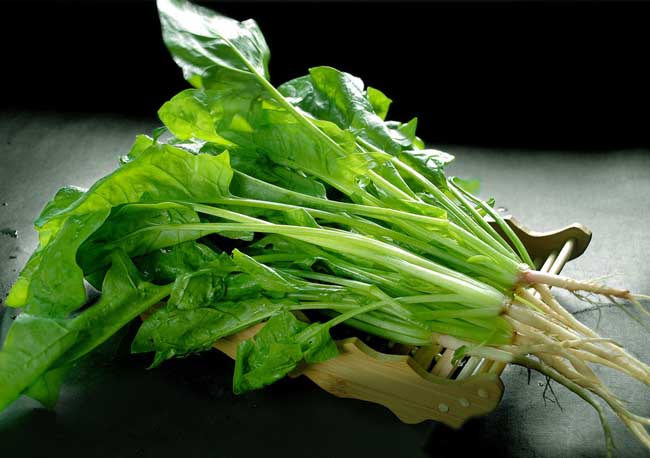
Spinach can be divided into 5 types: root-stubble spinach, buried spinach, spring spinach, summer spinach and autumn spinach. Spring spinach can be sown once temperatures rise above 5°C in early spring, with March being the suitable sowing period, and harvested 30-50 days after sowing. Varieties with late bolting and broad leaves should be chosen, such as Chunqiu Daye, Shenyang Round Leaf, and Liaoning Round Leaf. Let's take a look at spinach planting techniques below!
Spinach Growing Environment
1. Temperature: Spinach is a cold-tolerant vegetable. Seeds can germinate at 4°C, with the optimum being 15-20°C. The suitable temperature for vegetative growth is 15-20°C. Growth is poor above 25°C. The above-ground parts can withstand low temperatures of minus 6-8°C.
2. Sunlight: Spinach is a long-day crop. Under high temperature and long-day conditions, plants tend to bolt and flower. It has low requirements for light intensity and can be intercropped with tall-stemmed crops.
3. Water: Spinach has a large leaf area and tender tissues, with relatively high water requirements. With sufficient water, growth is vigorous, the flesh is thick, yields are high, and quality is good. Under high temperature, long-day and drought conditions, vegetative growth is inhibited, reproductive growth is accelerated, and premature bolting easily occurs.
4. Soil: Spinach has strong adaptability to soil, but soil that is fertile with strong water and fertilizer retention capacity is still best. Spinach is not acid-tolerant, with a suitable pH of 7.3——8.2. Spinach is a leafy vegetable and requires more nitrogen fertilizer and appropriate phosphorus and potassium fertilizers.
Spring Spinach Planting Techniques
The key to spring spinach planting lies in achieving early sowing and preventing early bolting.
1. Variety selection: For spring spinach, round-leaf spinach with late bolting should be chosen.
2. Seed soaking and germination: To speed up emergence, soak seeds in cold water for 12-24 hours before sowing, and use a bamboo broom to poke up and down to pierce the seed coat. After removal, place them at 15-20°C for germination (the seeds should be spread to a thickness of about 15 cm, covered with a wet burlap sheet to keep moist). After 3-5 days, once the radicle emerges, they can be sown.
3. Sowing: Sowing can begin when the average daily temperature reaches 4-5°C. Apply sufficient base fertilizer and use the wet sowing method, with a seeding rate of 5-6 kg per mu.
4. Field management: Early management focuses on preserving soil moisture, with less and light irrigation to prevent temperatures from being too low. After 2-3 true leaves, the plants enter a period of vigorous growth, and water and fertilizer must keep up to promote growth and prevent early bolting.
Summer Spinach Planting Techniques
1. Seed selection and germination: Choose varieties such as round-leaf spinach or large-leaf spinach that are relatively heat-tolerant, easy to germinate, and highly disease-resistant. First break the shell and soak the seeds for 12-24 hours, then place them in a water well or in a refrigerator at 2-4°C for low-temperature germination. Alternatively, after soaking, spread them in a cool indoor place for germination (note: rinse once daily with clean water to wash away mucus and prevent mildew), turning frequently and keeping moist. Generally, after 4-5 days, they will germinate and can be sown.
2. Timely sowing: Generally, sowing from mid-May to early June is more suitable. During high-temperature periods, the seeding rate should be appropriately increased to 10-15 kg per mu. To facilitate successive emergence and continuous harvesting, and to extend the supply period, 2 parts of soaked, germinated wet seeds can also be evenly mixed with 1 part dry seeds before sowing. Before sowing, choose well-drained sandy loam soil, then plow and apply sufficient base fertilizer (apply 1500-2000 kg of decomposed high-quality manure per mu). The day before sowing, dig furrows and build beds, usually 2 m wide, water thoroughly, and water once each morning and evening before emergence.
3. Fine management. For spinach sown before "White Dew," it is best to cover the ground with water grass or similar after sowing, and if conditions permit, build a shed for shading; remove the cover once seedlings emerge. During the growing period and after each spinach harvest, timely apply decomposed dilute manure water in split applications, adhering to the principle of small amounts of fertilizer with plenty of water, light and frequent irrigation, and keeping the soil moist at all times. In rainy seasons, reduce humidity to prevent disease.
After reading about spring spinach and summer spinach planting techniques, let's now look at autumn spinach and winter spinach planting techniques!
Autumn Spinach Planting Techniques
1. Determine the suitable sowing period: Autumn spinach is generally sown in early August and harvested in October-November, with a yield of about 2000 kg per mu. The sowing period can be flexibly adjusted according to local climate and soil fertility. If sown too early, plants tend to show excessive growth and early decline; if sown too late, plants will not be large enough, resulting in poor economic returns.
2. Timely thinning and weeding: When sowing, drill sowing at 10-15 cm spacing or broadcast sowing can be used. When seedlings have 2-3 leaves, thin once to a spacing of 4-6 cm. Appropriate density is beneficial for individual plant growth and increases yield per unit area.
3. Strengthen fertilizer and water management: Spinach requires a relatively large amount of nitrogen fertilizer, but phosphorus and potassium fertilizers should also be applied in coordination. When preparing the soil before sowing, apply 2000-3000 kg of fine dry manure per mu as base fertilizer. After thinning, apply a top dressing once with 10-15 kg of nitrogen fertilizer per mu; when plants reach 5-6 leaves, apply a second fertilization with 20 kg of nitrogen fertilizer and 100 kg of plant ash per mu. Water after top dressing. In dry weather, water once every 6-7 days. By late October, as temperatures drop, extend the watering interval and avoid excessive watering.
4. Timely harvest: The spinach harvest period can be flexibly managed according to growth conditions and market demand.
Winter Spinach Planting Techniques
1. Apply sufficient base fertilizer: Overwintering spinach has a long growth period. To prevent nutrient deficiency, base fertilizer must be sufficient. Generally, organic fertilizer and phosphorus and potassium fertilizers can all be deeply applied at once, then the soil is prepared and beds are made.
2. Control nitrogen before winter: The standard for fertilizer and water management before overwintering is to ensure that spinach grows 4-5 true leaves before winter to enhance cold resistance. If too large or too small, it is prone to freeze damage. Therefore, if the sowing period is appropriate and base fertilizer is sufficient, appropriately control nitrogen fertilizer application before overwintering to prevent seedling spindling and low dry matter accumulation, which leads to freeze damage; if sowing is too late or soil fertility is insufficient, consider applying an appropriate amount of nitrogen fertilizer to promote seedling growth and ensure spinach overwinters at a suitable seedling age.
3. Top dressing after greening: For fertilizer and water management of overwintering spinach after greening, seize the opportunity for timely top dressing. Top dressing is mostly applied together with watering, generally in 2 applications in mid-to-late March and early April. If top dressing is too early, low soil temperature affects seedling recovery and growth; if too late, insufficient fertility will delay spinach growth. In short, top dressing after overwintering must be done before spinach bolts, which can delay bolting and flowering and help improve spinach yield and quality.
4. Use ammoniacal nitrogen fertilizer with caution. Spinach is sensitive to ammoniacal nitrogen. The growing season of overwintering spinach coincides with the transitions of autumn-winter and winter-spring, when soil temperature is low and soil nitrification is weak. Therefore, it is best to use it cautiously or not at all.
Spinach Pest and Disease Control
1. Aphids: Spray with 40% dimethoate 1000x solution, or 50% pirimicarb 2000-3000x solution.
2. Leafminers: Spray with 50% phoxim emulsifiable concentrate 1000x solution, or 80% trichlorfon powder 1000x solution.
3. Downy mildew: Spray with 58% Ridomil 500x solution, or 75% chlorothalonil 600x solution.
4. Anthracnose: Spray with 50% thiophanate-methyl 500x solution, or 50% carbendazim 700x solution for control.