Detailed guide to growing spinach on a balcony: grow good spinach at home too
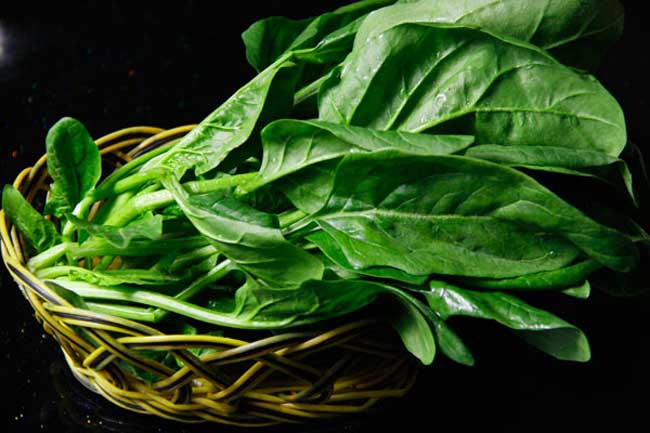
Spinach is divided into two types: pointed-leaf and round-leaf. Among them, pointed-leaf spinach is also called Chinese spinach or winter spinach. It has better taste, stronger cold tolerance, and slightly weaker heat tolerance, making it suitable for autumn and winter cultivation. Its fruit has angular spines. It is a common home-grown vegetable. Below, the editor will introduce the balcony growing method for spinach!
Growing season
Spinach is generally sown in September-October (it can be sown in all four seasons, but the quality of autumn and winter cultivation is better; when growing in winter in the north, attention must be paid to keeping warm.
Seedling raising method
Spinach has underdeveloped lateral roots and does not tolerate transplanting, so it is usually direct-sown. Seeds can generally be stored for 3-5 years, and 1-2 year old seeds have stronger germination ability. They can germinate above 4°C, with an optimum germination temperature of 15-20°C. Above 35°C, the germination rate decreases, and dry seeds germinate more slowly.
1. Soak the seeds in a 0.1% potassium permanganate solution for about 15 minutes, then soak them in water at about 25°C for 10-12 hours. Remove them and dry them in a cool place until the seed surface is slightly dry, then sow. In high temperatures, after soaking the seeds they can be pre-germinated, that is, wrapped in a wet cloth (or paper towel) and kept at about 15-20°C, then sown after most seeds have sprouted.
2. After watering the potting soil thoroughly, scatter the seeds on the soil surface, cover with about 1-2 cm of soil, and press down lightly. They germinate in about 1 week. If the surface soil dries before germination, water by spraying. Seedlings grow slowly, and growth begins to speed up after 2 true leaves. Generally water once every 1-4 days, just keeping the soil moist.
3. If the seedling density is high, thin once when there are 3-4 true leaves. If the seedlings are growing weakly, spray once with diluted decomposed organic fertilizer.
Daily management
1. From the 4-5 true leaf stage onward, leaves grow vigorously. According to growth conditions, spray decomposed organic fertilizer (a complete fertilizer with nitrogen, phosphorus, and potassium is needed, among which potassium and nitrogen are needed in larger amounts) to promote growth.
2. It does not tolerate waterlogging. During the growing period it needs sufficient water and dislikes drought. Generally water once every 1-2 days. In high temperatures, water in the morning and evening as needed to keep the soil moist.
3. Thin when there are 4-5 true leaves. Usually pull out the larger seedlings and let the smaller seedlings continue growing. After harvest, apply once with decomposed organic fertilizer. Note that in the early growth stage and when temperatures are high, thin fertilizer should be applied, while in the late growth stage and when temperatures are lower, the concentration can be appropriately increased.
4. It does not tolerate high temperatures and has very strong cold tolerance. The optimum growing temperature is 15-25°C. It can still grow above 0°C, but grows slowly. Spinach seedlings with 4-6 true leaves have the strongest cold tolerance and can safely overwinter in open ground at about -10°C. It can tolerate short-term low temperatures of 40 to -30°C.
5. It likes sufficient light but does not tolerate strong sun exposure, so attention must be paid to shading. When daily light exceeds 12 hours, it tends to flower; the growing period is short, and there are relatively few pests and diseases.
Harvesting method
When spinach has grown 4-5 true leaves, the plants can begin to be harvested for eating, and the height should not exceed 30 cm.
Pest and disease control
1. Aphids: spray with 40% dimethoate 1000x solution, or 50% pirimicarb 2000-3000x solution.
2. Leafminer: spray with 50% phoxim emulsifiable concentrate 1000x solution, or 80% trichlorfon powder 1000x solution.
3. Downy mildew: spray with 58% Ridomil 500x solution, or 75% chlorothalonil 600x solution.
4. Anthracnose: spray with 50% thiophanate-methyl 500x solution, or 50% carbendazim 700x solution for control.