Where are the chili pepper production areas? An overview of the main producing regions
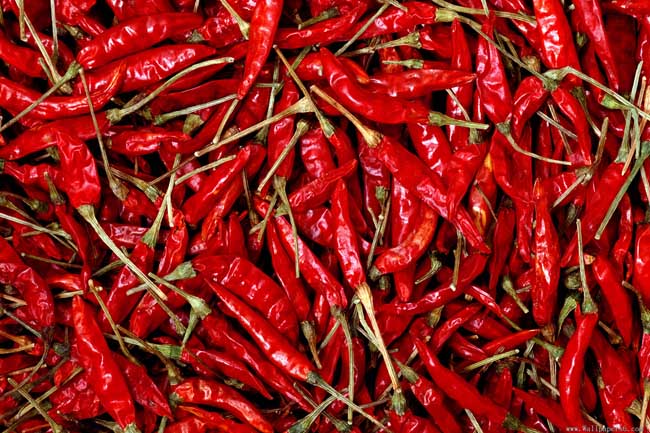
Chili pepper, also known as fanjiao and dajiao, is an annual herbaceous plant with ovate-lanceolate leaves and white flowers. The chili pepper originated in the tropical regions of South America and has been widely cultivated since its introduction to China. The fruit is green and turns red when ripe, generally has a spicy taste, is mainly used for food, and can also be used as medicine. Let's take a look at information related to the production areas of chili peppers!
Where are chili peppers produced?
The chili pepper originated in the tropical regions of Central and Latin America, with Mexico as the country of origin. At the end of the 15th century, after Columbus discovered the Americas, he brought the chili pepper back to Europe, and from there it spread to other parts of the world. It was introduced to China during the Ming Dynasty. Chen Haozi's "Hua Jing" of the Qing Dynasty contains records of fanjiao. Today it is widely cultivated throughout China and has become a popular vegetable. The chili pepper has a central axial placenta. The chili pepper is an annual or perennial herbaceous plant, with ovate-lanceolate leaves and white flowers. The fruit mostly resembles the tip of a writing brush, and there are also lantern-shaped and heart-shaped types. The fruit is green when unripe and turns red or yellow when mature. It generally has a spicy taste and is used for food and medicine.
The major chili pepper-producing countries in the world are India, China, Mexico, Brazil, and Spain. China's chili pepper production areas are mainly distributed in Henan, **, Gansu, Inner Mongolia, Shandong, Hebei, Yunnan, and other places.
1. Henan mainly grows chaotianjiao (facing-heaven chili).
2. ** mainly grows large chili peppers. Large chili peppers include Yidu Red, Wangdu Red, xianjiao (line chili), Jinta, and Meiguihong (rose red). Among these, ** mainly grows Yidu Red (commonly known as banjiao), Jinta, and xianjiao.
3. Gansu mainly grows Meiguihong among the large chili peppers.
4. Inner Mongolia mainly grows Jinta Red and Yidu Red among the large chili peppers.
5. Shandong mainly grows Yidu Red and Wangdu Red among the large chili peppers.
6. Hebei mainly grows chaotianjiao.
7. Yunnan mainly grows chaotianjiao. Shanxi, Sichuan, and Guizhou also grow chaotianjiao.
8. Hunan ranks first in eating chili peppers, but grows relatively few. Apart from Baoqing, there are no concentrated production areas.
China's four major chili pepper production areas in history
In China's chili pepper history, there were four major production areas, commonly known as "one Ze and three Du." "One Ze" refers to Jize County in Hebei Province, and "three Du" refers to Chengdu in Sichuan Province, Yidu in Shandong Province (now renamed Qingzhou), and Wangdu in Hebei Province.
Among them, Chengdu pepper is mainly chaotianjiao with high spiciness, Yidu pepper is mainly Yidu Red with low spiciness, and Jize pepper is the medium-spicy "yangjiaojiao" (ram's horn chili). Jize chili pepper is bright red, smooth, slender, with a hook at the tip, shaped like a ram's horn, hence the name "yangjiaojiao." It has the characteristics of thin skin, thick flesh, abundant oil, fragrant seeds, and moderate pungency. During the Ming and Qing dynasties, it was once cited as a "tribute."