A detailed guide to Hericium erinaceus cultivation techniques, teaching you the growing method step by step
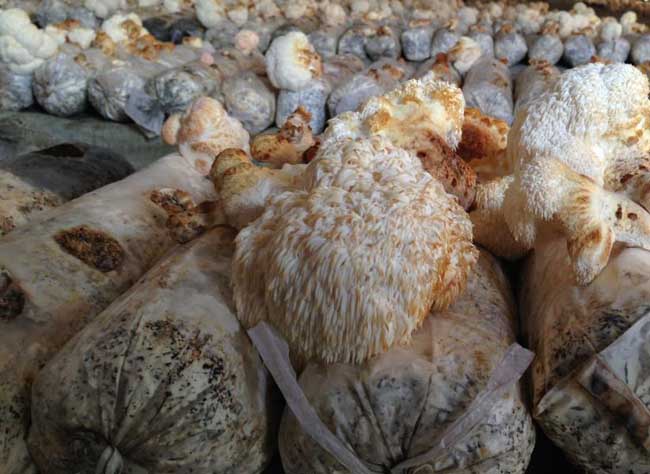
Artificial cultivation of Hericium erinaceus has reached varying scales in different regions. The prominent problem is that although the yield can meet standards, the proportion of high-grade products is low, which reduces commercial value and affects the economic returns of growers. To produce high-grade Hericium erinaceus, attention should be paid to the following aspects. Let us now take a look at the cultivation techniques for Hericium erinaceus!
Planting time schedule
Hericium erinaceus is a fungus that spawn-runs at medium temperature and forms fruiting bodies at low temperature. The mycelial growth temperature is 10°C-33°C, with the optimum at 25°C-28°C. The fruiting body grows at 12°C-24°C, with the optimum at 16°C-20°C. Above 25°C growth is slow, and below 12°C the fruiting body turns red. According to its biological characteristics and following the natural air temperature, the best production season should be inoculation at the Autumn Equinox (late September), producing 1-2 flushes of mushrooms by Minor Snow (late November), and another flush the following spring.
In mountainous areas, early-spring inoculation in January can also be adopted, with heated spawn-running culture, and mushrooms growing in March-April.
Culture medium formulation
The cultivation raw materials should meet the substrate conditions for pollution-free edible fungi, requiring freshness, no mold or deterioration, and no substances containing toxic or harmful mycelium. The additive content should not exceed 5%. Reasonable formulas are:
1. 4% miscellaneous wood sawdust, 40% cottonseed hull, 18% wheat bran, 1% sucrose, 1% gypsum powder.
2. 82% cottonseed hull, 15% wheat bran, 2% gypsum powder, 1% phosphate fertilizer.
3. 38% cottonseed hull, 20% miscellaneous wood sawdust, 20% spent logs from white fungus cultivation, 16% wheat bran, 3% cornmeal, 1% phosphate fertilizer, 2% gypsum powder. The formula's moisture content is about 60%, and pH 6 before sterilization is suitable.
The cultivation bag specifications are 12.3 cm × 52 cm for spring cultivation and 13.5 cm × 56 cm for autumn cultivation. Bagging, sterilization and cooling follow conventional practice.
Cultivation of high-quality mother culture
Hericium erinaceus bags are usually punched with 3-4 inoculation holes. To prevent “disease entering through the mouth”, the “three requirements” must be strictly followed during inoculation:
1. The bag temperature should drop below 28°C before inoculation.
2. The spawn should be pretreated, that is, scraping off the aged mycelium on the surface and any tumor-like or coral-like fruiting bodies already formed.
3. Choose a sunny evening or early morning for inoculation, and carry out inoculation strictly according to aseptic procedures. After inoculation, from mycelial germination to culturing into a mycelial mass takes about 20-25 days, by which time the bag is fully colonized.
In management, the main thing is to regulate temperature well. For the first 4 days after inoculation, the indoor greenhouse temperature is best at 26°C-28°C, so that the mycelium can quickly colonize the substrate in the most suitable environment, establish itself and spread, gain dominance and reduce contamination by foreign fungi. Within 5-15 days, as the mycelium develops, the temperature inside the bag rises, with bag temperature 2°C higher than room temperature; at this time the room temperature should be adjusted to about 25°C. After 16 days, the mycelium gradually enters a period of vigorous metabolism, and it should be controlled at 20°C-23°C. Spring cultivation has lower air temperatures, so heated spawn-running can be adopted to promote normal mycelial growth and development. In autumn, take care to prevent high temperatures. During the spawn-running period, dry indoor culture is required, with relative air humidity below 70%, and attention should be paid to avoiding light.
Directional fruiting induction
Hericium erinaceus is an aerobic fungus, and the cultivation site requires fresh air; an outdoor mushroom shed is relatively ideal. After about 25 days of indoor spawn-running culture, the mycelium reaches physiological maturity and shifts from vegetative growth to reproductive growth. Hericium erinaceus often begins to form primordia and differentiate into fruiting bodies before the mycelium has fully colonized the bag. Therefore, observe carefully and promptly move the bags to a shady outdoor shed for arrangement, and scrape off the surface layer of the original spawn block to induce directional, uniform fruiting. There are currently 3 common arrangement methods:
1. Build 4-5 tiers of shelving for intensive three-dimensional cultivation.
2. Build 1 tier of shelving and place 2 bags. One bag lies flat on the ground with the hole opening facing up, and one bag lies flat on the shelf with the hole opening facing down.
3. Simulating open-field shiitake cultivation, lean the bags at an angle, or build ridges on both sides and lay single bags flat with the hole opening facing down.
Comparing the above 3 methods, the first has high space utilization and forms a three-dimensional setup, but has poor moisture retention and easily produces bald mushrooms and shrunken mushrooms. The latter two favor the formation of spines on the fruiting body and a whiter color. This is because the spines of Hericium erinaceus have a clear “geotropic” growth tendency, but in the rainy season, when the bed accumulates water and ventilation is poor, rotten mushrooms easily appear. During the fruiting period with bags leaned at an angle, do not easily turn or rearrange the bags, otherwise the spines will not grow in the proper direction and deformed mushrooms will result.
Cultivation environment control
To obtain high-grade Hericium erinaceus products, the following aspects of management must be strengthened during the mushroom-growing stage:
1. Regulate temperature: after the bags are moved to the field, the temperature should be lowered from the original spawn-running temperature to the optimum fruiting temperature of 16°C-20°C to induce budding. Under suitable temperature conditions, from small buds to developed mushrooms generally takes 10-12 days before harvest. When the air temperature exceeds 23°C, fruiting body development slows down, causing the stipe to proliferate continuously, and the mushroom body to spread into a cauliflower-like deformed mushroom, or a bald mushroom without spines. Above 25°C the mushroom body may also shrink. Therefore, during the fruiting stage, special attention must be paid to temperature control. If the specified temperature is exceeded, 4 measures can be taken: ① increase spray of atomized water in the space. ② irrigate the furrow to increase humidity. ③ thicken the shade covering of the shed. ④ stagger ventilation times, uncovering the film for ventilation in the morning and evening. At noon, open both ends of the covering film so that air flows smoothly. Create a suitable temperature to promote the smooth growth of young buds.
2. Strengthen ventilation: Hericium erinaceus is an aerobic fungus. If ventilation is poor, too much carbon dioxide accumulates, stimulating the stipe to branch continuously and inhibiting development of the central part, resulting in coral-like deformed mushrooms. Under such saturated humidity and still air, it is even more likely to become deformed fruiting bodies, or to suffer contamination by foreign fungi. For this reason, in outdoor bed cultivation, the film should be uncovered for ventilation for 30 minutes at 8 a.m. every day. When the fruiting bodies grow larger, ventilate morning and evening every day, appropriately extending the ventilation time. But never let the wind blow directly onto the fruiting bodies, to avoid shrinkage.
3. Control humidity: during the fruiting body growth and development period, water must be managed scientifically, spraying different amounts of water according to different conditions such as mushroom size, surface color and clear weather. Do not spray when the mushrooms are small; especially for bags placed with the hole opening facing down or bags placed on the ground, the ground moisture is sufficient, and generally no spraying is needed. If the climate is dry, shallow water can be stored in the furrow, letting the water evaporate onto the fruiting bodies. To check whether humidity is appropriate, observe the spines: if the spines are fresh white and strongly elastic, it indicates suitable humidity. If the mushroom body is withered and yellow, the spines are not obvious, and growth is slow, then humidity is insufficient, and water should be sprayed to increase humidity. Spraying must be combined with ventilation, so that the air is fresh and the fruiting bodies grow robustly. But strictly guard against blind excessive spraying, which causes the fruiting bodies to rot. The cultivation site must create a suitable relative air humidity of 85%-90%. Young mushrooms are sensitive to spatial humidity; if it is below 70%, differentiated fruiting bodies stop growing. Even if growth resumes after humidity is increased later, permanent marks remain on the surface of the mushroom body. If it is above 95%, combined with poor ventilation, it easily causes contamination by foreign fungi. To create suitable humidity, the following can be done:
① Irrigate the furrow to increase ground humidity.
② Point the nozzle upward and spray into the space.
③ Cover the bed tightly with plastic film to retain moisture.
④ For tiered cultivation during the young bud stage, cover the surface with wet gauze or newspaper to increase humidity.
4. Moderate light: during the mushroom-growing period, scattered light is needed, generally a light intensity of 300-600 lux. In the outdoor shade shed, follow “three parts sun and seven parts shade, with dappled sunlight able to shine in”, to meet the growth needs of the fruiting bodies.
Harvest management
From the appearance of mushroom buds to maturity of the fruiting body, under suitable environmental conditions, generally takes 10-12 days. Some can also mature early in 8-10 days. Signs of maturity: the mushroom body is white, the spines are rough, and it begins to discharge spores, with a thin layer of white powdery substance accumulating on the surface of the bag. According to the requirements of the Hericium erinaceus market, the maturity at harvest differs slightly. For Hericium erinaceus used for fresh-keeping dishes for the market or for salt-processing, it is best to harvest when the spines have not yet extended, or have formed but are no more than 0.5 cm long, and have not yet released large amounts of spores. At this time the color is pure white, the flavor is fresh and pure, with no bitterness or very slight bitterness. If it is for medicinal Hericium erinaceus, with dehydrated and dried products as the commodity, the fruiting body maturity can be extended somewhat, and harvesting when the spines are about 1 cm is better.
Hericium erinaceus can generally be harvested for 3 flushes, and some can also yield 4 flushes, but the first 1-2 flushes have high yield and high grade, generally accounting for 80% of the total yield. Regenerated mushroom cultivation is as follows: after the first flush is harvested, stop spraying water for 3 days. And uncover the film for ventilation for 12 hours, letting the surface of the mushroom roots after harvest shrink, to prevent mold. Then adjust the temperature to 23°C-25°C, so that the mycelial mass accumulates nutrients. After about 5 days primordia appear, and after about 10 days young buds form; at this time lower the temperature to 16°C-20°C and raise the air humidity to about 90%, and the fruiting bodies will grow healthily. The entire production cycle under normal air temperature conditions ends in 60-70 days, and the biological conversion rate is generally 90%-100%.