Where are the main producing areas of king oyster mushroom?
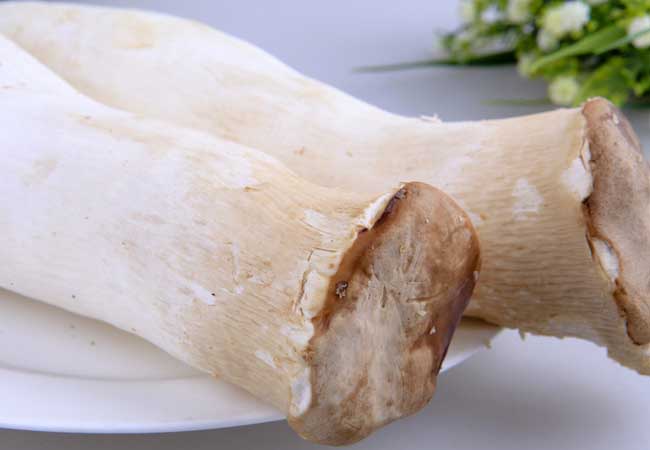
Where are the producing areas of king oyster mushroom? King oyster mushroom has long been loved by the public for its unique texture. Most people probably like eating it but may not truly understand it. Does everyone know where the producing areas of king oyster mushroom are? Now please follow the editor to learn some relevant information about the producing areas of king oyster mushroom.
Producing areas of king oyster mushroom
The natural distribution of king oyster mushroom producing areas includes Italy, Spain, France, Germany, Czechoslovakia, Hungary, the southern part of the former Soviet Union, Morocco, India, Pakistan, **, China and western Sichuan, China, in high mountain, grassland and desert zones.
King oyster mushroom is produced in many places in China, among which Shijiazhuang and Tang County in Baoding, Hebei, have relatively large production scale.
Producing area conditions for king oyster mushroom
1. Nutrition: King oyster mushroom is an edible fungus with a relatively strong ability to decompose lignin and cellulose. It needs relatively abundant nutrition, especially sufficient nitrogen sources, for vigorous mycelial growth and higher yield. For artificial cultivation, the main substrate grows very well on materials such as cottonseed hulls, sawdust, sugarcane bagasse and wheat straw. Adding auxiliary materials to substitute substrate cultivation, such as rice bran, wheat bran, corn flour, cottonseed cake powder, calcium carbonate and sugar, can promote mycelial growth and spread and increase the number of mushroom buds.
2. Moisture: King oyster mushroom is relatively drought-tolerant, but suitable water content is more conducive to growth and development and increases yield. During the mycelial growth stage, the suitable water content of the culture material is 60%—65%, but because water should not be sprayed on the fruiting bodies during cultivation, and the water needed by the fruiting bodies mainly comes from the culture material, the water content of the culture material can be appropriately increased to 65%—70% when preparing it. For relative air humidity, about 60% is sufficient during the mycelial growth stage, while after primordia appear, during the fruiting body differentiation stage, 90—95% is suitable, and during the fruiting body growth stage it can be appropriately lowered to 85—90%.
3. Temperature: Temperature is the key factor determining the success or failure of king oyster mushroom cultivation and whether yield is high or low. The temperature range for mycelial growth is 22—27°C, and the optimum temperature is about 25°C. Above 30°C, mycelial growth is poor. King oyster mushroom is a mushroom type with stable temperature requirements; too large a temperature difference is unfavorable for primordium formation. The temperature range for fruiting is 10—18°C, with the optimum temperature being 12—16°C. Below 8°C, primordia will not appear; above 20°C, deformed mushrooms are likely to appear, and diseases may also occur, causing dead and rotten mushrooms. The fruiting body growth temperature is 10—21°C, and the optimum temperature is 10—18°C. Temperature control varies with different strains, so when introducing strains, special attention should be paid to understanding the characteristics of the strain.
4. Air: The mycelial growth stage requires relatively little oxygen, and low concentrations of carbon dioxide even stimulate mycelial growth. As the mycelium grows, the CO2 concentration in the bag (bottle) gradually rises from 0.03% in normal air to more than 2%, and the mycelium can still grow very well. During the primordium stage, sufficient oxygen is needed, and the CO2 concentration should drop to about 0.5%. Otherwise, the primordia will not differentiate and will swell into spherical shapes. During the growth and development period of the fruiting bodies, fresh air is needed, and the CO2 concentration should preferably be less than 0.01%.
5. Light: The mycelial growth stage does not need light, and mycelial growth is accelerated in a dark environment. The primordium and fruiting body growth and development stages need a certain amount of scattered light, and the suitable light intensity is 500—1000Lx.
6. pH: The pH range for mycelial growth is 4—8, and the optimum pH is 6.5—7.5. The optimum pH for the fruiting stage is 5.5—6.5.