Detailed Explanation of Black Fungus Cultivation Techniques and Management Key Points
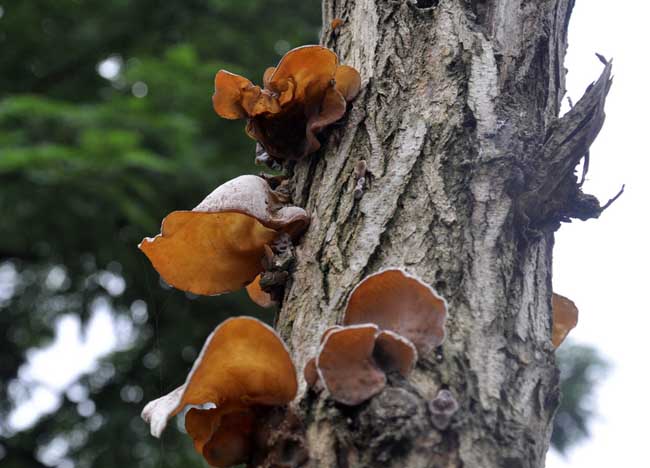
Black fungus (wood ear mushroom) is a high-quality, delicious gelatinous edible and medicinal fungus. China's black fungus production areas are divided into three regions: the Northeast region——Liaoning, Jilin, Heilongjiang. The Central China region——Shaanxi, Shanxi, Gansu, Sichuan, Henan, Hebei, Hubei. The Southern region——Yunnan, Guizhou, Guangxi, Guangdong, Hunan, Fujian, Taiwan, China, Jiangxi, Shanghai. Black fungus has a delicate texture, is crisp and smooth, and is rich in nutrients. Its protein content is far higher than that of ordinary vegetables and fruits. It also contains amino acids and multiple vitamins essential to humans. Among these, the vitamin B content is ten times that of rice, flour, and vegetables, and 3—6 times higher than that of meat. The iron content is 100 times higher than that of meat. The calcium content is 30—70 times that of meat, and the phosphorus content is also higher than that of eggs and meat, being 4—7 times that of tomatoes and potatoes.
Black fungus has effects such as nourishing and strengthening the body, clearing the lungs and boosting qi, calming and relieving pain, and cleansing the gastrointestinal tract. The polysaccharides it contains also have significant antitumor activity. It is a commonly used formula drug in traditional Chinese medicine for treating cold-dampness lumbar and leg pain, numbness and cramps of the hands and feet, hemorrhoid bleeding, dysentery, uterine bleeding, and postpartum weakness. It is a health food for workers in textiles, cement, mining, cleaning, and chemical plants. The nucleotide substances in black fungus can reduce cholesterol levels in the blood. Therefore, in 1980, American merchants suggested that China grind black fungus into powder or granules as a pharmaceutical product for entry into the US market. They were very optimistic about the sales prospects of black fungus as a medicine in the United States, because heart and vascular diseases had become the number one disease in the United States. China had long conducted research on the medicinal use of black fungus. In the Ming Dynasty, Li Shizhen wrote in the Compendium of Materia Medica: “……stops grain intake and treats hemorrhoids……, abnormal uterine bleeding, and bloody dysentery”.
Because black fungus has high nutritional and medicinal value, it sells well in both international and domestic markets, and the product is in short supply. China's black fungus output ranks first in the world, and it is a traditional major export specialty, enjoying a high reputation in the international market. Therefore, fully exploring and rationally utilizing the natural forest resources and crop straw in mountainous areas and vigorously developing black fungus production has important practical significance for revitalizing local economies and expanding foreign trade exports.
In the early period, China's black fungus production areas used old cultivation methods, some relying on the natural spread of black fungus spores; some relying on the mycelial spread of old ear wood; and some using crushed fungus for inoculation. In the 1950s, after arduous efforts, Chinese scientific researchers successfully cultivated pure strains and applied them to production, changing the long-standing semi-artificial cultivation state. This not only shortened the black fungus production cycle, but also achieved doubled yield growth, with quality also significantly improved.
Since the 1970s, research on substitute material cultivation of black fungus has been carried out domestically and has now been applied in production. Substitute material cultivation of black fungus uses sawdust, corn cobs, and rice straw as raw materials, and uses glass bottles, plastic bags, and other containers to cultivate black fungus. Substitute material cultivation has abundant resources, high yield, and a short cycle, and is a cultivation method with development prospects.
Biological Characteristics of Black Fungus
In plant classification, black fungus belongs to the phylum Fungi, class Basidiomycetes, subclass Heterobasidiomycetidae, order Tremellales, family Auriculariaceae, genus Auricularia.
In recent years, foreign countries have also attached great importance to black fungus production, but except for Japan, the black fungus produced abroad is not true black fungus; most of it is a closely related species of black fungus——hairy wood ear. Because the growth environment of hairy wood ear is the same as that of black fungus, it is also quite widely distributed in China, and its appearance is very similar to black fungus, so domestically people often mistake hairy wood ear for black fungus.
Hairy wood ear fruiting bodies are thick and fleshy, and cultivation is easier than black fungus, with yield much higher than black fungus, but quality is lower than black fungus. It tastes crisp and is not easy to chew thoroughly, and its quality is far inferior to black fungus. Its current market price is about 1/3 of black fungus.
Morphological Characteristics of Black Fungus
In nature, black fungus grows laterally on dead wood, and it consists of three parts: mycelium, fruiting body, and basidiospore.
1. Mycelium: Black fungus mycelium is composed of many branched, downy hyphae with cross walls. Monokaryotic hyphae can only be observed under a microscope. Mycelium is the nutritional organ by which black fungus decomposes and absorbs nutrients, growing on wood sticks, substitute materials, or slant culture media. If it grows on wood sticks, the wood becomes loose and white; if it grows on a slant, the mycelium appears gray-white and downy, adhering to the surface. If cultured in a petri dish on a flat medium, the mycelium grows outward from the inoculation block as the center, forming circular colonies with neat edges. When mycelium grows under strong light, it secretes brown pigment, turning the culture brown, and yellow or light brown appears on the surface of the mycelium. In addition, if the culture time is too long, the mycelium gradually ages and also shows the same characteristics as when cultured under strong light.
2. Fruiting body: Also called the basidiocarp, namely the edible portion, it is a gelatinous mass interwoven from many hyphae. When young, it is granular, and the young fruiting body is cup-shaped. During growth, it gradually extends into a flat, wavy shape, namely the ear piece. The ear piece has a dorsal and ventral side. The dorsal side has hairs, and the ventral side is smooth and has a hymenium. Under suitable environmental conditions, it produces basidiospores. The fruiting body is elastic when fresh and brittle and hard when dry, with a darker color.
3. Basidiospore: Usually a uninucleate haploid structure, kidney-shaped, about 9—14 micrometers long and 5—6 micrometers wide. When large numbers of basidiospores gather together, a layer of white powder can be seen.
Growth Process of Black Fungus
The growth and development of black fungus proceeds from basidiospore—mycelium—fruiting body—basidiospore, which is called a life cycle or a generation.
The sexual reproduction of black fungus is carried out through heterothallic mating, and hyphae of different mating types must combine to complete its life history. Black fungus is a bipolar heterothallic mating system, controlled by a single factor, with “plus” and “minus” different sexes. After basidiospores of different sexes germinate under suitable conditions, they produce monokaryotic hyphae, which are called primary hyphae.
Primary hyphae are initially multinucleate, then quickly develop septa, dividing the hyphae into multiple monokaryotic cells. When two monokaryotic hyphae, one carrying “plus” and the other “minus”, combine and undergo nuclear fusion, dikaryotic secondary hyphae are produced, also called dikaryotic hyphae.
Each cell of the secondary hyphae contains two nuclei of different nature. Through clamp connections, the dikaryotic hyphae ensure that both daughter cells produced by division contain the same two nuclei as the mother cell. It is sturdier than primary hyphae, grows faster, and has stronger vitality. Artificially cultivated spawn is secondary hyphae.
Secondary hyphae absorb large amounts of nutrients and water from the surrounding environment and multiply greatly. The hyphae intertwine alternately, and the dense hyphae growing in the substrate form the white down visible to the naked eye, which is the mycelium. After a certain period, the mycelium gradually transforms toward the reproductive fruiting body, and fruiting body primordia grow on the substrate. By absorbing large amounts of nutrients and water from the substrate, the gelatinous and elastic black fungus fruiting body gradually forms.
The mature fruiting body produces club-shaped basidia on its ventral side. From the sides of the four arranged cells, the basidia extend small branches, and basidiospores are produced on these small branches. The basidiospores are ejected from the fruiting body through special ejection organs on the fruiting body, drift with the wind, and upon finding a suitable substrate, begin a new generation of the life cycle. Under suitable conditions, the entire life cycle takes about 60—90 days to complete.
Growth Conditions of Black Fungus
The growth and development conditions of black fungus include nutrients, temperature, moisture, air, light, and suitable pH.
1. Nutrients
The nutrient source of wood ear depends entirely on the mycelium absorbing from the substrate. During growth, the mycelium continuously secretes various enzymes. Through the action of enzymes, complex substances in the culture material are decomposed into substances easily absorbed by wood ear hyphae. Wood ear is a saprophytic fungus, and its nutrient source depends on organic matter, namely decomposing and absorbing various ready-made carbohydrates, nitrogen-containing substances, and inorganic salts from the phloem and xylem of dead trees, thereby obtaining the energy needed for growth and development. For tree species with strong regeneration ability, when just cut, the tissues have not yet died, so the organic matter cannot be decomposed by black fungus hyphae, and black fungus hyphae cannot reproduce.
When using sawdust, cottonseed hulls, corn cobs, bean straw, rice straw, and other materials as culture material, rice bran or wheat bran is often added to increase nitrogen sources and vitamins, so as to facilitate the growth and reproduction of mycelium. The suitable carbon-to-nitrogen ratio for wood ear growth and development is 20:1.
2. Temperature
Different varieties have different humidity requirements. For example, “Hu Er No. 1” requires a slightly lower suitable temperature for mycelial growth, while “Hu Er No. 2” requires a higher one. The same variety also has different temperature requirements at different developmental stages, and strains from different regions also have different temperature requirements. Understanding and mastering the temperature requirements of black fungus at each stage is the basis for artificial cultivation management.
① Temperature requirements for black fungus spore germination: Black fungus spores germinate fastest at 22—23°C, and no spores are produced below 4°C or above 30°C.
② Temperature requirements for black fungus mycelial growth: Mycelial growth has strong adaptability to temperature. It can grow and reproduce at 5—35°C, with the optimum temperature being 20—28°C. At a low temperature of minus 40°C, the mycelium can still maintain vitality. However, it can hardly endure high temperatures above 36°C.
③ Temperature requirements for black fungus fruiting body development: The range for fruiting body occurrence is approximately 15—32°C, with the optimum temperature being 15—22°C. The temperature for fruiting body formation is related to the region; generally, southern varieties are about 5°C higher than northern ones. Within the growth temperature range of black fungus, a large day-night temperature difference makes the mycelium grow robustly, the fruiting bodies large, and the ear pieces thick. When the temperature is on the high side, although the mycelium grows quickly, its vitality is weak, the fruiting body color is lighter, and the quality is poorer.
3. Moisture
Black fungus has certain requirements for relative air humidity and moisture content in the substrate. For artificially prepared culture medium, the suitable moisture content is 60—65%. The mycelium of black fungus requires a wood moisture content of about 40% during growth. During the mycelial growth stage, the relative air humidity in the culture room should be controlled at 50—70%. During the fruiting body formation stage, it is relatively sensitive to relative air humidity, requiring over 90%; if below 70%, fruiting bodies are not easily formed. During fruiting body growth, large amounts of water need to be absorbed, so water should be sprayed several times a day. The mycelium has strong drought tolerance; in log cultivation, if it does not rain for a hundred days, the mycelium will not die. In artificial cultivation of black fungus, alternating dry and wet water management conforms to the growth and development requirements of black fungus.
4. Air
Black fungus is an aerobic saprophytic fungus, absorbing oxygen and releasing carbon dioxide during metabolism. In open-air cultivation, the air requirements of black fungus generally need not be considered, but in indoor cultivation and during mycelial culture, attention should be paid to ventilation and avoiding excessive moisture content in the culture medium that displaces air and causes poor growth.
5. Light
Black fungus mycelium needs to grow in a dark or dim light environment. However, under completely dark conditions, fruiting bodies cannot form. If light is insufficient, fruiting body development is abnormal. Under 400 candlepower, fruiting bodies can grow normally.
6. pH
The optimum pH range for mycelial growth is 5—6.5. Generally, when preparing sawdust culture medium, adding 1% calcium sulfate or calcium carbonate can automatically adjust the pH to slightly acidic.
Cultivation Techniques on Logs
The main method of log cultivation is to cut suitable broadleaf tree trunks and branches into appropriate log sections, inoculate black fungus spawn onto the log sections, and culture them in a suitable growth environment. The operating procedures are as follows:
1. Selection and Clearing of the Ear Field
The ear field is the site for artificial wood ear cultivation, and its conditions should be based on satisfying the living conditions of wood ear. Only by satisfying the temperature, moisture, and light conditions required for wood ear growth and development can a bumper harvest be obtained.
① Selection of the ear field: The ear field should be chosen in a warm, humid place with abundant ear tree resources. Its position should face south with its back to the north, and the altitude should preferably be 500—1000 m in a semi-high mountain area. A gentle slope with short grass, good air circulation, and close to a water source is suitable. Such a site is relatively warm, with much mist and cloud, high humidity, warm in winter and cool in summer, conducive to the growth and development of black fungus, and also labor-saving and convenient to manage. Places with surrounding mountains, ditch edges, or on hilltops and slopes are not suitable as ear fields. The former has insufficient sunlight and poor ventilation; the latter has excessive wind, which is unfavorable for moisture retention. There should be trees above the ear field for shade.
② Clearing of the ear field: After the ear field is selected, thorny vines and weeds should be cut away, while ground cover grass, short grass, and moss should be retained, which is beneficial both for ventilation and light transmission and for moisture retention in the ear field. It can also avoid soil contaminating the wood ear. If the canopy density is too great, some branches should be pruned to create reasonable light transmission conditions. Drainage ditches should be dug above and on both sides to prevent water accumulation in the ear field. After clearing the site, sprinkle some lime and insecticide to disinfect the ear field.
2. Preparation of Logs
(1) Selection of the ear field
The selection of ear trees includes tree species, tree age and diameter, and site conditions.
① Types of ear trees: There are many types of ear trees, but different tree species, or the same tree species growing in different environments, due to differences in texture and nutrients, also show great differences in ear yield. Ear trees generally chosen are those with moderate bark thickness, not easily peeling, well-developed sapwood, and strong compatibility with black fungus, so that they not only produce ears but also can achieve high yield. Commonly used species include Quercus acutissima, Quercus variabilis, Quercus glauca, Celtis sinensis, Liquidambar formosana, white poplar, Pterocarya stenoptera, elm, Tilia, alder, white birch, maple, black locust, mulberry, Hovenia acerba, Robinia pseudoacacia, Phellodendron amurense, and plane tree. Broadleaf trees containing resin, alcohol-ether bactericidal substances, such as those in the Lauraceae and Styracaceae, cannot be used to cultivate black fungus. Among tree materials suitable for cultivating black fungus, tree species with loose wood, good permeability, and easy acceptance and storage of moisture produce ears early, abundantly, and quickly after inoculation. In the same autumn, more fruiting bodies can grow and can be harvested several times. The second year is the peak production period, but by the third year there is basically no harvest. In contrast, tree species with hard wood produce less in the inoculation year, but have a longer wood ear production period.
② Tree age and diameter: For trees of Fagaceae such as Quercus variabilis and Quercus acutissima, the suitable felling age is 8—10 years, and a diameter at breast height of 10 cm is best. Production practice has proven that small-diameter wood with a diameter of 6—10 cm has the highest yield and good economic benefits. If the tree age is too young, although ears can be produced early, because the bark is thin and smooth, moisture retention and water absorption are poor, and nutrients in the wood are low, yield is low. Conversely, if the tree age is too old, the bark layer is thick and the heartwood is large, and yield is also low.
③ Site conditions: It is better to choose trees growing on sunny slopes and fertile mountainous soil, because trees growing on sunny slopes and fertile mountainous soil grow quickly, have loose wood, and contain more nutrients; conversely, trees growing on shady slopes and barren mountainous soil grow slowly, have harder wood, and insufficient nutrients.
2. Felling Trees
The best time for felling logs is between the Winter Solstice and the Beginning of Spring. During this period, trees enter a “hibernation” stage, the sap in the trees is in a stagnant state, nutrients are abundant, moisture content is low, the bark and wood are tightly combined and not easily peeled, and pests and diseases are few. When felling, in order to concentrate nutrients in the trunk, the treetop should as much as possible fall uphill. In order to accelerate evaporation of moisture in the trunk, after felling, branches and leaves should be retained for a period before pruning, generally 10 days to half a month. For large trees and tree species with high moisture content, the branch retention time should be longer; otherwise, shorter. When pruning branches, a few protruding stubs should be appropriately retained, but not too long. When pruning, thicker branches can still be used as ear wood.
After pruning, saw the trunk into 1—1.2 m log sections, then stack them in a “well” shape in a high, ventilated, sunny place to dry. When stacking, log sections of different thickness should be stacked separately. Gaps should be left between stacks to facilitate ventilation and sun-drying. During the sun-drying process, turn the stack once every 10—15 days, swapping the upper and lower, inner and outer log sections, to facilitate uniform drying. During sun-drying, the logs should not be exposed to direct sunlight or rain, so they should be covered. When both ends of the log sections change color and the sound when struck becomes crisp, inoculation and cultivation should be carried out. Beginners with insufficient experience may find it difficult to judge, so the weighing method can be used: first weigh the wet wood, and when every 100 jin of wet wood dries to only 70—80 jin, it is suitable for inoculation. If the logs are over-dried, after inoculation the spawn moisture will quickly be absorbed by the log sections, affecting the air permeability of the log sections and hindering inward extension of the mycelium; but if the log sections are too wet, mold is likely to occur.
Artificial Inoculation of Logs
Artificial inoculation is the process of transferring cultivated spawn onto log sections. It is an important step in artificial cultivation of black fungus and is also a feature of the new cultivation method. The inoculation procedure is as follows:
1. Inoculation Season
According to the temperature requirements for black fungus mycelial growth, inoculation can be carried out when the natural temperature stabilizes above 5°C. During this period, contaminating microorganisms are in an inactive state, while black fungus mycelium can still grow, which both reduces contamination and ensures a sufficient vegetative growth period. Generally, the inoculation season is best arranged during the “Awakening of Insects” period. Therefore, in old production areas there is a saying, “Fell trees after entering the nines, inoculate at Awakening of Insects.” In recent years, some units have advanced the inoculation time to February, with good results, and it is also more conducive to labor arrangement. Even if low temperatures occur, the mycelium will not freeze to death, and when the temperature rises, the mycelium continues to grow.
2. Inoculation Density
Inoculation density is generally controlled at a hole spacing of 10—12 cm, row spacing of 6 cm, hole diameter of 1.2 cm, and hole depth driven 1.5 cm into the xylem, arranged in a triangular pattern. In addition, hole spacing should also be denser for trees with thick diameter, hard wood, and high altitude, and sparser otherwise.
3. Inoculation Methods
Black fungus spawn is divided into sawdust spawn and wooden plug spawn. Sawdust spawn is easy to produce but troublesome to inoculate, while wooden plug spawn is troublesome to produce but easy to inoculate.
① Inoculation method for sawdust spawn: First use a 1.3 cm punch hammer, belt punch, or electric drill to make holes according to the required inoculation density and depth, then insert a small piece of sawdust spawn, filling to about eighty percent full, then cover the inoculation hole with a bark cover or wooden plug cover made with a 1.4 cm belt punch, and gently tap flat with a small hammer.
② Wooden plug spawn: Wooden plug spawn is prepared in advance by filling bottles with wooden plugs and sawdust culture medium in proportion to make spawn. When inoculating, there is no need to separately prepare wooden plugs or bark covers. When inoculating, first insert a small amount of sawdust spawn into the planting hole, then hammer in one wooden plug spawn.
4. Precautions
In order to ensure inoculation quality, the following should be noted during inoculation:
① Do not inoculate on rainy days when the surface of the ear wood is wet. If the ear wood is stacked in a rain-sheltered place and the bark is not wet, inoculation can be done there, while on sunny days inoculation should be done in a shaded place.
② The containers holding the spawn, inoculation tools, and hands must all be disinfected in advance, and the site must be clean and sanitary.
③ Inoculation should be done as a continuous process, with dedicated personnel for punching holes and dedicated personnel for inoculation. After punching a log, inoculate immediately; it must not be left for long, to avoid drying of the inoculation holes or contamination by foreign microorganisms.
④ Select excellent varieties suited to the local climate and high-quality spawn with white, sturdy mycelium, free of contamination, and not aged.
⑤ Bark covers used to seal holes should be made and used on the same day; if wooden plugs are used, they should be boiled in water before inoculation. A mixture of 80% paraffin, 15% rosin, and 5% lard can also be melted and mixed evenly and applied to the inoculation holes to seal them.
Mycelial Incubation Techniques for Black Fungus
After black fungus inoculation, in order to help it establish as quickly as possible and allow the mycelium to rapidly spread and grow in the ear wood, pile incubation should be adopted. The method is:
1. In the cultivation site, choose a sunny, wind-sheltered, dry place that is easy to water, clean it thoroughly, and disinfect the site well.
2. Lay down crossbeams or stones and bricks, and stack the inoculated ear wood by thickness class into a “#’ shape. The stack height should be about one meter, with certain gaps left between ear wood pieces for ventilation. In the early stage of piling, when the temperature is relatively low, the gaps can be smaller and the stack height can be higher. Later, as the temperature rises, gaps should be increased and stack height lowered during turning, and the top of the stack should be covered with plastic film or straw curtains to retain heat and moisture.
3. In order to make mycelial growth uniform, during the incubation period turn the pile once every 7—10 days, swapping the upper and lower, inner and outer ear wood. For the first turning, because the ear wood moisture content is relatively high, generally no watering is needed; for the second, water a small amount as appropriate. After that, water at each turning, and each piece of ear wood should be evenly moistened. If light rain occurs, the covering can be opened to let it rain on the wood, which is even more conducive to mycelial growth. During the incubation period, attention should be paid to regulating temperature, humidity, and air to meet mycelial growth conditions and improve the mycelial survival rate. After 20—30 days of pile incubation, sample checks should be made for mycelial survival rate. The method is to use a small knife to pry open the inoculation cover. If a white mycelial film has formed on the surface of the spawn in the inoculation hole and has grown into the surrounding wood, and the white mycelium has established, it indicates that incubation is normal; otherwise, re-inoculation should be carried out.
Spreading and Laying Out of Black Fungus Logs
After the inoculated ear wood has gone through 4—6 weeks of pile establishment, the mycelium begins to extend longitudinally and deeply, and in a very few inoculation holes small fruiting bodies may be seen. At this time, the pile should be spread out and laid in rows to create a good environment for further deep extension of the mycelium and to promote the development of mycelium into fruiting bodies.
The method of laying out is to first place a small wooden pole horizontally in the moist ear field, then place the thick end of the ear wood on the ground and rest the small end on the wooden pole, with a gap of 1—2 cun between ear wood pieces, so that the ear wood can receive ground moisture and promote ear bud growth; it also prevents the ear wood from being too wet against the ground and suffocating the mycelium and bark, and allows the ear wood to evenly receive sunlight, rain and dew, and fresh air.
After laying out, management is required, mainly regulating moisture. The mycelium spreads rapidly in the ear wood, and the humidity required at this time is greater than during the establishment period. In addition, as the temperature rises, water evaporates quickly, so watering is needed. At first, water once every 2—3 days, and later gradually increase the frequency and amount according to weather conditions. During the laying-out period, the logs need to be turned, that is, every 7—10 days swap the end originally resting on the wooden pole with the end placed on the ground; and turn over the side facing the ground with the side facing upward, so that the ear wood receives sunlight and absorbs water evenly.
Racking Management of Black Fungus
About one month after laying out, the ear wood has entered the “fruiting” and harvesting stage. When about half of the inoculation holes on the ear wood have produced ear buds, racking should begin. The method is to use one wooden pole as a crossbeam, with supports at both ends raising the crossbeam 30—50 cm high. In dry ear fields, it should be racked lower; otherwise, higher. Then lean the ear wood obliquely against the crossbeam in alternating directions on both sides, forming a ”“ shaped ear rack. For convenience of calculation and management, generally 50 ear wood pieces are placed per rack.
After racking, the fruiting bodies enter the stage of rapid growth and maturation, and moisture management is most important. The relative air humidity in the ear field should be about 85—95%, requiring water spraying management. The time, frequency, and amount of water spraying should be flexibly controlled according to climatic conditions. Spray more on sunny days, less on cloudy days, and not on rainy days; spray more on small ear wood and less on large ear wood; spray more on smooth bark and less on rough bark; spray more in sunny and dry places and less in shady and damp places. The best times for spraying are morning and evening, 1—2 times per day. Do not spray water at noon during high temperatures. During the growth and development of black fungus, if there is good weather with “three sunny days and two rainy days,” it is extremely favorable for mycelial growth and fruiting body development. After each harvest, water spraying should be stopped for 3—5 days to reduce the moisture content of the ear wood, increase aeration, allow the mycelium to recover, and accumulate nutrients. Then spray water again to promote the emergence of the next flush of ear buds.
Other Cultivation Methods
Because specific conditions differ from place to place, different cultivation methods may be adopted. Two high-yield cultivation methods are introduced here.
1. Pit Cultivation Method
Pit cultivation is further divided into deep pits and shallow pits. Deep pits require more labor to dig but are extremely convenient to manage and give very high yields; shallow pits are easy to dig, troublesome to manage, and give average yields.
① Deep pit cultivation: Dig a pit one meter wide and one meter deep, with length depending on terrain and the number of ear wood pieces. Pile the excavated soil on the pit rim and pack it firm to increase the depth of the pit. Above the pit, use bamboo strips or wooden sticks to build an arched or “” shaped frame, cover it with branches, or plant green climbing plants in advance, such as bitter gourd, green beans, and tomatoes. Dig a narrow drainage ditch on each side of the pit bottom, with a management walkway in the middle. Between the drainage ditches and the walkway, place thin stone blocks or bricks to support the ear wood, or lay a layer of coarse sand to support the ear wood. On both walls of the pit, 80 cm away from the support stones, place one crossbeam on each side, with each end supported by an 80 cm long short wooden post. Rest one end of the ear wood on the crossbeam and the other end on the support stones so that the ear wood is placed obliquely on both walls of the pit. Deep pit cultivation is less affected by adverse external climate, humidity is easier to maintain, and watering and harvesting are very convenient. When the temperature drops in late autumn, the shade material on the shade frame can be removed and plastic film added for heat-preservation cultivation to extend the harvest period. Deep pit cultivation is currently a relatively high-yield cultivation method.
② Shallow pit cultivation method: Dig a shallow pit one meter wide, 33 cm deep, and unlimited in length. Place one sleeper on each side of the pit bottom, and lay the ear wood vertically and flat on the sleepers. After filling one layer, more sleepers can be placed to arrange a second layer. Then build an arched frame and cover it with plastic film or branches according to the climate. During management, because there is no management walkway inside the pit and the space between the top cover and the pit bottom is too low for direct entry, turning logs and harvesting require first removing the covering, and after management and harvesting, covering it again. Therefore, it is much more troublesome to manage than deep pit cultivation, and the yield is also lower than that of deep pit cultivation.
2. Plastic Shed Cultivation
Using plastic sheds to cultivate black fungus makes it easy to control temperature, humidity, and light conditions, and can prevent low temperatures, waterlogging, and drought. Compared with open-air cultivation, it extends the growth time of black fungus and raises the per-unit yield level.
The plastic shed should be built on sloping land or flat grassland close to a water source, sheltered from wind and facing the sun, with moist soil. The ground inside the shed should be paved with sand and gravel, and drainage ditches should be opened. The shed frame can use a bamboo and wood structure or be built with local materials adapted to local conditions. The shed body is arch-shaped, generally 2.2—2.4 m at the middle, with doors and ventilation windows left on both sides.
During management, attention should be paid to regulating temperature and humidity and maintaining good ventilation and light conditions. On sunny days with strong light and high temperature, shade material should be added and cold water sprayed to lower the temperature; in midsummer at high temperatures, the plastic film around the shed should be rolled up onto the top frame, and put back down when the temperature is low.
Overwintering Management of Black Fungus
In log cultivation of black fungus, harvesting can be done in the same year and can continue for three years. The first year's yield is not much, the second year's yield is the highest, and the third year's yield declines. Each year when winter arrives, as the temperature drops, black fungus stops growing and enters the overwintering dormant period. There are several ways to manage the overwintering period:
1. In the southern provinces, winter temperatures are relatively high, so the ear wood can be left on the ear racks to overwinter naturally. During relatively dry periods, spray a little water appropriately to retain moisture.
2. Overwinter by laying out: first place a sleeper on the ground, then lay the ear wood horizontally on it one by one, with one end on the ground and one end resting on the sleeper. This can both maintain moisture and prevent mildew and termite damage.
3. Gather the ear wood and pile it in a wind-sheltered, sunny, dry site, with stack height preferably not exceeding one meter. When too dry, spray a little water appropriately to retain moisture.
No matter which overwintering method is adopted, the bark should be strictly protected. In the following spring, when fruiting bodies are produced in large numbers, racking management should begin.
Substitute Material Cultivation of Black Fungus
So-called “substitute material cultivation” uses sawdust, sugarcane bagasse, crop straw, and the skins and shells of fruits and seeds as raw materials for cultivating wood ear. It can not only turn waste into treasure, but also has the advantages of a shorter cycle and higher yield than log cultivation, and is more suitable for factory-scale cultivation and household courtyard cultivation.
Any raw material containing a certain amount of carbon source, nitrogen source, vitamins, and inorganic salts can be used to cultivate wood ear, and missing components in the raw materials can also be supplemented by adding other substances. Each place can use local materials according to local resource conditions. Several formulas are introduced here for reference:
① Sawdust (broadleaf tree) 78%, wheat bran (or rice bran) 20%, gypsum powder 1%, sugar 1%.
② Mixed sawdust 49%, corn cobs (crushed) 49%, gypsum powder 1%, sugar 1%.
③ Corn cob powder 79%, wheat bran 20%, gypsum powder 1%.
④ Corn cob powder 49%, rice straw powder 49%, sugar 1%, gypsum powder 1%.
⑤ Rice straw powder 49%, mixed sawdust 49%, sugar 1%, gypsum powder 1%.
⑥ Rice straw powder 78%, wheat bran (or rice bran) 20%, sugar 1%, gypsum powder 1%.
⑦ Cottonseed hulls 90%, wheat bran (or rice bran) 8%, sugar 1%, gypsum powder 1%.
⑧ Sugarcane bagasse 84%, wheat bran (or rice bran) 15%, gypsum 1%.
⑨ Bean straw powder 88%, wheat bran (or rice bran) 10%, sugar 1%,
Each place can also prepare various formulas according to resource conditions. Because the nutritional composition of the main ingredients in the formula differs, yield also varies. But the general principle is: satisfy the nutritional requirements of wood ear as much as possible to increase yield, and use local resource conditions as the main raw materials to reduce costs and obtain relatively high economic benefits.
Substitute Material Cultivation Methods for Black Fungus
There are many methods for substitute material cultivation of black fungus, mainly fungus brick cultivation, glass bottle cultivation, and plastic bag cultivation. Among them, bag cultivation has the highest yield.
1. Fungus Brick Cultivation Method
First dissolve sugar in water, weigh and mix the other materials evenly, then add the sugar water and mix evenly. The moisture content is 60—65%. Put the culture material into spawn bottles, shaking while filling so that the tightness of the culture material in the upper and lower parts of the bottle is consistent. Fill to the bottle neck, press the surface flat, wash the bottle wall, make a hole in the middle, plug the bottle mouth with a cotton plug, and tie on kraft paper. Sterilize in a steamer; after the temperature in the flat-pressure steamer reaches 100°C, maintain for 8 hours, then remove and cool. Inoculate black fungus spawn in a sterile room. Then place in a culture room and culture at 20—25°C and 50—70% humidity. Remove contaminated bottles at any time. After the mycelium has grown to the bottom of the bottle, the bottles can be dug out and pressed into bricks.
Generally, a movable wooden mold of 24x17x6CM is used. Dig the cultured mycelium out of the bottles, pour it into the mold, and press it tightly into blocks. Wrap well with plastic film and keep at 20—25°C for the mycelium to heal into blocks, which takes about 7—10 days.
When ear buds appear on the surface of the fungus block, move the fungus block into the cultivation room. The cultivation room requires ventilation, light transmission, and good moisture retention. A temperature of about 20°C is suitable. If using natural air temperature for cultivation, a suitable cultivation season must be selected. Remove the plastic film from the fungus brick and stand it upright on the culture shelf, spray water frequently, and keep the relative air humidity above 85%. After 10—15 days, some fruiting bodies have matured and harvesting can begin.
Mushroom bricks can be cultivated outdoors under tree shade, in grass, and inside artificial shade sheds.
2. Bottle cultivation method
The steps for cultivating wood ear mushroom (black fungus) using old cans or 500 ml wide-mouth bottles are: after mixing ingredients and filling the bottles, seal the inner layer of the bottle mouth with plastic film. Punch a 0.4 cm hole in the center of the film, and cover the hole with a little cotton. Then seal the outer layer with kraft paper and tie it tightly. After sterilization and cooling, inoculate by conventional methods. Place the bottles at 20—25°C and culture for about 30 days until the mycelium fills the bottle.
After the mycelium fills the bottle, conditions for fruiting body growth must be created. If allowed to fruit naturally, a large number of primordia often appear on the bottle wall or densely cluster in the center of the bottle, making it difficult to open the bottle and affecting yield. Generally, the following methods can be used to promote primordium formation.
① Light control and moisture retention method: Stand the bottles with fully grown mycelium upright, shade the surroundings with wooden boards, open the upper paper cover, remove the cotton, and cover the plastic cap with a piece of gauze. Spray water daily to keep the gauze moist. Adjust the temperature to 20—24°C, maintain a day-night temperature difference, and primordia will form in the center of the bottle in about 10 days.
② Lime stimulation method: After the mycelium fully covers the bottle, remove all covers, air-dry naturally for 6 hours, use a small knife to scrape out 3 small pieces of the surface mycelial membrane in a "△" shape, each about 1 cm in diameter, immediately apply a layer of lime with a brush, lay the bottle horizontally on indoor shelves or in outdoor cultivation pools for moisture-retention culture for about 7 days, and primordia will form at the lime-coated spots.
③ Early exposure method: When the mycelium has grown to cover 80% of the bottle in a dark room, expose the bottle mouth to sufficient scattered light to induce early fruiting. To prevent the primordia from being too large and too dense, use a brush to draw #-shaped black frame lines on the film, with a line width of 1—1.5 cm; no primordia will form at the black frame lines.
Place the bottles with formed primordia horizontally on cultivation shelves or in outdoor cultivation pools to grow fruiting bodies. Horizontal placement can prevent water accumulation inside the bottle from causing rot. Control room temperature at around 20°C, maintain a large day-night temperature difference, and keep humidity at 80—90%. After a large number of primordia appear, increase water spraying, ventilation, and scattered light.
3. Bag cultivation method
Using plastic bags as containers to produce wood ear mushroom, the production process is: mycelium growth 40—45 days -- hole opening cultivation 7—10 days -- primordium formation 15—20 days -- mature harvest 10 days -- second primordium formation 15—20 days -- harvest.
Select the substrate according to local conditions, add water and mix evenly according to the above substrate formula. The moisture content of the substrate is 55—60%. Use 17×33 cm or 15×30 cm polypropylene plastic bags. Before filling the bag, fold the two bottom corners inward, fill with substrate to 4/5 of the bag height, compact it, and level the surface. Wipe off the substrate adhering to the bag wall with gauze, add a plastic neck ring to the bag mouth, fold the bag mouth downward, tie it tightly with a rubber band or string, then insert a cotton plug and cover with kraft paper, and sterilize in a steamer. After cooling, aseptically introduce 5—10 g of mother culture; the spawn should be dispersed on the surface of the substrate to accelerate mycelial growth.
Arrange the inoculated bags neatly on cultivation shelves. If the shelf boards are rough, first lay a layer of paper to avoid puncturing the bag bottom. During cultivation, to allow healthy growth of the wood ear mycelium while controlling irregular appearance of fruiting bodies, the light in the culture room should be kept dark. Room temperature should be controlled at 20—25°C. Ventilate for 10—20 minutes daily, and keep relative air humidity at 50—70%; if it exceeds 70%, the cotton plug is prone to mold. During cultivation, do not move the bags as much as possible; when movement is necessary, handle them gently to avoid bag damage and contamination by foreign fungi. After 40—45 days of cultivation, when the mycelium reaches the bottom of the bag, move them to the cultivation room for cultivation management.
For indoor shelf cultivation, use the hanging bag method: on each shelf layer, stretch No. 10 iron wire every 20 cm for hanging bags. The operation method is: remove the cotton plug and neck ring from the bag mouth, tie the bag mouth with string, and gently cut three rectangular openings in the bag wall with a sharp knife. When hanging, use No. 14 iron wire to make "S"-shaped hooks, and hang the bags onto the iron wires of the cultivation shelf. Manage according to the temperature, humidity, and air requirements of the fruiting body growth stage.
In seasons with suitable natural temperatures, outdoor cultivation can also be carried out under tree shade or in artificial shade sheds. The hanging bag method is still preferred.
Harvesting and processing of wood ear mushroom
Mature fruiting bodies should be picked in time. The criteria for maturity are: the color changes from dark to light, the fruiting body spreads and softens, the flesh becomes thick, the base shrinks, and white spore powder appears on the ventral surface of the fruiting body. For log cultivation, it takes about 6—7 days from primordium occurrence to maturity; for bag cultivation, generally two weeks. However, because the positions of cultivation bags differ, maturation times also differ, so harvesting must be done in batches. For outdoor cultivation, it is best to harvest after rain clears or on sunny mornings; if mature during rainy weather, harvest urgently to avoid losses as much as possible. On cloudy days without rain, harvesting can be done all day. Indoor cultivation is not limited by weather. When picking, grasp the whole wood ear mushroom with your hand and pull it down gently, or cut it off along the wall with a small knife. Never leave the base behind, as it may rot and mold, causing root rot and fruiting body flow, breeding foreign fungi, and affecting the next batch of fruiting. The general requirements are: frequent picking, careful sorting, and preventing fruiting body flow. For log cultivation, spring and autumn mushrooms should be picked large and left small; for summer mushrooms, pick both large and small together.
After harvesting, wash the wood ear mushroom with clean water to remove sand and impurities, then sun-dry under strong sunlight; if cloudy and rainy, dry it promptly. During drying or sun-drying, spread it in a single layer without overlapping to avoid sticking. Do not turn it before it is dry, to prevent the fruiting bodies from curling into fist-like ears and affecting product quality.
Dried wood ear mushroom should be sealed in non-toxic plastic bags to prevent moisture absorption and deterioration. Packaging bags that have contained pesticides, chemical fertilizers, chemicals, or other harmful substances must not be used to package wood ear mushroom.
According to the grading standards for wood ear mushroom proposed by the Ministry of Commerce, it is divided into three grades, with quality standards as follows:
Grade 1: Fruiting bodies complete, cannot pass through a sieve with a diameter of 2 cm. The upper surface is dark brown with a glossy appearance, and the back is dark gray. No fist-like ears, flowing ears, insect-damaged ears, or moldy ears. Moisture content not exceeding 14%, bulk density 1:15 or above. Fruiting body thickness 1 mm or above. Ash and soil impurities not exceeding 0.3%, crude protein not less than 7%, total sugar 22%, crude fiber 3—6%, ash 3—6%, fat not less than 0.4%.
Grade 2: Fruiting bodies basically complete, cannot pass through a sieve with a diameter of 1 cm. The upper surface is dark brown, and the back is dark gray. No fist-like ears, flowing ears, insect-damaged ears, or moldy ears. Moisture content not exceeding 14%, bulk density 1:14 or above. Fruiting body thickness 0.7 mm or above. Ash and soil impurities not exceeding 0.5%. Chemical indicators same as Grade 1.
Grade 3: Fruiting bodies small or broken into pieces, cannot pass through a sieve with a diameter of 0.4 cm. Fruiting bodies mostly dark brown to light brown. Fist-like ears not exceeding 1%, flowing ears not exceeding 0.5%. No insect-damaged ears or moldy ears. Moisture content not exceeding 14%, bulk density 1:12 or above. Ash and soil impurities not exceeding 1%. Chemical indicators same as Grades 1 and 2.
Pest and disease control of wood ear mushroom
During the cultivation of wood ear mushroom, foreign fungi and insect pests often occur, causing losses in production. Especially under extensive management and high temperature and high humidity, pests and diseases often occur severely, sometimes resulting in no harvest. Common wood ear mushroom pests include fish worms, shell worms, rice weevils, slugs, small millipedes, springtails, and bagworms; common foreign fungi harming wood ear mushroom include carbon fungus, Panus, turkey tail, Trichoderma, Penicillium, Schizophyllum, and cinnabar fungus.
Prevention should be the main approach for controlling wood ear mushroom pests and diseases, with integrated control methods, so as to improve the resistance of wood ear mushroom itself, reduce conditions for pest and disease breeding, and apply chemical control. The main measures are as follows:
1. Improve the resistance of wood ear mushroom itself to pests and diseases
① Select and breed high-quality, high-yield, and stress-resistant spawn.
② Create suitable temperature, humidity, and nutritional conditions for wood ear mushroom growth, so that the wood ear mushroom itself has a strong ability to compete with foreign fungi.
2. Reduce conditions for pest and disease growth
① Clean the mushroom yard well, and properly disinfect the mushroom yard and cultivation rooms.
② For highly infectious contaminated logs, bags, bottles, and bricks, isolate and burn them.
③ Chickens can be released into the mushroom yard to peck at pests. The chickens must only eat pests and not damage the wood ear mushroom.
3. Chemical control
① After harvesting all fruiting bodies, spray with 600—800 times diluted dichlorvos solution to kill various pests.
② Use 5% salt water or 5% alkaline water to control slugs.
③ Use 2% wettable dicofol at 1000 times dilution to soak logs or spray to control mites.
④ Spray with 1% lime water or 5% salt water to control nematodes.
⑤ Apply 2% quicklime to areas harmed by foreign fungi to inhibit their spread.