What are the common types of edible fungi? Let us introduce you to the main varieties
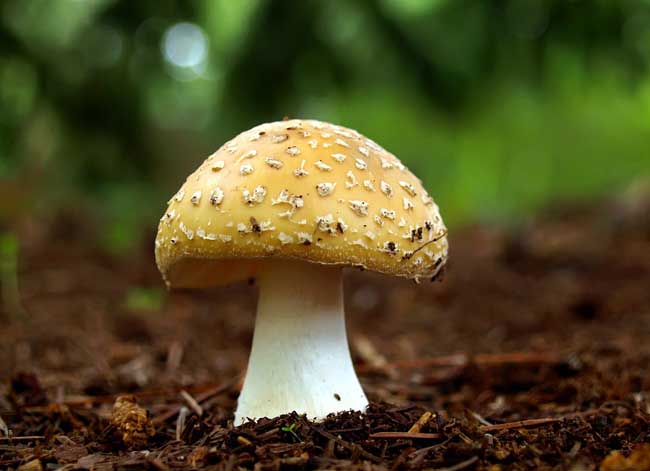
What types of edible fungi are there? Can you clearly identify them from their pictures? When people talk about edible fungi, many friends probably think of shiitake mushrooms, wood ear fungus, silver ear fungus, and lion's mane mushroom. Indeed, these edible fungi are the ones we come into contact with and are familiar with most often. But there are so many types of edible fungi - how many of the others do you know about?
There are a great many types of edible fungi. The common ones include shiitake mushroom, wood ear fungus, straw mushroom, oyster mushroom, pearl oyster mushroom, enoki mushroom, king oyster mushroom, tea tree mushroom, silver ear fungus, lion's mane mushroom, porcini, red mushroom, bamboo fungus, button mushroom, matsutake (songrong), reishi, Cordyceps sinensis, and so on. The less commonly seen types of edible fungi include: morel, saddle fungus, truffle, and so on.
Shiitake mushroom
Shiitake mushroom, also known as flower mushroom, lion's mane mushroom, xiangxun, xiangxin, xiangjun, winter mushroom, and xianggu, is the fruiting body of the plant xiangxun of the Pleurotaceae family. Shiitake is the second largest edible fungus in the world and is also one of China's specialties. Among the people it has long been known as the “treasure of the mountains.” It is a fungus that grows on wood. It tastes delicious, has a refreshing aroma, and is rich in nutrients. Shiitake is rich in B vitamins, iron, potassium, and provitamin D (which converts to vitamin D after sun exposure); it is sweet in taste and neutral in nature. It is chiefly used to treat loss of appetite, lack of energy, and fatigue.
Shiitake mushroom has long been known as the "king of mountain treasures" and is a high-protein, low-fat nutritional health food. Physicians of past Chinese dynasties all made famous discussions about shiitake. As modern medicine and nutrition science continue to conduct in-depth research, the medicinal value of shiitake is also continually being discovered. Shiitake has a very high content of ergosterol, which is effective in preventing and treating rickets; shiitake polysaccharide (β~1,3 glucan) can enhance cellular immunity, thereby inhibiting the growth of cancer cells; shiitake contains more than 40 enzymes from six major enzyme classes, which can correct enzyme deficiencies in the human body; the fatty acids contained in the fat of shiitake are beneficial for lowering blood lipids in humans.
Wood ear fungus
Wood ear fungus mainly grows in China and Japan. In China, most of it is Northeast wood ear and Qinling wood ear. Among them, the black wood ear of Tongjiang, Sichuan is the finest, and since ancient times it has been praised as a sacred product and was presented to the imperial palace many times; in 2005 it received a personal inspection and study visit by Premier Wen Jiabao. Wood ear can be both wild and artificially cultivated. The fruiting body is ear-shaped, leaf-shaped, or cup-shaped, thin, with wavy edges, 3-10 cm wide, about 2 mm thick, and attaches to the substrate by a short lateral stalk or a narrow, slender attachment base. Its color is blackish brown, its texture is soft and gelatinous, thin and elastic, semi-transparent when moist, and when dry it shrinks and becomes brittle and horny, resembling leather. It tastes delicious, can be prepared as a vegetarian or non-vegetarian dish, and is rich in nutrients.
Wood ear fungus is sweet in taste and neutral in nature, and has many medicinal effects. It can boost qi and strengthen the body, has blood-activating effects, and can prevent and treat iron-deficiency anemia and so on; it can nourish the blood and preserve youthfulness, making the skin rosy and the complexion radiant, can clear the stomach and intestines and lubricate the intestinal tract, and at the same time is also somewhat helpful for patients with high blood pressure.
Straw mushroom
The straw mushroom originated in Nanhua Temple in Shaoguan, Guangdong. China began artificial cultivation 300 years ago, and in about the 1930s of this century it was introduced to countries around the world by overseas Chinese. It is an important tropical and subtropical mushroom and is the third largest cultivated edible fungus in the world. China's straw mushroom output ranks first in the world, and it is mainly distributed in South China. Straw mushroom is rich in nutrients and delicious in taste. Every 100 g of fresh mushroom contains 207.7 mg of vitamin C, 2.6 g of sugar, 2.68 g of crude protein, 2.24 g of fat, and 0.91 g of ash. Straw mushroom protein contains 18 kinds of amino acids, of which essential amino acids account for 40.47-44.47%. In addition, it also contains various mineral elements such as phosphorus, potassium, and calcium.
The straw mushroom gets its name because it often grows in moist, rotting rice straw, and it is mostly produced in Guangdong and Guangxi, Fujian, Jiangxi, and Taiwan, China. It is plump, thick-fleshed, short-stalked, smooth and refreshing, and extremely delicious, hence it is known as the “orchid mushroom” and the “delicious volva mushroom.”
Red mushroom
The red mushroom has a unique flavor, fragrant and refreshing. Its taste is incomparably fresh and sweet, surpassing that of any other mushroom; it also contains various components such as amino acids essential to humans. It has effects in treating tumors, especially lung tumors, soreness and weakness of the waist and legs, numbness of the hands and feet, discomfort of the muscles and bones, convulsions of the limbs, and in enriching the blood, nourishing yin, cooling and detoxifying, and treating diseases such as anemia, edema, malnutrition, and excessive bleeding in postpartum women. It also has effects such as increasing the body's immunity and resisting cancer. Regular consumption can make the skin delicate and smooth, keep one full of energy, and prolong life.
During the Ming and Qing dynasties, before every Mid-Autumn Festival, the local authorities would send people to escort a batch of red mushrooms to the capital as tribute, and thus it became famous far and wide.
King oyster mushroom
King oyster mushroom, also known as Pleurotus eryngii, is a rare new variety of edible fungus successfully developed and cultivated in recent years that combines food, medicinal, and dietary therapy uses. There are quite a lot of king oyster mushroom products on the market, such as the common Baishanzu mushroom side dish——king oyster mushroom, king oyster mushroom extract, ready-to-eat king oyster mushroom small packages, and individually packaged small packs of king oyster mushroom, and so on.
King oyster mushroom is rich in nutrients and is rich in protein, carbohydrates, vitamins, and minerals such as calcium, magnesium, copper, and zinc. It can improve the human body's immune function and has effects on the human body such as resisting cancer, lowering blood lipids, moistening the stomach and intestines, and beautifying the skin.
Lion's mane mushroom
Lion's mane mushroom is also called monkey head fungus, simply because its appearance closely resembles a monkey's head. Monkey mushroom, monkey head, monkey mushroom - it is a traditional precious Chinese dish, with tender flesh, fragrant aroma, and a delicious taste. It is one of the four famous dishes (monkey head, bear's paw, bird's nest, shark's fin). It has the saying of “monkey head of the mountain treasures, shark's fin of the sea delicacies.”
A fungus of the Hericiaceae family, the surface of its cap is covered with furry fleshy spines about 1-3 cm long. Its fruiting body is round and thick, white when fresh, and from light yellow to light brown after drying, with a narrow base or a slight short stalk, and an enlarged upper part 3.5-10 cm in diameter. Seen from a distance it resembles the head of a golden monkey, hence it is called “lion's mane mushroom,” and it also resembles a hedgehog, hence it is also called “hedgehog fungus.” Lion's mane fungus is an incomparably delicious mountain treasure; its flesh is fresh and tender, fragrant and mellow, and it is known as the “meat among vegetarian foods.”
Porcini
Porcini is the general term for fungi of the Boletaceae and Strobilomycetaceae families and others. They are wild and edible mushrooms. Apart from a few varieties that are poisonous or bitter and therefore inedible, most varieties can be eaten.
Porcini mainly includes white, yellow, and black porcini. White porcini tastes delicious and is rich in nutrients. This fungus has a relatively large body, thick flesh, and a sturdy stalk; it tastes sweet and delicious and is rich in nutrients. It is a world-famous edible fungus. The people of all ethnic groups in Yunnan Province love to gather fresh mushrooms to cook and eat. Countries in Western Europe also have a widespread habit of eating white porcini. Besides eating it fresh as a dish, most of it is sliced and dried, processed into various small packages to be used to make soup stock or made into soy sauce extract, and some is also made into salted products for eating. Yunnan Province has exported white porcini since 1973, selling to Western Europe, where it is extremely popular and in short supply.
Bamboo fungus
Bamboo fungus is a cryptogamic fungus that parasitizes the roots of dead bamboo. Its shape slightly resembles a net-patterned dried white snake skin. It has a dark green cap, a snow-white cylindrical stalk, and a pink egg-shaped volva. At the top of the stalk there is a ring of delicate, pure white net-like skirt spreading downward from the cap. It is called the “fairy in a snow skirt,” the “flower of mountain treasures,” the “flower of fungi,” and the “queen among mushrooms.” Bamboo fungus is rich in nutrients, has a rich fragrance, and tastes delicious, and since ancient times it has been listed as one of the “eight treasures of herbs.”
In many countries around the world, such as Japan, India, Sri Lanka, Indonesia, the Philippines, Korea, the United States, Cuba, Brazil, the United Kingdom, France, the Soviet Union, Mexico, Australia, East Africa, and others, bamboo fungus is distributed. Its distribution range in China is also very wide. There are reports of bamboo fungus being collected in Heilongjiang, Jilin, Hebei, Shaanxi, Jiangsu, Zhejiang, Anhui, Hunan, Hubei, Jiangxi, Fujian, Sichuan, Yunnan, Guizhou, Tibet, Guangdong, Guangxi, and Taiwan, China, and other provinces and regions, but the bamboo fungus varieties in each place are not entirely the same. Among them, it is more widely distributed in the southwestern provinces, and the quality of the edible varieties is also relatively better.
Button mushroom
The button mushroom is a white agaric genus wild mushroom that grows on the Mongolian grasslands. It generally grows in places where there are sheep bones or sheep dung, and its taste is extraordinarily delicious. Because Mongolian button mushroom local specialties were formerly all transported to the interior through Zhangjiakou City, Hebei Province, and Zhangjiakou was the distribution center for Mongolian goods, it was called “koumo” (button mushroom). Because output is not large and demand is great, its value is high, and it is still currently the most expensive kind of mushroom on the Chinese market.
The main producing areas of button mushroom are the grassland areas of East Ujimqin Banner, West Ujimqin Banner, and Abag Banner in the Xilingol League, Hulunbuir City, and Tongliao. This kind of mushroom is usually transported to Zhangjiakou City for processing and then sold to the interior. Because Mongolian local specialties were formerly all transported to the interior through Zhangjiakou City, Hebei Province, and Zhangjiakou was the distribution center for Mongolian goods, it was called “koumo.” Because output is not large and demand is great, its value is high, and it is still currently the most expensive kind of mushroom on the Chinese market. In 1958, when Guo Moruo inspected Zhangjiakou, he wrote a poem praising the button mushroom: “The name of koumo is known throughout the world; who knows why it is called 'koumo'? It turns out it is produced in Zhangjiakou, where koumo mushrooms are good and plentiful.” The poet explained the origin of the name koumo.
Matsutake
Matsutake, scientific name Tricholoma matsutake, also known as songxun, hejun, and taijun, belongs to the Basidiomycota and Tricholomataceae. It is an ectomycorrhizal fungus of trees such as pine and oak, has a unique rich fragrance, is a rare and precious natural medicinal fungus in the world, and is a second-class endangered protected species in China. Matsutake likes to grow in forest land with few nutrients and relatively dry conditions. It generally forms in autumn and usually parasitizes the roots of red pine, dwarf pine, hemlock, and Japanese hemlock. China's main matsutake producing areas include the Shangri-La matsutake area, the Chuxiong matsutake area, and the Yanbian matsutake area, among others. Among them, the Shangri-La matsutake area accounts for 70% of the national total output and has been the champion of matsutake exports for 30 consecutive years.
Matsutake is a purely natural, rare, and precious edible fungus, and is praised as the “king of mushrooms.” It is said that after the atomic bomb attack on Hiroshima in August 1945, the only multicellular microorganism that survived was matsutake, and currently it cannot be artificially cultivated anywhere in the world. It grows in high mountain forest land at altitudes above 3500 m in the cold temperate zone. It was recorded in the Song dynasty work Jing Shi Zheng Lei Wu Ji Ben Cao. Research has shown that matsutake is rich in protein, has 18 kinds of amino acids, 14 kinds of essential trace elements for the human body, 49 kinds of active nutrients, 5 kinds of unsaturated fatty acids, nucleic acid derivatives, peptides, and other rare elements. It also contains 3 kinds of precious active substances, namely double-stranded matsutake polysaccharide, matsutake polypeptide, and the world's unique anti-cancer substance——matsutake alcohol. It is the world's most precious natural medicinal fungus. Matsutake is collected and eaten in autumn from early August to mid-October. It has a particularly strong fragrance, and its texture is like abalone, extremely smooth and refreshing.
Matsutake is revered as the “divine mushroom” in Japan. Japanese people are accustomed to eating matsutake dishes in autumn, believing in “nourishing the form with the form,” and eating it has effects such as strengthening essence and tonifying the kidneys, benefiting the brain and improving intelligence, and resisting cancer.
Morel
Morel is also called yangdu cai, yangmo, and yangdu mo. It is used for food accumulation with qi stagnation, distension and fullness of the stomach and abdomen, and phlegm congestion with qi counterflow, asthma, and cough. Morel, also called yangdu cai and yangmo, and also known as caoli bamboo, is a precious edible and medicinal fungus. Morel was discovered in 1818. Its structure is similar to that of the cup fungus; its upper part is wrinkled and net-like, resembling both a honeycomb and a sheep's stomach, hence its name. Morel production is especially high within two to three years after a mountain fire, so pickers in North America collect morels according to mountain fires. However, after the fire is brought under control, its growth quantity in the same area will decrease year after year.
Morel is composed of a sheep's-stomach-shaped fertile head-like cap and a sterile stalk. The surface of the cap has a net-ridged hymenium, and the edge is connected to the stalk. The stalk is cylindrical and hollow, with a smooth surface or grooves. Morel is the most famous delicious edible fungus among the ascomycetes. Its cap contains 7 kinds of amino acids essential to the human body: isoleucine, leucine, lysine, methionine, phenylalanine, threonine, and valine. It is sweet and cold and non-toxic, and has medicinal effects of benefiting the stomach and intestines and resolving phlegm and regulating qi.
Tea tree mushroom
Tea tree mushroom was originally a wild mushroom growing on the tea tree stumps in the high mountain dense forest areas within Guangchang, Jiangxi. It is a purely natural, pollution-free health-care edible fungus that combines high protein, low fat, low sugar, and health-care dietary therapy. After optimization and improvement, the tea tree mushroom has a tender cap and a crisp stalk, a pure and delicate fragrance, and an excellent taste. It can be cooked into all kinds of delicious dishes, and its nutritional value exceeds that of other edible fungi such as shiitake, so it belongs to the high-grade edible fungi.
Tea tree mushroom is mainly distributed in the northern temperate zone, and is also distributed in subtropical regions, but is rare in tropical regions. Neither extremely cold nor extremely hot climatic conditions are suitable for its development. Tea tree mushroom can be cultivated using the general cultivation methods for wood-rotting fungi.
There are very many types of edible fungi in the world, and it is difficult to list them all. The types and pictures of edible fungi shared with you above are all relatively common ones.