How to grow bok choy? A complete guide to the four-season planting methods
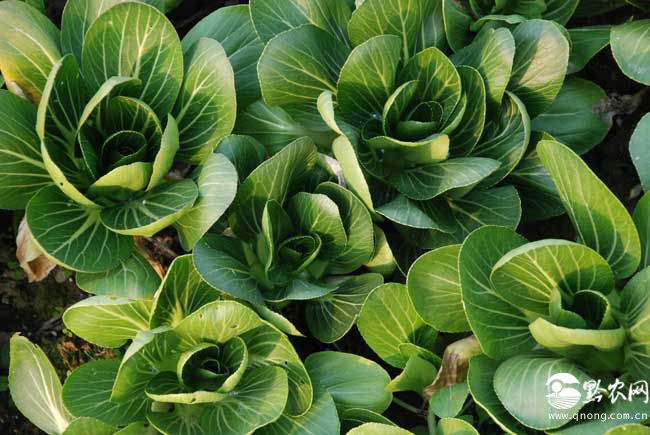
Bok choy is also called baby bok choy, rape, or small rape; the rape whose seeds can be pressed for oil is also known as rape, and has two variants, Brassica rapa and purple rape; its leaves have a powdery bloom, and its basal leaves are pinnately lobed, unlike baby bok choy. The planting season is generally from August to October, and it can be planted every year, but autumn and winter are best; in the north, winter planting should be done indoors.
Seedling-raising methods for bok choy
When the temperature is relatively high, direct sowing is suitable; when the temperature is relatively low, you can sow first and then transplant.
1. First water the potting soil thoroughly, mix the seeds evenly with fine soil and scatter them on the soil surface, then cover lightly with soil, just enough to cover the seeds; it must not be too thick. You can use a spray to moisten the surface soil and keep it moist. Germination usually takes about 3-4 days, and about 1 week when the temperature is low. You can also use the spot-sowing method, with 2-3 seeds per hole and a spacing of about 3-5 cm; when the temperature is high, the spacing can be smaller, and when the temperature is lower, the spacing should be slightly larger.
2. During the seedling stage, keep the soil moist; when the temperature is relatively high, water once in the morning and once in the evening. Two weeks after germination, apply 1 application of dilute decomposed organic fertilizer along with watering.
3. When there are 4-5 true leaves, the plants can be transplanted and set out; the plant spacing depends on the size of the variety, generally about 15-20 cm. After setting out, water thoroughly, shade slightly, and carry out normal management once they survive. If no transplanting is needed, begin thinning the seedlings and pull out the larger ones. The principle of thinning is to make the seedlings more evenly distributed; it can be done several times until the spacing is suitable, and after each thinning, apply 1 application of decomposed organic fertilizer.
Spring cultivation methods for bok choy
1. Variety: For bok choy cultivated in spring, choose varieties with strong winter hardiness so they are less likely to bolt. In the Shanghai area, varieties such as Sanyue Man, Siyue Man, and Wuyue Man are generally used.
2. Seedling raising: Make the seedling land into beds 2 m wide (including ditches), and use 1000 kg of decomposed organic fertilizer per mu. Sow from early to late October, using 0.3 kg of seed per mu; sow evenly and press firm after sowing. After emergence, thin the seedlings 2-3 times and apply appropriate topdressing. When the seedlings have 6-7 true leaves, they can be set out in the field.
3. Land preparation: After plowing the field, apply 50 kg per mu of vegetable-specific compound fertilizer as base fertilizer, make beds 2.5 m wide (including ditches), and wait for setting out.
4. For greenhouse seedling raising, Sanyue Man is set out in late January, and Wuyue Man from early February to late March. The plant and row spacings are respectively 10×15 cm for Sanyue Man, 15×15 cm for Siyue Man, and 15×20 cm for Wuyue Man.
5. Field management: After the plants are set out and survive, apply one topdressing, using 5 kg of urea per mu. Before the rows close, apply a second application, using 7.5 kg of urea per mu. In March, pay attention to preventing aphids.
6. Harvest: Sanyue Man raised in open-field seedlings is harvested from late February to late March, Siyue Man raised in greenhouse seedlings is harvested from late March to early April, and Wuyue Man is harvested from late April to early May. Use a kitchen knife to remove the roots, and market the cleaned vegetables.
Summer cultivation methods for bok choy
1. Variety: Choose varieties with strong heat tolerance and good quality for summer cultivation, such as Kangreqing No. 3, Huawang, 605, etc.
2. Land preparation: Apply 40 kg per mu of vegetable-specific compound fertilizer as base fertilizer, make beds 2 m wide (including ditches), and make deep ditches and high beds to facilitate drainage and irrigation.
3. Sowing: Huo bok choy (bok choy cultivated in summer is called huo bok choy) is sown in batches from mid-June to early August, evenly broadcast; the seeding rate depends on the cultivation purpose. For cultivation as jimaocai, the seeding rate is 2.5-3 kg per mu. For “one sowing, three sales,” the seeding rate is 1.2-1.5 kg. For use as vegetable seedlings, the seeding rate is 1 kg. Full-season coverage cultivation with insect-proof nets and shade nets can be used to achieve the goal of using less or no pesticide.
4. Field management: For huo bok choy, thin the seedlings when the cotyledons unfold, keeping a seedling spacing of 3 cm; thin again after true leaves appear, with a seedling spacing of 12-14 cm. After each thinning, apply topdressing, using 6 kg per mu of vegetable-specific compound fertilizer each time. Transplanted huo bok choy is generally sown in late July, with a seedling age of 25 days; transplanting is chosen on cool weather, pulling seedlings in the afternoon and setting out after 3 p.m., with a density of 12-14 cm square. Water according to the principle of light and frequent watering, watering before 8 a.m. and after 5 p.m. to prevent rotting. Attention should be paid to controlling aphids, cabbage caterpillars, and diamondback moths.
Autumn cultivation methods for bok choy
1. Variety: Generally choose varieties with relatively strong resistance to viral disease, such as Aikangqing and Xinchangqing.
2. Seedling raising: Prepare the seedling land well, and sow in batches for seedling raising from early August to late September, with a seeding rate of 0.5-0.75 kg per mu. After sowing, water 1-2 times a day. After emergence, thin 2-3 times, with a final seedling spacing of 3 cm square.
3. Land preparation is the same as for spring cultivation.
4. Setting out: The setting-out time is generally from early September to early November, with a plant and row spacing of 20×25 cm. Water immediately after setting out to settle the roots.
5. Field management: After the plants survive, apply the first topdressing, using 5 kg of urea per mu, and apply another topdressing before the rows close. In case of drought, water or irrigate in time, and pay attention to preventing aphids and viral disease.
6. Harvest: The harvest period varies depending on the setting-out time. For those set out in September, they can be harvested in 25-30 days. For those set out in early to mid-October, harvest takes about 40 days, and for those set out from late October to early November, harvest takes 45 days.
Winter cultivation methods for bok choy
1. Variety: Generally choose Dongchangqing and Eryue Man
2. Seedling raising: Sow for seedling raising from late September to early October, with a seeding rate of 0.4-0.75 g per mu, and apply appropriate topdressing during the seedling stage.
3. Land preparation: Same as spring cultivation.
4. Setting out: The setting-out period for winter bok choy is from early November to the end of January the following year; set out by planting deeply and densely. To avoid freezing injury, the general plant and row spacing is 8×15-17 cm.
5. Field management: Basically the same as spring cultivation, strengthen cold protection measures, and non-woven floating row covers can be used.
6. Harvest: Winter-sown bok choy grows slowly, and it takes 80-90 days from setting out to harvest; it can be appropriately advanced or delayed according to the market.