Detailed Explanation of the Key Points of Organic Vegetable Growing Techniques
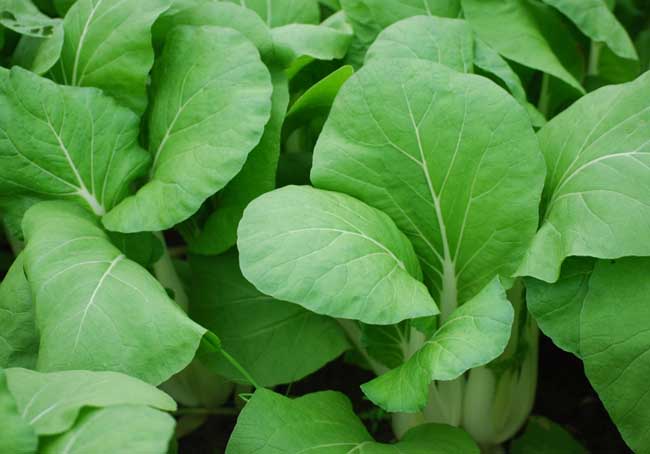
So-called organic vegetables refer to purely natural vegetables produced without the use of chemical substances in the vegetable production process, including pesticides, chemical fertilizers, growth regulators and other such substances. Based on practical experience gained in mastering organic vegetable growing techniques, the editor of QNN now introduces organic vegetable growing techniques as follows:
Variety Selection
The seeds and seedlings of organic vegetables must meet 3 basic requirements: first, they must not contain genetically engineered transgenic components. Second, they must not be treated with prohibited substances. Third, they must have strong resistance to pests and diseases. In organic vegetable production, certified organic vegetable seeds and seedlings should be selected. However, if certified organic vegetable seeds and seedlings cannot be purchased in the initial stage of planting, conventional seeds that have not been treated with prohibited substances may be used. In addition, vegetable types and excellent varieties with strong pest and disease resistance, strong stress resistance, and suitability for the local soil and season should be selected, such as spinach, carrot, radish, soybean, taro, celery, ginger, Chinese chives, garlic, Welsh onion, onion and so on.
Production Base
The organic production base should be a complete plot of land. It must not contain conventional production plots interspersed within it. However, organic conversion plots are allowed to exist. There must be clear markers at the boundary between the organic vegetable production base and conventional plots, such as rivers, hills, artificially set isolation belts and so on. The transition from conventional production to organic production usually requires 2 years of conversion time, and only after the vegetables sown afterward are harvested can they be regarded as organic products. The starting time of the conversion period is calculated from the date of applying to a certification body for certification. During the conversion period, producers must operate fully in accordance with organic production requirements.
Cultivation Management
For the cultivation of organic vegetables, supporting cultivation techniques should be adopted. Carry out crop rotation and changing of stubble and clean the fields, and through techniques such as raising strong seedlings, grafting and root replacement, ridge cultivation, plastic film mulching, rational close planting, and plant adjustment, make full use of conditions such as light, heat and air. Adopt crop rotation, and after the previous crop of vegetables is harvested, thoroughly clean the base to create an environment favorable for vegetable growth, so as to achieve the goal of high yield and high efficiency.
Fertilizer Use
The fertilizers used in organic vegetable production are mainly organic fertilizers. These include animal manure, composted plant fertilizer, green manure, plant ash, cake fertilizer, biogas fertilizer and so on, and also include organic special fertilizers certified by organic certification bodies and some microbial fertilizers.
1. Harmless treatment of fertilizers
Organic fertilizer needs harmless treatment 2 months before application, and there are 2 methods: first, sprinkle water on the fertilizer and mix it wet, pile it up, cover it with plastic film, and let it fully decompose. The fermentation temperature is above 60 degrees, which can effectively kill pests, diseases and weeds in farmyard manure, and the treated fertilizer is easily absorbed and utilized by vegetables. Second, use a biogas digester to put organic fertilizer into the biogas digester for fermentation, and use biogas slurry or biogas residue as organic fertilizer.
2. Fertilizer application methods
① Fertilization amount. When using fertilizer on land for organic vegetable cultivation, vegetable growing and soil fertility building should be carried out simultaneously. The ratio of animal manure to composted plant material should preferably be 1:1.
② Apply sufficient base fertilizer. Use 80% of the total fertilization amount as base fertilizer. Apply the fertilizer evenly into the plow layer. This is beneficial for root absorption. In combination with land preparation, apply 45~75 tons/hectare of decomposed barnyard manure or biological compost. If conditions permit, organic compound fertilizer can be used as seed fertilizer, with an application amount of 1500 kg/hectare. The method is to apply it in furrows or holes before transplanting or sowing, and the appropriate fertilization depth is 5~10 cm.
③ Skillfully apply topdressing. In combination with watering and earthing up, carry out soil topdressing, mainly using human excrement and urine and biological fertilizers and so on. Foliar spraying can also be carried out. During the growth period, select biological organic foliar fertilizer and spray once every 7~10 days, for 2~3 consecutive sprays. For vegetables with high planting density and shallow root systems, the spread-and-topdress method can be used. When the vegetables grow to 3-4 leaves, evenly scatter fertilizer that has been dried and finely processed into the vegetable field, and water promptly. For vegetables with larger planting rows and relatively concentrated root systems, fertilizer can be applied in furrows. When opening the furrows, do not damage or break the root systems, cover them with soil and water promptly. Note that when fertilizing, flexible matching should be made according to fertilizer characteristics and different soil properties, different vegetable types and different growth and development stages.
Pest, Disease and Weed Control
Because the use of all chemically synthesized pesticides is prohibited in the organic vegetable production process, and the use of products produced by genetic engineering technology is prohibited, pest, disease and weed control for organic vegetables must adhere to the principle of “prevention first, combining prevention and control”. Select disease-resistant varieties, adopt agricultural and physical measures such as high-temperature disinfection, rational fertilizer and water management, diversified intercropping and relay cropping, and protection of natural enemies, and comprehensively prevent and control pests, diseases and weeds.
1. Disease control: Use lime, sulfur and Bordeaux mixture to control various vegetable diseases. Allow restricted use of copper-containing materials, soft soap, plant preparations, vinegar and so on to control fungal diseases.
2. Pest control: Advocate the control of pests by releasing parasites and predatory natural enemies, or by using traps and dispensers with attractants, or by physical insect-catching facilities. Rotenone, plant-derived pyrethrins, emulsified vegetable oil and diatomaceous earth may be used in a restricted manner to kill insects, and microorganisms and their preparations may be used in a restricted manner to control pests.
3. Weed control: Control weeds by adopting cultivation techniques that restrict weed growth and development, such as crop rotation, planting green manure, fallowing and so on, or use straw mulching to suppress weeds. Mechanical and electrothermal weeding are allowed. The use of genetically engineered products and chemical herbicides for weed control is prohibited. Note that grasses beneficial to the growth of natural enemies should not be removed.