What Is Star Anise? One Article Explains Star Anise's Characteristics and Uses
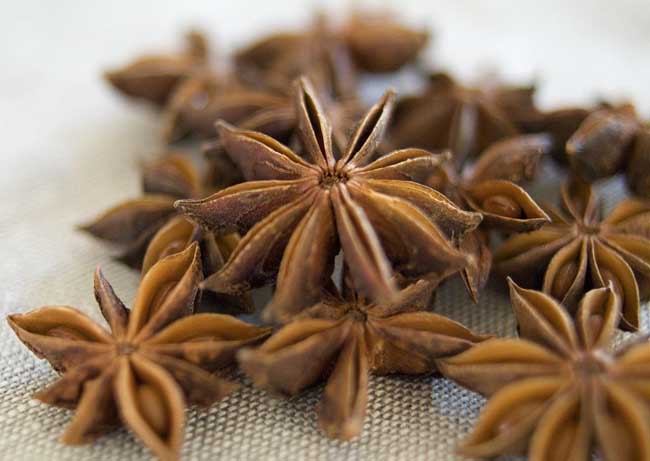
Star anise is also known as fennel, star anise, da liao and anise. It is a plant in the genus Illicium of the family Illiciaceae. Its dried fruit of the same name is one of the seasonings used in Chinese cuisine and Southeast Asian cooking. It has a fragrant and sweet aroma. It is used whole or ground into powder. Now please follow the editor to learn about star anise!
Star anise is da liao, the same thing called differently in the north and south. Southerners call it star anise, northerners call it da liao.
Morphological characteristics of star anise
Star anise is an evergreen tree that can reach 20 m in height; the bark is gray to reddish-brown. The leaves are alternate, leathery, lanceolate to oblong, 5-12 cm long and 1.5-5 cm wide, with a short pointed or short acuminate apex and a narrowly wedge-shaped base; the upper surface is glossy with transparent oil dots, and the lower surface is sparsely pubescent; the petiole is stout, about 1 cm long. The flowers open in spring, solitary in the leaf axils, with a fleshy perianth; 3 sepals, yellow-green; 6-9 petals arranged in 2-3 whorls, pale pink or dark red, broadly ovate or oblong; 11-20 stamens arranged in 2-3 whorls; 8-9 carpels, free, with a short style, a thickened base and a minute stigma. The aggregate fruit is arranged in a star shape, 2.5-3.5 cm in diameter, and the mature carpels are reddish-brown. The seeds are flattened globose, brown and glossy. The apex of the follicles is blunt or bluntly pointed and slightly recurved. It flowers twice a year. The spring fruit harvest period is from January to February, and the autumn fruit period is from August to September, with autumn fruit being the main one.
Medicinal and culinary value The fruit and seeds can be used as a seasoning and are also used as medicine in traditional Chinese medicine. This medical theory holds that it has a strong fragrance and has effects such as repelling insects, warming the middle and regulating qi, strengthening the stomach and stopping vomiting, dispelling cold, and stimulating nerves. In addition to being used as a condiment, star anise can also be used industrially as a raw material for perfumes, toothpaste, soap, cosmetics, etc., and can also be used in medicine as a carminative and stimulant. It is warm in nature and pungent in taste. It has the effects of warming yang and dispersing cold, and regulating qi and relieving pain. It is used to treat cold vomiting and hiccups, cold hernia and abdominal pain, kidney deficiency and lumbago, and dry and wet beriberi, etc. Some modern studies show that attention needs to be paid to it because it contains safrole.
Nutritional analysis of star anise
The fruit contains volatile oil, whose main components are anethole, anisaldehyde a href=https://www.zhifujing.org/special/wa/ target=_blank class=infotextkey>frogneodymiumⅫ/p>
1. The main component of star anise is anise oil, which can stimulate the gastrointestinal nerves and blood vessels, promote the secretion of digestive juices, increase gastrointestinal peristalsis, have the effects of strengthening the stomach and promoting qi, and help relieve spasms and reduce pain.
2. Anethole can promote the maturation of bone marrow cells and their release into peripheral blood, and has a significant effect of increasing white blood cells, mainly by increasing neutrophils, and can be used for leukopenia.
Pharmacological effects of star anise
1. Antibacterial effect
The water decoction of star anise has an inhibitory effect on Mycobacterium tuberculosis and Bacillus subtilis, and its ethanol extract has a strong inhibitory effect on Staphylococcus aureus, pneumococcus, diphtheria bacillus, Vibrio cholerae, typhoid bacillus, paratyphoid bacillus, dysentery bacillus and some common pathogenic bacteria. The antibacterial effect of plants in the Illiciaceae is related to the volatile oil they contain.
2. Effect of increasing white blood cells
3. Analgesic effect
4. Other effects
Anethole has estrogen-like effects and strong sensitizing effects. Plants in this family have a certain toxicity, and their toxic components are sesquiterpene lactones; some volatile oils also have a certain toxicity, and their inhibition of the nervous system can cause paralysis, and central inhibition can lead to death.