3 Causes of Large-Scale Yellowing of Sago Palm Leaves in Summer and How to Prevent Them
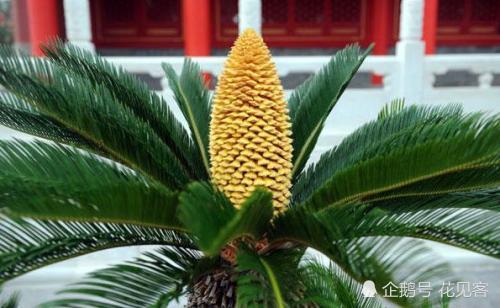
The sago palm (Cycas revoluta) is an ornamental plant with very high ornamental value, and most people keep it in courtyards, balconies, living rooms, and other places.
Many people think the sago palm is very easy to grow and that it will flourish even with little care, but recently some flower growers have reported large-scale yellowing of sago palm leaves. What is going on?
There are 3 main reasons that cause large-scale yellowing of sago palm leaves. Today Hua'er will share them with you. You need to prevent them in advance so that the branches and leaves stay lush and green, and it blooms every year!
1. Improper control of fertilizer and water
The sago palm grows relatively fast from April to August and needs sufficient water, while both lack of water and waterlogging can cause large-scale yellowing of its leaves. Especially as summer arrives, water evaporates quickly, so water must be replenished in time, but waterlogging must be avoided; otherwise, in a high-temperature and high-humidity environment, root rot is very likely to occur. Generally, when the soil shows signs of turning white, you can water it thoroughly. In summer, you can water once every morning and evening, and usually spray some water on the leaves to increase humidity.
2. Iron-deficiency yellowing
The growth of the sago palm requires a lot of iron. If iron is insufficient, iron-deficiency yellowing will occur. You can water it with ferrous sulfate water, then use a 0.1-0.3 ferrous sulfate solution to spray the leaves, spraying once every three days, and the branches and leaves will turn emerald green and glossy again.
Note that for branches and leaves with relatively severe yellowing, they should be pruned off in time, otherwise it can easily lead to pests and diseases.
3. Leaf spot disease
Summer is the peak growth period for the sago palm and also a period when pests and diseases occur frequently. Especially in a high-temperature and high-humidity environment, leaf spot disease is prone to occur. It is mainly a fungal infection. In the early stage of the disease, the leaves show small light brown spots, which slowly spread. Black small dots appear on the diseased spots, forming a section of spots, and finally the leaves die directly.
Leaf spot disease is highly contagious. If not treated in time, it can easily spread to other leaves, or even the whole plant. In the early stage of the disease, 75% chlorothalonil wettable powder can be diluted 600 times and sprayed. During usual care, diseased and old leaves should be removed in time, and more clean water should be used for washing.
The care of the sago palm is introduced here. If flower growers have other additions, you can share them with everyone in the comment section below. If you want to learn more about flower-growing knowledge, you can follow Huajianke!