What are the common pest and disease control methods for spinach?
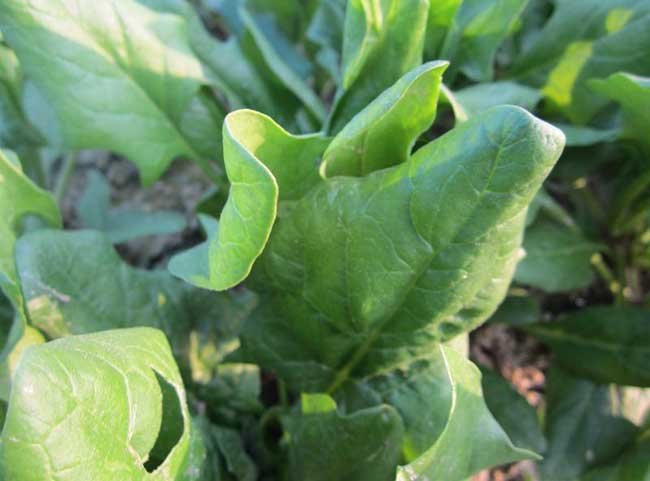
Spinach originated in Persia and was already being cultivated 2000 years ago. The main pests and diseases of spinach include spinach white spot disease, spinach fusarium wilt, spinach downy mildew and spinach silver Y moth, etc. Below, the editor will briefly introduce the control methods for these common pests and diseases of spinach.
Control methods for spinach white spot disease
The symptoms of spinach white spot disease mainly appear on the leaves. The lower leaves are affected first. The lesions are round to nearly round, with distinct edges, 0.5-3.5 mm in size. The center of the lesion is yellowish white, and the outer edge is brown to purplish brown. After expanding, they gradually develop into white spots. When humidity is high, grayish hair-like substances can be seen on some lesions. When dry and wet conditions alternate sharply, the center of the lesion easily ruptures. The appearance of these symptoms is caused by infection with Cercospora beticola. Besides harming spinach, this fungus also harms sugar beet and other Chenopodium plants, causing similar symptoms. The spinach white spot pathogen overwinters as mycelium with diseased residues in the soil. In the following spring, the pathogen spreads through wind and rain. It is prone to occur under weak growth and warm, humid conditions, and is more severe in low-lying, poorly ventilated areas with poor management.
[Control methods]
1. Choose flat, well-ventilated plots with sufficient organic fertilizer to plant spinach, water appropriately, and manage carefully to improve plant disease resistance.
2. After harvest, promptly remove diseased residues, bury them deeply in a centralized manner or burn them to reduce sources of disease.
3. In the early stage of the disease, spray 30% Ludebao suspension concentrate at 400-500 times dilution, or 1:0.5:160 Bordeaux mixture, or 75% chlorothalonil wettable powder at 700 times dilution, or 50% duomei.
Control methods for spinach fusarium wilt
Spinach fusarium wilt generally occurs more severely at the adult plant stage. It manifests as old leaves turning dark and losing luster, leaf mesophyll gradually yellowing, gradually spreading upward, and when developing downward, the roots turn brown and die. Plants affected early are noticeably dwarfed. In dry weather and high temperatures, diseased plants quickly wilt and turn yellow. Under humid and low-temperature conditions, diseased plants can continue to survive for some time, sometimes growing new lateral roots. But once high-temperature weather occurs, they quickly wither and die.
The spinach fusarium wilt pathogen mainly oversummers or overwinters with diseased plant residues in the soil or on seeds. Seeds can carry the pathogen, and undecomposed manure can also carry it. The pathogen can spread with rainwater and irrigation water, directly invading through root wounds or root tips, and after invasion can reach the vascular bundles. In the vascular bundles, the pathogen produces toxic substances, blocking the vessels and causing leaves to yellow and wither. High temperature and high humidity favor the disease; soil temperature around 30°C, moist soil, insufficiently decomposed fertilizer, many underground pests, and many nematodes make the disease more likely to occur.
[Control methods]
1. Practice a 3-5 year crop rotation with allium crops and gramineous crops, avoiding continuous cropping.
2. Apply compost fermented with Japanese enzyme bacteria or fully decomposed organic fertilizer, and adopt formula fertilization techniques to improve host disease resistance.
3. Use raised beds or ridge cultivation, drain promptly after rain, and strictly prohibit flood irrigation.
4. When central diseased plants are found, promptly pull them out, and drench the diseased holes and surrounding areas with 50% benomyl wettable powder at 1500 times dilution, 40% duosulfur suspension concentrate at 500 times dilution, or 10% zhiweiling aqueous solution at 300-400 times dilution, spraying once every half month for 2-3 consecutive times.
Control methods for spinach downy mildew
Downy mildew is the disease with the highest incidence rate in spinach. It is caused by a fungus called spinach downy mildew fungus. The symptoms of field damage are as follows: it mainly harms the upper surface of leaves. The lesions are pale yellow, irregular in shape, varying in size, 3-17 mm in diameter, with indistinct edges. After the lesions expand, they connect with each other into patches, and later turn brown and withered. On the back of the leaves, grayish purple mold layers are produced on the lesions. The disease gradually develops from outer leaves to inner leaves, and spreads from the lower part of the plant upward. In drought, diseased leaves wither and turn yellow; under high humidity, they mostly rot, and in severe cases the entire plant's leaves turn yellow and die.
[Control methods]
1. Strengthen cultivation management. Reasonable close planting, scientific irrigation, and reduce field humidity.
2. Choose disease-resistant varieties. You can choose famous and superior varieties such as Savoy hybrid No. 612, Bandi, and Bonus, or you can use pointed-leaf type varieties.
3. Collect seeds from disease-free land or disease-free plants. If the seeds carry the pathogen, they can be treated before sowing by mixing with 50% thiram wettable powder at a dosage of 0.4% of seed weight.
4. In early spring, if diseased plants are found in the spinach field, promptly pull them out, take them out of the field and burn them.
5. In the early stage of the disease, spray 40% fosetyl-aluminum wettable powder at 200-250 times dilution, 58% metalaxyl period, spray 40% fosetyl-aluminum wettable powder at 200-250 times dilution, 58% metalaxyl mancozeb wettable powder at 500 times dilution, 64% sandofan wettable powder at 500 times dilution, or 72.2% propamocarb aqueous solution at 800 times dilution, spraying once every 7-10 days for 2-3 consecutive times.
Control methods for spinach silver Y moth
The spinach silver Y moth mainly harms vegetables such as cabbage, turnip, radish, kidney bean, and eggplant. Newly hatched larvae gather on the back of leaves and peel off the leaf mesophyll, leaving only the epidermis. Older larvae disperse to cause damage, eating the leaves into holes.
[Control methods] Generally, no separate control is needed. If the occurrence is relatively severe, chemical control should be the main method. The best period for spraying control is from the peak hatching stage of eggs to before the 3rd instar larvae, and both the front and back sides of the leaves should be sprayed. The pesticides used include: 10% permethrin emulsifiable concentrate at 1000-1500 times dilution, or 2.5% deltamethrin emulsifiable concentrate at 2000-3000 times dilution, or 20% fenpropathrin emulsifiable concentrate at 3000 times dilution, or 2.5% bifenthrin emulsifiable concentrate at 3000 times dilution, or 10% juma emulsifiable concentrate at 1500-2000 times dilution, or 50% phoxim emulsifiable concentrate at 1000-1500 times dilution, etc.