When Is the Best Time to Plant Cowpeas? A Detailed Guide to Planting Time
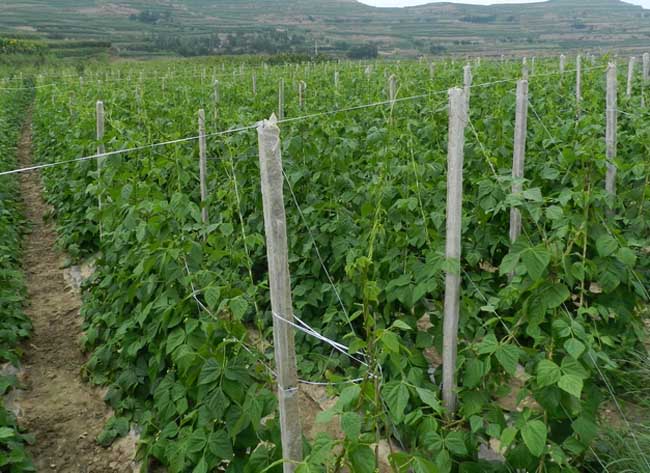
Cowpea, commonly known as black-eyed pea, Jiang bean, belt bean, or hanging bean pod. Cowpeas are divided into two types: long cowpea and rice cowpea, both belonging to the legume family. Since cowpeas are not strict about growing conditions, they can be planted in spring, summer, and autumn. Below, the editor will introduce the planting time for cowpeas.
Planting Time for Cowpeas
Cowpeas are classified into spring cowpeas, summer cowpeas, and autumn cowpeas according to different planting times. Let us look at their planting times separately.
1. Spring cowpeas are generally raised as seedlings from late February to late March, transplanted from late March to late April, harvested from early June to mid-August, and seed-collected from late July to early August.
2. Summer cowpeas are sown in the Yellow River basin from April 20 to June 30, in the Yangtze River basin from mid-April to early July, in northern Guangxi from early April to early August, in Zhejiang and Fujian sown in spring and summer, and in the Leizhou Peninsula sown in spring.
3. Autumn cowpeas should be sown in August to September. Direct sowing is preferable. Plant at a reasonable density, using 1.25-1.5 kg per mu, with row spacing of 50-60 cm and plant spacing of 8-10 cm, in double rows, sowing two seeds per hole.
Growing Environment for Cowpeas
Cowpeas require high temperatures and have strong heat tolerance. The optimal growing temperature is 20-25°C. In summer, they can still set pods normally at temperatures above 35°C, and flowers do not drop. However, they are not tolerant of frost. Under prolonged low temperatures below 10°C, growth is inhibited. Cowpeas are short-day crops, but long cowpeas grown as vegetables are mostly neutral to light and are not very strict about sunlight requirements. Varieties such as Hongzuiyan and Zhijiang 28-2 can be cultivated in spring, summer, and autumn in the south.
Cowpeas have wide adaptability to soil. As long as the field has good drainage and loose soil, they can be planted. The pods are tender, and during the pod-setting period, sufficient fertilizer and water are required.
Cowpeas are climbing plants, so when the seedlings grow to more than 30 cm, a trellis about 2 m high needs to be set up in time. The materials usually used are reeds, thin bamboo poles, thin wooden sticks, etc. The top branches have a twining and climbing habit and will climb upward on their own.
Having read this, I believe you now have some understanding of the planting time and growing environment for cowpeas. Taking this opportunity, the editor will briefly introduce the cultivation techniques for cowpeas.
Cultivation Techniques for Cowpeas
1. Seedling raising. Cowpeas sprout easily and generally do not need seed soaking or germination acceleration. The bottom soil of the seedling bed should be firm, and it is best to spread 6 cm of loam to prevent the main root from going deep into the soil and producing many fibrous roots, which would cause great damage to the root mass when transplanting. Therefore, when the seedlings have one pair of true leaves, they can be transplanted with soil; large seedlings are not suitable for transplanting. If conditions permit, nutrient pots or plug trays can be used for seedling raising, with two or three seedlings per pot.
2. Transplanting. Transplant after the frost period ends, when the seedlings are 20-25 days old. The transplanting field should be given plenty of decomposed organic fertilizer, 3000-5000 kg per mu, 25-30 kg of superphosphate, 50-100 kg of plant ash or 10-20 kg of potassium sulfate. The transplanting density is 66 cm row spacing and 10-20 cm hole spacing, with 3000-3500 holes per mu and two or three plants per hole (the two- or three-plant seedling method can be used during seedling raising to facilitate later transplanting). After transplanting, water to help the seedlings recover, then cultivate deeply to restrain growth for 5-8 days to promote well-developed roots.
3. Direct sowing. Sow in the open field after the frost period ends. For vining varieties, the density is 66-70 cm row spacing and 20-25 cm plant spacing, with 4-5 seeds per hole and 2-3 seedlings retained. For dwarf varieties, the row spacing is 50-60 cm and the plant spacing is 25-30 cm. After sowing, press the soil firm with your foot so that the soil and seeds are in full contact and absorb enough water to facilitate sprouting. When 70% of the sprouts have emerged from the soil, water lightly once to ensure full emergence. After watering, cultivate deeply in time to preserve moisture, raise temperature, and restrain growth, promoting root development.
4. Field management
(1) Checking and replanting seedlings: When the first pair of primary leaves appears, go into the field and check each bed for missing seedlings and replant them. For replanted seedlings, it is best to raise seedlings 3-4 days early in paper pots in a greenhouse. If transplanting seedlings, replanting should be done after the seedlings have recovered.
(2) Cultivating and loosening soil: For direct sowing, after the seedlings have fully emerged, or after transplanted seedlings have recovered, cultivate once every 7-10 days to loosen the soil, preserve moisture, restrain growth, and promote rooting. Stop cultivating after the vines begin to spread.
(3) Watering and topdressing: In the early stage, cowpeas should not be given too much fertilizer, to prevent excessive vegetative growth caused by too much fertilizer and water. Generally, water once with manure water after the plants are established. During budding, flowering, and the start of harvest, fertilizer and water supply should be strengthened, generally topdressing 2-3 times, each time applying 750-1000 kg of human and livestock manure and urine per mu. If it is too rainy to apply manure water, 5-10 kg of urea can be applied in holes between the rows. For autumn cultivation, keep promoting growth throughout.
(4) Setting up trellises, guiding vines, pruning, and removing side shoots: When the plants begin to send out vines, set up the trellis. Use a herringbone trellis or an X-shaped trellis. The trellis height is 2-2.5 m, 10-15 cm from the base of the plants, with one inserted per hole, 15-20 cm deep. Every two trellises cross, and a horizontal pole is placed at the crossing point of the upper 4/5 and tied tightly. Guiding cowpea vines onto the trellis is generally done at noon or in the afternoon on sunny days, not when dew has not dried or in rain, to avoid breaking the vines and leaves. Guide the vines counterclockwise.
5. Pruning methods
(1) Remove buds at the base: All side buds at nodes below the first inflorescence on the main vine should be removed to promote flowering.
(2) When leaf buds appear mixed beside flower buds in the leaf axils of the middle and upper parts of the main vine, the side branches produced by the leaf buds should be removed in time.
(3) Topping: When the main vine grows to more than 2 m, top it to control growth, promote the formation of secondary flower buds, and also facilitate harvesting.
6. Fertilizer and water management
Cowpeas should not be grown continuously on the same land. On the basis of applying sufficient base fertilizer, fertilizer requirements are low during the seedling stage, so fertilizer and water should be controlled, with special attention to nitrogen fertilizer application, to avoid excessive vegetative growth of stems and leaves, increased branching, higher node positions for flowering and pod setting, and reduced number of inflorescences, which would result in empty vines in the middle and lower parts with no pods. During the full flowering and pod-setting period, more fertilizer and water are needed, and pod-setting fertilizer must be applied heavily to promote more flowering and pod setting, prevent premature aging, and increase yield. Taking spring cowpeas as an example: after full emergence and during the vine-extension period, apply 10-20% human manure water 1-2 times; when the plants enter the early flowering stage, vegetative growth and reproductive growth proceed simultaneously, and the number of fruits increases, apply 1500-2000 kg of human manure per mu to promote more flowering and pod setting; during the harvest period, apply manure water once every 4-5 days, for a total of 3-4 times. Cowpeas are drought-tolerant. In the south, spring has more rain, so irrigation is not necessary. Summer and autumn are high-temperature and dry seasons, so attention should be paid to fertilization and irrigation to reduce flower and pod drop and prevent premature aging of vine and leaf growth, so as to extend the fruiting period and increase yield.
7. Pest and disease control
Aphids mainly damage during the seedling stage and can transmit cowpea mosaic virus disease. Spray with 40% dimethoate once every 7-10 days. The legume pod borer generally occurs in large numbers between July and August (summer and autumn cowpeas) and damages the pods. During the flowering period, spray with 800 times diluted dichlorvos once every 6-10 days. In the south, when there is a lot of rain in summer and autumn, it often causes cowpea black mold disease. In the early stage of occurrence, spraying with 50% carbendazim 1000 times solution or 50% thiophanate 1000 times solution 2-3 times can control it, while cowpea rust can be controlled with 70% thiophanate-methyl wettable powder 1000 times solution or 65% zineb 500 times solution. Spray once every 7-10 days, for a total of 2-3 times.