When Is the Best Time to Plant Ginger? A Detailed Guide to Planting Time
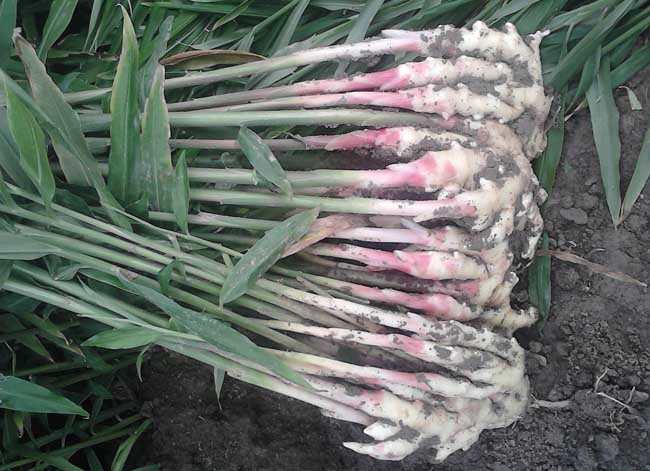
Ginger prefers warm, humid environmental conditions and cannot tolerate low temperatures or frost. It begins to sprout above 16°C, the optimum temperature for seedling growth is 20-25°C, and the optimum temperature for stem and leaf growth is 25-28°C. Growth stops below 15°C. Therefore, the planting time for ginger is generally late April to early May; in low-heat river valley areas, early to mid-March is suitable; and with sprouting promotion or plastic film cultivation, it can be appropriately advanced.
Ginger sowing time
The sowing time for ginger is generally late April to early May.
Before sowing ginger, carefully select the seed ginger and remove moldy, rotting, shriveled, diseased or weak ginger pieces. For seed ginger, it is best to choose pieces of 50—100 grams with 1—2 strong buds. Larger ginger pieces can also be sown but require a larger amount of seed and higher cost. They can be cut with a knife or split by hand, but the wounds should be disinfected with plant ash or lime before sowing.
Before sowing ginger, it is best to soak the seeds in a chemical agent to promote sprouting. The method is to spread the seed ginger out to dry in the sun for 1—2 days, then soak the seeds in a 1:1:120 Bordeaux mixture for 10 minutes. After that, take out the seed ginger and stack it layer by layer with moist sand, then cover it with plastic film at a thickness of about 30—40 cm, keeping the temperature at 20—30°C. Sprouts will emerge in 8—10 days. Sow according to the size and strength of the sprouts, grading them by grade. The seed quantity used per mu is 300—500 kg.
Ginger planting conditions
1. Temperature: Ginger originated in the tropical regions of China and the East Indies. It likes warmth, and the growth of the rhizome (ginger piece) requires a relatively high temperature. It can sprout only above 16-18°C; at 20-27°C the ginger piece develops rapidly; a monthly average temperature of 24-29°C is most suitable for rhizome division and growth; growth stops below 15°C; and germination is still not hindered at 40°C. However, below 10°C, ginger pieces are prone to rotting.
2. Light: Ginger is shade-tolerant and not tolerant of strong sunlight, and it has no strict requirement for day length. Therefore, when cultivating it, shade sheds should be built or intercrops should be used to provide appropriate shading to avoid exposure to strong sunlight.
3. Moisture: Ginger's root system is not well developed, and its drought tolerance and waterlogging resistance are poor, so its water requirements are especially particular. During the growth period, soil that is too dry or too wet is unfavorable to the growth and expansion of ginger pieces, and both can easily cause disease and rot.
4. Soil nutrients: Ginger prefers fertile, loose loam or sandy loam. It grows poorly when planted in heavy, sticky, wet low-lying land, and it also grows poorly in thin soil with poor water retention. Ginger has the greatest need for potassium fertilizer, followed by nitrogen fertilizer, and the least need for phosphate fertilizer.