When is the planting time for celtuce? A detailed explanation of the sowing period
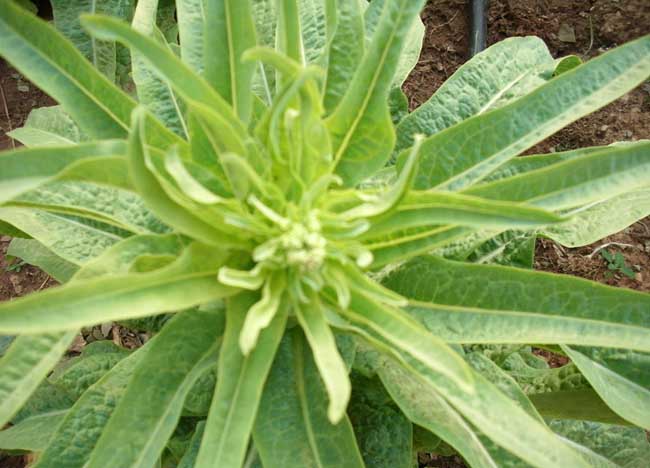
The planting time for celtuce needs to be set according to local climate conditions, variety characteristics, facility conditions and the arrangement of planting slots throughout the year. For overwintering celtuce in the open field in the Yangtze River Basin, spring celtuce is the main type, generally sown in September-October of the first autumn, and transplanted after 40-50 days when the seedlings have 5-6 true leaves. It can overwinter safely in winter, and after turning green the following spring it has ample time to grow its leaf rosette, so a harvest in April-May can achieve high yields.
The growing environment for celtuce
1. Celtuce is a semi-hardy vegetable that prefers cool conditions, tolerates frost slightly, and fears high temperatures; it grows poorly in hot seasons.
2. Celtuce is a long-day crop and needs sufficient light; it is sensitive to soil acidity and alkalinity and is suitable for growing in slightly acidic soil.
3. Celtuce has a shallow root system and weak absorption capacity, and has relatively high oxygen requirements. Sandy loam and loam are best for growing celtuce.
Field management for celtuce cultivation
Spring lettuce overwinters as seedlings, grows slowly in the early stage and needs little fertilizer. After planting, water once with dilute manure water. If intercropping or relay cropping prevents the application of base fertilizer, apply manure 1-2 more times during the year, at 1000-1500 kg per mu, combined with intertillage and soil loosening to promote root growth. Before winter, control fertilizer and water to avoid excessive vegetative growth, enhance cold resistance and ensure safe overwintering. After spring begins, stems and leaves grow rapidly. After entering the rosette stage, carry out timely intertillage and soil loosening to raise soil temperature, and combine this with one topdressing of 1000 kg of 30% human excrement and urine per mu. After the plants close the rows, stem enlargement accelerates and fertilizer demand increases greatly, so apply 2-3 heavy topdressings, totaling 2000-3000 kg of human excrement and urine or 30-40 kg of urea, to ensure stem expansion. Fertilization must not be too late, so as to avoid stem cracking.
1. Select good varieties, sprout seeds at low temperature, and cultivate strong seedlings. Choose high-yielding varieties with strong heat tolerance, weak response to daylength and resistance to bolting, such as the extra heat-tolerant Erbaipi celtuce. Sow and raise seedlings in late June, choosing a seedbed in a high, dry and fertile location. Soak the seeds before sowing to promote germination. The method is to soak the seeds in clean water for 24 hours, remove and wash them, wrap them well in gauze and place them in a refrigerator, treat them at -3°C to -5°C for 24 hours, then place the frozen seed block in a cool indoor place and let it gradually thaw. After 3-5 days, when 80% of the seeds have broken white, they can be sown. The soaked seeds can also be hung in a well 30 cm above the water surface to promote germination. After the seeds germinate, mix in a small amount of fine sand and sow evenly, at 2-3 grams per square meter. After sowing, cover lightly with fine nutrient soil, lay a shade net flat on the bed surface, and water thoroughly. Cover the small arch frame above the bed with a shade net and agricultural film to shade, retain moisture and promote emergence. After emergence, remove the shade net from the ground surface and scatter dry fine soil to stabilize the seedlings; on the frame, cover the shade net after 8 a.m. on sunny days and remove it after 5 p.m.; do not cover on cloudy days, and cover promptly with the shade net and agricultural film during heavy rain; after 2 true leaves, gradually reduce the covering time. During the seedling stage, pay attention to controlling underground pests and snails. Transplant the seedlings at 22-25 days of age.
2. Reasonable close planting, shading and moisture retention. In mid-to-late July, after the lettuce seedlings have unfolded 4-5 true leaves, transplant them with soil in the evening or on cloudy days, generally with a row spacing of 33 cm and a plant spacing of 30 cm. Pay attention to grading large and small seedlings for transplanting. After transplanting, water thoroughly to settle the plants, and cover the greenhouse frame with a shade net to promote recovery.
3. Apply enough base fertilizer and topdress in time. Lettuce takes more than one month from transplanting to harvest. If fertilizer is lacking, the plants will grow poorly and are prone to premature bolting, reducing yield and quality, so base fertilizer must be sufficient. Generally apply 2500-3000 kg of decomposed human and livestock manure per mu, or 1000 kg of decomposed chicken manure, and 25-30 kg of 45% nitrogen-phosphorus-potassium compound fertilizer, then plow and prepare the beds. After the lettuce has recovered and begun to grow, apply 1-2 light dressings of dilute manure to promote seedling growth. After the rosette stage, when the fleshy stem begins to expand, apply 15-20 kg of urea per mu as a flush application together with watering.
4. Harvest at the proper time. When the heart leaves of the lettuce are level with the tips of the highest leaves, it can be harvested for market. The general yield is 1800-2000 kg per mu, with an income of about 3000 yuan.
Disease control in celtuce cultivation
Celtuce mainly suffers from downy mildew, sclerotinia rot, viral disease and gray mold. Prevention should be the main approach. Under the suitable temperatures for lettuce growth (not exceeding 24°C during the day and not below 10°C at night), increase ventilation as much as possible. When humidity is on the high side, timely ventilation to disperse moisture can prevent disease occurrence. Once disease occurs, apply medication promptly according to the condition to prevent it from spreading.
1. Downy mildew: spray with Yikuaijing at 2000-2500 times dilution, or Anke at 2500 times dilution.
2. Sclerotinia rot: spray with Sukeling at 1000 times dilution, or Nongliling at 1000 times dilution.
3. Viral disease: spray with Bingdu A at 500 times dilution, or Junkeduke at 1000 times dilution.
4. Gray mold: spray with Shijiale at 800 times dilution, or procymidone at 600-800 times dilution.