What is the best time to plant bitter melon?
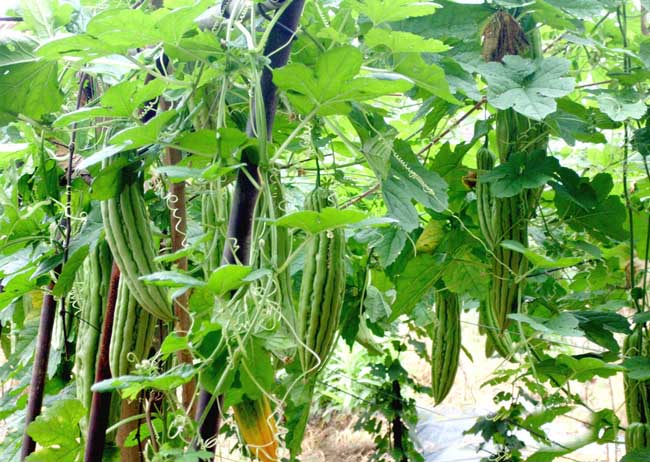
Bitter melon is generally planted in March; in some cases the seedlings are first raised in a greenhouse or plastic tunnel and then transplanted, so sowing can be moved up to February. In northern China, seeds are sown and seedlings raised in a greenhouse or plastic tunnel from late March to early April, with transplanting in early May; in the Yangtze River basin, sowing is in mid-March and transplanting in mid-April; in southern China, spring cultivation is sown from January to March, summer cultivation from April to May, and autumn cultivation from July to August. With protective facilities, it can also be grown in winter.
The planting time for bitter melon is determined by its growing environment, especially the effect of temperature. Below, the editor will introduce the environmental requirements for growing bitter melon.
Soil requirements
For pot cultivation, use garden soil mixed with an appropriate amount of lime, decomposed pig manure, superphosphate, plant ash and so on. It can be sown directly in pots, or the seedlings can be transplanted into pots, with thin bamboo poles set up as a trellis for them to climb. In courtyards, it is mostly planted beside a trellis in full sunlight, generally with a plant spacing of 40 to 50 cm. Enrich the soil with fertile, nutrient-rich soil mounded 2 to 3 cm above the ground, and keep the soil moist at all times.
Temperature requirements
Bitter melon has different temperature requirements at different stages of development. The optimum temperature for seed germination is 30°C to 35°C; the optimum temperature for seedling growth is 20°C to 25°C, with growth slowing below 15°C and poor growth below 10°C; the optimum temperature for flowering and fruiting is 20°C to 30°C, and at 25°C to 30°C the fruit-setting rate is high and the fruit develops rapidly; in the later stage of growth, it can still bear fruit normally when the night temperature is 10°C and the daytime temperature is 15°C to 20°C.
Light conditions
Bitter melon is not strict about day length, but insufficient light during the seedling stage reduces cold resistance and disease resistance, and the stems and leaves tend to grow leggy. During the flowering and fruiting stage, sufficient light is beneficial to the growth of stems and leaves and to a higher fruit-setting rate, and the fruit also develops faster.
Water and fertilizer management
Bitter melon should be given a sufficient water supply, especially during the flowering and fruiting stage, when it needs even more water; avoid both water shortage and prolonged waterlogging. Bitter melon is highly tolerant of fertilizer but sensitive to waterlogging, so choose well-drained sandy loam or clay loam with a deep soil layer for cultivation. Base fertilizer should mainly be decomposed organic fertilizer, and topdressing should mainly be decomposed human and animal manure and urine, applied once a week. Seedling fertilizer should be applied lightly; once the flowering and fruiting stage begins, the concentration can be increased, and after the peak fruiting period, apply 1 to 2 additional applications of potassium fertilizer or compound fertilizer to prolong the flowering and fruiting period.