When to Plant Cucumbers? A Detailed Guide to the Best Planting Time
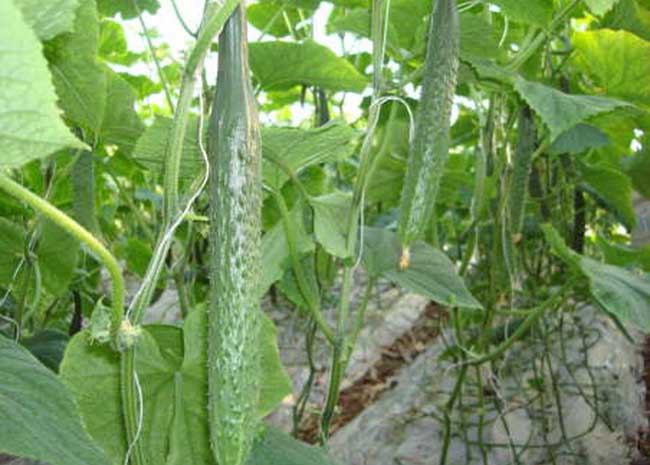
Cucumbers like warmth and cannot tolerate cold, so they are widely distributed across southern China and are one of the main greenhouse products. Because of differences in planting time, they are divided into spring cucumbers and autumn cucumbers. Below, the editor will introduce the planting times for spring cucumbers and autumn cucumbers separately!
Planting Time for Spring Cucumbers
Spring cucumbers refer to cucumbers raised as seedlings in winter and harvested in spring. Let us now look at the sowing time and transplanting time for spring cucumbers:
1. Sowing time for spring cucumbers: The sowing period for spring cucumbers is determined by the transplanting period. The suitable calendar seedling age at transplanting is 40-50 days, and the physiological seedling age is four true leaves and one heart. If calculated by calendar seedling age, sow 40-50 days before transplanting. The length of the physiological seedling age is related to the seedling-raising method: 50-55 days when using a cold frame or solar greenhouse for seedling raising; 45-50 days when using a heated greenhouse; 45 days when using an electric heating wire greenhouse. Therefore, different seedling-raising methods mean different sowing times. Practice has proved that rapid seedling raising not only saves time, but also produces fast and sturdy seedlings with high early yield. Where conditions permit, rapid seedling raising should be used as much as possible.
2. Transplanting time for spring cucumbers: The transplanting time for spring cucumbers is after the local late frost, when the average temperature of the ten-day period reaches above 18t. In Beijing, Tianjin, and Shijiazhuang areas, transplanting is generally done after late April. To help the seedlings recover quickly, choose a sunny day to plant the seedlings; do not transplant on cloudy or windy days. The transplanting density is mainly determined by the characteristics of the variety.
Planting Time for Autumn Cucumbers
Autumn cucumber cultivation refers, in frost-prone areas, to cultivation that finishes harvesting before the first frost, while in areas without frost year-round, it refers to cucumbers that are marketed in autumn after summer cucumbers are pulled up. The growth period of autumn cucumbers is only 80-90 days. They can be cultivated directly or raised as seedlings and transplanted, and grown in open fields or greenhouses.
Autumn cucumbers are generally sown about 70 days before Frost's Descent, and seedling transplanting can be done 7-10 days earlier. Because the seedling stage and early growth stage are in the hot, rainy season, autumn cucumbers suffer severe pests and diseases, and yields are also relatively low.
Growth Habits of Cucumbers
1. Temperature: Cucumbers like warmth and cannot tolerate cold. The suitable temperature for growth is 10-32°C. Generally, growth is best at 25-32°C during the day and 15-18°C at night; the most suitable soil temperature is 20-25°C, with a minimum of about 15°C. The most suitable day-night temperature difference is 10-15°C. At high temperatures of 35°C, cucumber photosynthesis is poor; at 45°C, high-temperature damage occurs; at low temperatures of -2 to 0°C, the plants freeze to death. If hardened at low temperature, they can withstand temperatures as low as 3°C.
2. Light: South China-type varieties are more sensitive to short-day conditions, while North China-type varieties are not strict about day length and have become day-neutral plants. Their light saturation point is 55,000 lux, and their light compensation point is 1,500 lux. Most varieties grow well under short-day conditions of 8-11 hours.
3. Water: Cucumbers have high yields and a large water requirement. The suitable soil moisture is 60-90%. During the seedling stage, water should not be excessive, with soil moisture at 60-70%. During the fruiting stage, sufficient water must be supplied, with soil moisture at 80-90%. The suitable relative air humidity for cucumbers is 60-90%. If relative air humidity is too high, disease is very likely to occur, causing reduced yield.
4. Soil: Cucumbers like moisture but cannot tolerate waterlogging, and like fertilizer but cannot tolerate excessive fertilizer. Fertile soil rich in organic matter should be chosen. They generally prefer soil with a pH between 5.5 and 7.2, but a pH of 6.5 is best.
Alright, the above are the planting times for spring cucumbers and autumn cucumbers. Next, let us look at the common pests and diseases in cucumber cultivation and their control techniques!
Pest and Disease Control
1. Downy mildew
[Symptoms] Downy mildew is a fungal disease. It occurs on the middle and upper leaves of cucumbers. When observing in the field, the following key points should be grasped: around 8 a.m. each day, check whether the back of the leaves has water-soaked, angular lesions and whether there is a gray mold layer on the lesions. If these three points are present, it can be diagnosed as downy mildew. The suitable conditions for onset are a temperature of 16°C-22°C and relative humidity above 83%. The pathogen of this disease has two fears, namely fear of dryness and fear of high temperature. When dry, the pathogen dies naturally in 3-5 days. Under conditions of relatively high humidity in the greenhouse, the temperature can be controlled at 45°C for 2 hours, and with appropriate control methods applied, this disease is easily controlled.
[Control methods] Options include Anke, Previcur, Mieke, cymoxanil mancozeb, Yikuaijing, Gold Ridomil, and Amistar. In addition, when controlling downy mildew, attention should be paid to the simultaneous occurrence of bacterial angular leaf spot. Agents for controlling bacterial angular leaf spot can be added to the chemicals used to control downy mildew.
2. Gray mold
[Symptoms] It can harm fruits, leaves, and stems and vines. When harming fruit, it often first infects faded flowers, causing the flowers to rot. After growing a light gray-brown mold layer, it further infects young cucumbers. The affected small cucumbers quickly soften, shrink, and rot, and are densely covered with a gray-white mold layer. Leaf disease mostly appears as round, nearly round, to irregular lesions, 20-50 mm in diameter, with obvious edges, a light reddish-brown surface, and a small amount of gray mold. When stems and vines are affected, local rot occurs, and in severe cases the diseased stem breaks and the whole plant dies. This is a disease caused by fungal infection. In greenhouses, this disease often begins to occur after winter begins, when humidity is high, ventilation is not timely, and temperature is low. A temperature of around 20°C, insufficient light on cloudy days, relative humidity above 90%, and long dew duration are important conditions for the occurrence and spread of gray mold. If the temperature is above 30°C and relative humidity is below 90%, the disease stops spreading.
[Control methods] In protected cultivation, at the early stage of disease, choose 10% Procymidone smoke agent or 45% chlorothalonil smoke agent, 250 g per mu each time, fumigating for 3-4 hours. It is also possible to use 50% iprodione wettable powder 1500-fold solution, or 2.5% Shileshi wettable powder 600-fold solution, or 50% Limeikang 500-fold solution, or 25% Amistar suspending agent 1500-fold solution. Apply once every 6-7 days, for 3-4 consecutive treatments, and the spray must reach the flowers and young cucumbers. When treating flowers at the beginning of the flowering stage, adding 0.1% of 50% Procymidone wettable powder or 25% Shileshi wettable powder 200-300-fold solution to treat or spray the flowers has an obvious effect.
3. Powdery mildew
[Symptoms] First, small round powdery mildew spots appear on the front or back of the lower leaves, gradually expanding, becoming thick and dense, and soon joining into patches. In the later stage of disease, the entire leaf is covered with white powder, then turns gray-white, and finally the leaf becomes yellow-brown and withered. Similar lesions also appear on stems and petioles, densely covered with powdery mildew spots. In autumn, sometimes yellow-brown small granules form on the lesions and later turn black. In this disease, the leaf is covered with white powder, and in the early stage of disease the epidermis under the mold layer remains green, making it easy to distinguish from other leaf diseases. The suitable temperature for this disease is 20-25°C, and the suitable relative humidity is 35-45%. Therefore, the powdery mildew fungus requires conditions that are neither cold nor hot, neither dry nor wet. Tender, leggy plants are susceptible to this disease.
[Control methods] The powdery mildew fungus is particularly sensitive to “sulfur”. Before transplanting, use 1.8 kg of sulfur powder per mu plus sawdust or another combustion aid, ignite and fumigate, keep it sealed and fumigated for one day and night, which can kill the powdery mildew fungus. After 3 days, fumigate again, then sow or transplant. During the cucumber growing period, the sulfur powder can be reduced by half, and the time reduced to one night, then fumigate again after 5-7 days, with good results. When central diseased plants appear in the field, spray promptly for control. Options include 20% triadimefon wettable powder 1000-fold solution, or 75% Daconil wettable powder 500-600-fold solution, or 10% Shigao 2500-fold solution, or 2% Jianshoumi 400-fold solution, etc., spraying once every 5-7 days, and alternating the pesticides. When spraying, do not neglect spraying the ground.
4. Viral disease
[Symptoms] Cucumber viral disease mainly harms leaves and cucumbers. It can occur at the seedling stage and adult plant stage. When disease occurs at the seedling stage, the cotyledons turn yellow and wither, and the young leaves show a mosaic pattern of dark green alternating with light green. When disease occurs at the adult plant stage, the plant is short, the internodes are short and thick, the leaves are obviously wrinkled and thickened, and new leaves show yellow-green mosaic. In severe cases, diseased leaves curl backward, and the lower old leaves of the diseased plant gradually turn yellow and withered. After cucumber fruits are affected, they stop growing, and the surface shows mottling of alternating dark and light green. In severe cases, the fruit surface is uneven or deformed. In severely affected plants, the internodes shorten, small leaves cluster, no cucumbers form, and the plant shrinks and dies. It is mainly spread by aphids, planthoppers, and field operations. Disease is severe under conditions of high temperature, drought, and strong sunlight. Disease is severe when there is a lack of water, lack of fertilizer, extensive management, and many aphids.
[Control methods] When raising seedlings, use shade nets to lower temperature and shade light, and keep away from diseased crops. After transplanting, immediately use “Tianda 2116” 1000-fold solution + Tianda Yufeng 1000-fold solution for foliar spraying and root drenching to promote seedlings and prevent disease. At the early stage of disease, use 20% Dukexing 500-fold solution or 20% Virus A 500-fold solution for spraying, once every 7 days.
5. Bacterial angular leaf spot
[Symptoms] At the seedling stage, round or oval water-soaked lesions with slight sunken centers form on the cotyledons, later turning brown and withered. At the adult plant stage, needle-sized water-soaked spots first appear on the leaves. The lesions expand and, restricted by leaf veins, become angular and yellow-brown. When humidity is high, milky white mucus is produced on the lesions on the back of the leaves, and after drying it forms a white film or white powdery substance. In the later stage, the lesions are brittle and easily perforated. Lesions on stems, petioles, and young cucumber fruits are water-soaked, nearly round to oval, later light gray; the lesions often crack, and when moist, bacterial ooze overflows from the diseased parts on the fruit. The lesions spread into the interior of the fruit, and the flesh along the vascular bundles changes color, extending all the way to the seeds, causing seed contamination. Diseased fruits rot in the later stage and have a foul odor. Affected young cucumbers often rot and fall early. Pathogens in the soil spread and expand in the field through irrigation water, wind and rain, airflow, insects, and farming operations. The pathogen invades the host through stomata, wounds, and water pores. The suitable temperature for onset is 18-26°C, and relative humidity above 75%. The greater the humidity, the more severe the disease. After storms, the disease tends to become epidemic. In low-lying plots with poor drainage, continuous cropping, excessive nitrogen fertilizer, insufficient potassium fertilizer, and overly dense planting, the disease is more severe.
[Control methods] At the early stage of disease, spray Xinzhiomycin 5000-fold solution, or 30% copper fatty acid ester (DT fungicide) wettable powder 500-fold solution, or 77% Kocide wettable powder 400-fold solution, or 47% Kasugamycin-copper wettable powder 600-800-fold solution. The above agents can be used alternately, spraying once every 7-10 days, for 3-4 consecutive sprays. Excessive use of copper preparations can easily cause phytotoxicity, generally no more than 3 times. Spraying must carefully and thoroughly cover the front and back of the leaves, which can improve the control effect.
6. Root-knot nematode
[Symptoms] It mainly harms the roots. After the roots are damaged, development is poor, with many lateral roots, and spherical or conical nodules of varying sizes form at the ends of the roots, sometimes in strings. They are initially white and soft, later turning brown to dark brown, and the surface is sometimes cracked. The aboveground parts of affected plants develop poorly, the leaves are yellow, and in dry weather they wilt and die, making them easily mistaken for plants with Fusarium wilt. The suitable temperature for the development of root-knot nematodes is 25-30°C. At 27°C, one generation takes 25-30 days to reproduce. Larvae stop activity at 10°C and die after 10 minutes at 55°C. Nematodes mostly move within a 20 cm deep soil layer, and are most abundant in the 3-10 cm soil layer. Nematodes spread and expand through soil, diseased seedlings, irrigation water, and farming operations. Conditions of high terrain, loose soil, and low salinity are suitable for nematode activity and favorable for disease occurrence. Sandy soil and continuous cropping land have severe disease. In the absence of a host, nematodes can survive in the soil for 1 year.
[Control methods] Disinfect the soil. Before planting, combine with deep plowing and apply 80 kg of lime nitrogen per mu. Disinfect the soil with 1.8% abamectin EC at 1-1.5 mL per square meter diluted in 6 L of water, or apply 4-6 kg of 3% Miral granular per mu, mixed with 50 kg of dry fine soil and broadcast. During the growing period, use 1.8% abamectin EC 1000-1500-fold solution for root drenching 1-2 times, with an interval of 10-15 days. After harvest, thoroughly remove diseased and residual plants from the field, burn them in a concentrated manner, or bury them deeply, and they can be used for composting. In addition, applying two tons of biogas residue per mu can effectively control root-knot nematodes. Where conditions permit, planting one crop of rice after vegetable harvest has an even better effect.
7. Whitefly
[Symptoms] Whiteflies are highly polyphagous and can harm many vegetables. They mainly damage plants as nymphs, gathering on the back of cucumber leaves to suck sap, causing leaves to fade, turn yellow, and wilt, and in severe cases the plant dies. While damaging the plant, they also secrete honeydew, contaminating the leaves and causing mold infection, affecting plant photosynthesis and seriously affecting yield and quality.
[Control methods] Try to avoid mixed planting, especially cucumbers, tomatoes, and kidney beans, which must not be mixed planted. Adjusting the production crop sequence is also an effective method, that is, arranging celery, sweet peppers, and other vegetables less affected by whiteflies in the first crop, and then planting cucumbers and tomatoes in the next crop. Older nymphs are mostly distributed on lower leaves, so remove old leaves and burn them. Setting yellow boards in the greenhouse can effectively control whiteflies. Using a knapsack motorized smoke generator to atomize 1% deltamethrin or 2.5% fenvalerate (sumicidin) oil into droplets suspended in the air is very effective for killing adults. Use 25% buprofezin (Applaud) wettable powder or 2.5% deltamethrin or 20% fenvalerate (Sumicidin) EC 2000-fold solution for spraying, once every 6-7 days, for 3 consecutive treatments. Smoke agents can also be used for fumigation, for 2-3 consecutive times.