Detailed Explanation of Ginger Planting Techniques and Management Methods
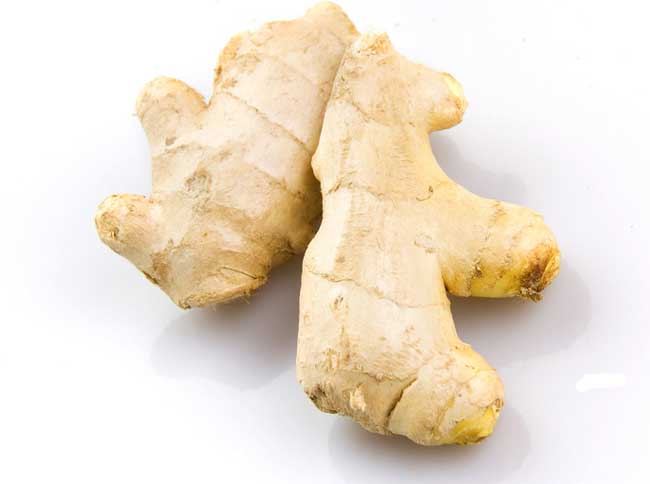
Ginger is the fresh rhizome of ginger, a perennial herbaceous plant of the Zingiberaceae family. It is also known by other names such as ginger root, bailayun, gouzhuangzhi, yindixin, yanliangxiaozi, fresh ginger, and honey-roasted ginger. The rhizome (dried ginger), cork layer (ginger peel), and leaves (ginger leaves) can all be used medicinally. In traditional Chinese medicine, ginger has effects such as dispelling cold, stopping vomiting, and relieving cough.
Ginger's Growing Environment
Ginger originated in the tropical regions of Southeast Asia. It prefers warm, humid climates and has weak cold and drought tolerance. The plant can only grow during the frost-free period. The most suitable temperature for growth is 25-28°C. When the temperature is below 20°C, sprouting is slow. When exposed to frost, the plant will wither, and frostbitten rhizomes completely lose their ability to sprout. In most counties of Guangxi's main production areas, the annual average temperature is 18-19°C, the average July temperature is 25.3°C, and the extreme high temperature is 39°C; the average January temperature is 10.2°C, and the extreme low temperature is -4°C; the annual frost-free period is more than 330 days. Annual rainfall is 900-1300 mm, and relative air humidity is around 80%.
Ginger's roots are not well developed, with few and short roots. They are distributed vertically mainly within 30 cm of soil depth, with a lateral expansion radius of 30 cm. After the seed ginger sprouts, the first shoot formed is called the main stem. Afterward, primary branches, secondary branches, and tertiary branches form successively on both sides of the main stem. Ginger lateral branches often grow symmetrically. Ginger is a vegetable crop propagated asexually, and its entire growth process is basically a process of vegetative growth, which can be divided into: germination stage, seedling stage, vigorous growth stage, and dormancy stage. Ginger likes warmth and cannot tolerate cold or drought. It grows above 16°C, and buds can begin to sprout, but sprouting is slow below 20°C. The suitable temperature for fine bud sprouting is 22-25°C. The suitable temperature for stem and leaf growth is 20-28°C.
Preparation Before Planting
1. Finely prepare the soil and apply sufficient base fertilizer. Select a plot with fertile soil and good irrigation conditions, and finely prepare the soil in early April. Along with soil preparation, broadcast 4 square meters of high-quality decomposed chicken manure or 10,000 kg of high-quality barnyard manure as base fertilizer. In high-fertility and high-water plots, open furrows at a row spacing of 60——65 cm for sowing preparation, and apply 100 kg of soybean cake, 50 kg of ternary compound fertilizer, 50 kg of potassium sulfate, 2 kg of zinc fertilizer, and 1 kg of boron fertilizer in the furrows as seed fertilizer.
2. Carefully select ginger seeds and cultivate strong buds. About 30 days before sowing, take out the seed ginger, remove the soil from the ginger pieces, and select healthy ginger pieces that are fat, plump, bright-skinned, not shriveled, not rotten, not frostbitten, and free of diseases and pests as seeds. The weight of a single seed ginger piece is required to reach more than 60 grams, and generally 500 kg of seed ginger is used per mu.
3. Sun the ginger and rest it. In early March, choose a sunny day around eight or nine in the morning, place the carefully selected seed ginger on sunny ground to dry, and bring it indoors at night, covering it with straw curtains to promote the decomposition of nutrients in the ginger pieces. Sun the ginger for 3——4 days and rest the seeds for 10 days, maintaining the temperature at 13——15°C to promote nutrient decomposition and bud differentiation.
4. Soak the seeds and promote sprouting. For the carefully selected and sun-dried seed ginger, soak the seeds in a 200-fold solution of pesticides such as Jiangwensan, Shengjiangbao, and Luba, generally for 10 minutes, which can play a sterilizing and disinfecting role. After soaking, dry them and promote sprouting. Place the ginger pieces in baskets and promote sprouting in a shed or sunny seedbed, maintaining air humidity at 75——85% and a temperature of 25°C. After 20 days, when the ginger sprouts grow to 0.5 cm, sow in batches according to sprout size.
Sowing and Seedling Stage Management
1. Cover with film and sow early. Sow on April 15. Before covering the film, use 150 grams per mu of a special herbicide and spray with water to clear weeds under the film. For the plastic film, choose film with a thickness of 0.005——0.006 mm and a width of 120 mm.
2. Plant sparsely and enlarge ginger pieces. The suitable planting density for high-yield plots is 7,000 plants/mu, with a row spacing of 50-55 cm and a plant spacing of 25 cm. The seeding rate is generally about 500 kg per mu.
3. Shade and promote growth. When more than 50% of the ginger has emerged, promptly shade the ginger field to promote robust growth of the ginger seedlings. The specific method is as follows: make the shade net into strip-style rows and stretch them between ginger rows, fixing both ends with bamboo poles. The strip width is 60——65 cm, and a shade net with a shading rate of 40% can be selected.
Fertilizer and Water Management During the Growing Period
On the basis of finely preparing the soil, applying sufficient base fertilizer, carefully selecting seed ginger, and sowing scientifically, achieving high yield also requires good mid- and late-stage management. The main technical points are as follows:
1. Apply light fertilizer to promote seedlings and heavy fertilizer when branches form. In early to mid-June, combine with watering and apply 25——30 kg of urea per mu with the water to promote ginger seedling growth. In early to mid-July, remove the plastic film and apply 50——60 kg of ternary compound fertilizer per mu. Before August 20, supplement 35 kg of potassium sulfate per mu, and water promptly after topdressing. In mid-September, according to the growth of the ginger seedlings, apply an appropriate amount of potassium fertilizer or nitrogen fertilizer, and carry out foliar topdressing on the aboveground part, choosing potassium dihydrogen phosphate and spraying once every 7 days for 3——4 consecutive sprays.
2. Water scientifically. Because ginger likes a humid environment, the field must have sufficient moisture. To ensure smooth emergence of ginger, on the basis of watering thoroughly before sowing, generally do not water before emergence, but wait until 70% of the ginger seedlings have emerged before watering. The specifics should be flexibly controlled according to the weather, soil quality, and soil moisture conditions. If the first watering is done too late, the ginger seedlings will suffer drought, and the buds are likely to dry up. Because plastic film has a good moisture-preserving effect, it is not advisable to water too frequently during the seedling stage, and it is best to water lightly under the film. In summer, watering in the morning and evening is best; do not water at noon. At the same time, pay attention to timely drainage after rain. Around the Beginning of Autumn, ginger enters the vigorous growth period and its water demand increases. At this time, it generally needs watering once every 4——5 days, always keeping the soil moist. To ensure that ginger has less mud attached after harvest and is easier to store, the last watering can be done 5 days before harvest. After applying branch fertilizer, according to the growth of the ginger, timely carry out hilling 2——3 times in stages to ensure that the ginger does not emerge from the ground and to promote rapid growth of the ginger pieces.
Pest and Disease Control of Ginger
1. Ginger blast. This is a devastating disease. Integrated control measures should be the main approach. Specifically, dig drainage ditches to drain water and prevent waterlogging, and combine this with chemical control. For chemical control, use 1500——2000-fold solutions of Shengjiangbao, Jiangwensan, Luba, and others to soak the roots. If diseased plants are found, promptly pull them out and treat the soil with the above solutions. Also mark the spot. After the ginger harvest, take away the soil from that spot for deep burial.
2. Insect pests. The main insect pests of ginger include ginger stem borers, beet armyworms, and ginger thrips. Do a good job of monitoring insect conditions to ensure control is carried out before major outbreaks. Use pesticides such as Kuaishaling and imidacloprid for spraying, with control once every 7——10 days.
Timely Harvest and Storage
When the temperature in late autumn is 8——18°C, with clear autumn skies, sufficient sunlight, and large day-night temperature differences, this is the key period for yield formation. Appropriately extending the growth period can greatly increase ginger yield. In the western Hebei region, the best harvest period for field-grown ginger should be October 25——30. Harvesting ginger at this time will neither freeze the ginger pieces nor allow the ginger to increase yield. Therefore, the best harvest timing must be grasped, and harvesting too early must be avoided. To facilitate storage and nutrient return, leave about 2——3 cm of stem when harvesting ginger.
Ginger is generally stored in cellars or sand storage rooms in a cool place.