Cilantro Growing Guide: The Complete Process from Sowing to Harvest
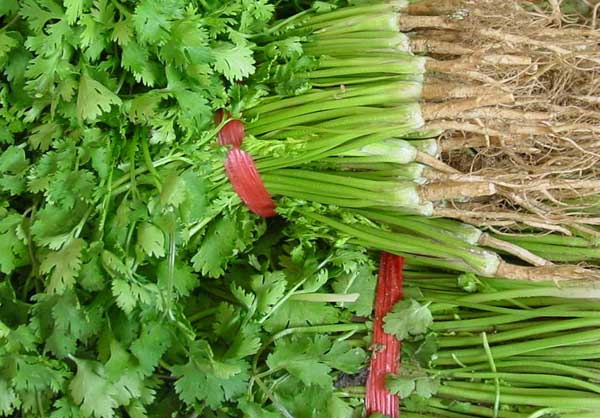
Cilantro can tolerate low temperatures of -1°C to 2°C, with an optimal growing temperature of 17°C to 20°C. Growth slows above 20°C and stops at 30°C. Cilantro is not demanding about soil, but soil with good structure, strong fertilizer and water retention, and high organic matter content is favorable for its growth. Cilantro originated in the Mediterranean region of Europe and was brought back from the Western Regions by Zhang Qian during the Western Han Dynasty (1st century BC). It is now cultivated in China's Heilongjiang, Hebei, Henan, Shandong, Anhui, Jiangsu, Zhejiang, Jiangxi, Hunan, Guangdong, Guangxi, Shaanxi, Sichuan, Guizhou, Yunnan, Xizang and other provinces and regions.
How to Grow Cilantro
1. Variety selection. Cilantro (coriander) has large-leaf and small-leaf varieties. Large-leaf varieties have tall plants, large leaves, few and shallow notches, mild aroma, and higher yield; small-leaf varieties have shorter plants, small leaves, deep notches, strong aroma, cold tolerance, and strong adaptability, but slightly lower yield. Generally, small-leaf varieties are chosen for cultivation.
2. Open-field cultivation. Cilantro can be grown in open fields in spring, autumn, and winter. Do not water too much during the seedling stage. When the seedlings reach 10 cm, the plants grow vigorously and should be watered frequently to keep the soil surface moist. While watering, apply quick-acting nitrogen fertilizer 1 to 2 times. Pay attention to intertillage and appropriate thinning, and remove weeds when thinning. In summer, appropriate shading is needed, and protection against heavy rain erosion is necessary. Drain promptly after rain to ensure uniform emergence.
3. Greenhouse cultivation. Generally direct-sown in September to October, with one watering of winter protection water before winter to help seedlings overwinter. Cover with the greenhouse frame in January; no ventilation is needed from January to February. When the seedlings turn green again, carry out intertillage, loosening of the soil, and weeding. When the seedlings reach 10 cm in height, the plants enter the vigorous growth stage, and the greenhouse should be kept at 15°C to 25°C. Apply about 15 kg of ammonium sulfate per mu each time, topdressing 1 to 2 times, which can advance the harvest.
4. Land preparation and fertilization. Generally, when planting cilantro (coriander), choose a plot with loose soil, rich organic matter, and convenient drainage and irrigation. After the previous crop is harvested, plow the soil promptly to a depth of 15-20 cm, and let it weather and sun-dry for more than 2 weeks. Then broadcast 4000-5000 kg of decomposed high-quality farmyard manure and 10-15 kg of compound fertilizer per mu as base fertilizer. After plowing and harrowing, make beds with a surface width of 140-150 cm, a height of 20-25 cm, and a length determined by the plot length, with ditches 30-40 cm wide that also serve as walkways. The bed surface requires fine, loose, and level soil. If drilling is used, open sowing furrows 4-5 cm wide and about 2 cm deep on the bed surface at a row spacing of 8-10 cm, ready for sowing.
Pest and Disease Control of Cilantro
1. Sclerotinia rot
① Rotate crops on diseased land, or disinfect the soil by using 40% quintozene at 1 kg per 667 sq m, adding 50 kg of fine soil, mixing well, and applying it to the soil.
② Use disease-free seeds or treat seeds with chemicals.
③ After covering with the greenhouse frame, spray 1000-fold “Sclerotinia Net” once, spray again after 10 days, spray a third time around the Beginning of Spring, and thereafter spray once every 7-9 days.
④ Ecological control: strengthen ventilation throughout the growing period and reduce humidity to lessen disease occurrence.
2. Leaf blight and spot blight
These two diseases occur in spots and patches, but once they appear, the condition spreads rapidly and causes relatively serious damage. They mainly harm leaves. After infection, leaves turn yellow-brown, and when humidity is high, the diseased parts rot. In severe cases, they infect downward along the leaf veins to the tender stems and then to the heart leaves, causing severe yield reduction. Therefore, these two diseases must be especially controlled. These two diseases are new diseases in our region and may be seed-borne, so we adopt preventive measures focused on seed disinfection. The method is to soak seeds in 500-fold “Captan” or “Carbendazim” solution for 10-15 min, rinse clean, and then sow. The second measure is to strengthen management. At the initial stage of covering with the greenhouse frame, when humidity is relatively high, pay attention to ventilation and dehumidification. Once disease is found, spray promptly for control, using 600-800-fold carbendazim solution, 600-fold mancozeb solution, 800-1000-fold 70% thiophanate-methyl solution, or 500-fold chlorothalonil solution. Mixing two or more of these gives a better effect.
3. Root rot
It mostly occurs in low-lying, damp plots. After the cilantro root system is infected, the main root turns yellow-brown or brown, becomes soft and rotten, and has no or almost no fibrous roots. When pulled by hand, the plant's root system breaks. Above ground, the plant appears stunted, with yellow, withered leaves, losing its marketability. The control method is to avoid planting in low-lying land as much as possible, and humidity must not remain excessively high for long periods. Chemical control is mainly soil treatment. Carbendazim 1 kg can be mixed with 50 kg of soil and scattered in the sowing furrows before sowing. In plots prone to the disease, a 300-fold continuous-cropping agent solution can be applied along with irrigation. Because root rot generally occurs before winter in October, control should be carried out before covering with the greenhouse frame, mainly by drenching the roots with 500-fold “Previcur” solution or 600-fold “Carbendazim” solution.
4. Powdery mildew
All aboveground parts of the cilantro plant can be infected, but it mainly harms leaves, stems, and flower stalks. It first appears on leaves near the ground, initially as white mold spots, which then expand on the mold spots into white powdery patches, occurring on both sides of the leaves; stem infection mostly occurs at the nodes. When conditions are suitable, the powdery substance quickly covers the flowers and fruits, mostly spreading from the lower part of the plant upward. In the later stage, the hyphae turn from white to light brown, and many small black grains are produced on the diseased parts, namely the ascocarps of the pathogen.
[Control methods]
① Breed powdery mildew-resistant varieties and strengthen temperature and humidity management in the greenhouse.
② After harvest, promptly remove diseased residues to reduce overwintering inoculum sources.
③ In the early stage of disease, dusting or smoke methods can be used in the greenhouse. In the evening, scatter 10% carbendazim-thiram dust at 1 kg per 667 sq m, or use 45% chlorothalonil smoke agent at 250 g per 667 sq m, ignite with a smoldering fire, and fumigate overnight
④ In open fields or greenhouses, choose 1500-2000-fold 30% triflumizole wettable powder, or 200-300-fold 50% sulfur suspension concentrate, 150-fold 2% Wuyi mycin aqueous solution or 2% agricultural antibiotic 120 aqueous solution, 1500-fold 15% triadimefon (Bayleton) wettable powder, 3000-fold 25% Tilt emulsifiable concentrate, 2000-fold 15% triadimefon (Bayleton) wettable powder plus 4000-fold 25% Tilt emulsifiable concentrate, or 9000-fold 40% Fuxing emulsifiable concentrate, at intervals of 7-21 days, for 2-3 consecutive treatments. Stop applying the chemicals 7 days before harvest.