How to prevent and control pepper damping-off? A detailed guide to practical techniques
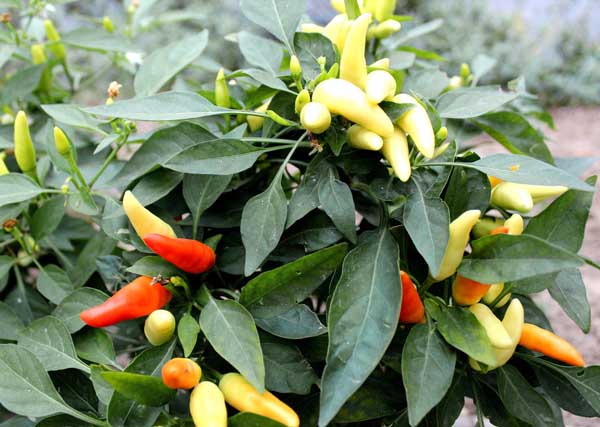
Damping-off is one of the important diseases of peppers at the seedling stage. It is found throughout the country and is often caused by unsuitable temperature and humidity during seedling raising and careless management. When the disease is severe, it often causes seedlings to lodge and die in patches. Besides harming peppers and other solanaceous vegetables, the disease can also affect the seedlings of cucurbits, lettuce, celery, Chinese cabbage, cabbage, radish, onion and other vegetables. When autumn seedlings are infected, the base of the stem becomes yellow-green and water-soaked, then quickly turns yellow-brown and spreads until it encircles the stem. The diseased tissue rots, dries out and becomes sunken, producing a constriction. The water-soaked area spreads from bottom to top, and the young seedlings lodge on the ground. At the early stage of the disease, only a few seedlings in the seedbed are affected. After a few days, it gradually spreads outward from this center, eventually causing seedlings to lodge and die in patches.
Occurrence pattern of pepper damping-off
The pathogen overwinters in the soil as oospores and survives adverse conditions. In the following spring, when suitable conditions occur, it germinates to produce sporangia and releases zoospores or directly produces germ tubes that invade the host, or it lives saprophytically as mycelium in diseased residual tissues or on humus. In the next spring, it produces sporangia and zoospores that infect seedlings, causing damping-off. The pathogen spreads through rain and irrigation water, and the application of contaminated fertilizer, transplanting and other farming activities can also spread the pathogen.
The main factors affecting the severity of damping-off are soil temperature, humidity, light and the level of seedbed management. High soil moisture, humid air and temperatures between 30——36°C or 8——9°C are suitable for pathogen growth but unfavorable for seedling development, so the disease is severe. Improper management during the seedling stage often also provides conditions for disease occurrence, such as sowing too densely, flood irrigation, improper ventilation for heat preservation, spindly seedling growth, and freezing injury. In addition, low-lying land, poor drainage, heavy clay soil and the application of undecomposed compost also make the disease more likely.
Pepper damping-off prevention and control techniques
1. Choose the seedbed reasonably. The seedbed should be selected as a disease-free plot with high, dry terrain, shelter from wind and good sun exposure, convenient drainage and irrigation, fertile soil and good aeration. To prevent the seedbed from carrying in pathogens, decomposed farmyard manure should be applied.
2. Seedbed treatment. Before sowing, the seedbed should be thoroughly turned and sunned, and old seedbeds should undergo soil treatment. Commonly, 50% carbendazim wettable powder is used at 8——10 grams per square meter of seedbed, plus 5000 grams of fine soil, mixed evenly. Take 1/3 of the medicated soil as a bedding layer, and after sowing use the remaining 2/3 of the medicated soil as a covering layer.
3. Seed disinfection. Sow after germination to shorten the time seeds remain in the soil.
4. Strengthen cultivation management
① Implement a 2-3 year rotation with non-solanaceous and non-cucurbit crops.
② Lay plastic film to block pathogens in the soil from splashing onto the plants and reduce infection opportunities.
③ Keep the seedbed soil temperature above 16°C and the air temperature between 20-30°C.
④ After the seedlings emerge completely, pay attention to ventilation, and at the same time strengthen soil cultivation and loosening to prevent excessive humidity in the seedbed. Keep the seedling-raising equipment well transparent to light, increase light exposure, and promote healthy and strong seedling growth.
⑤ Remove diseased plants promptly when found, concentrate them for burning, and prevent the disease from spreading.
5. Chemical control. After diseased plants are found, promptly deal with diseased leaves and plants, and spray pesticide over the whole area for protection.
① During the seedling stage, use "Qingkulike" 50-100 ml for spraying, once every 7 days, for 2-3 consecutive sprays.
② Remove diseased seedlings immediately when found, and promptly spray "Qingkulike" 50-100 ml + "garlic oil" 7 ml diluted in 30 jin of water with a large water volume, once every 3-5 days, for 2-3 consecutive sprays.