Detailed Explanation of Peanut Planting Techniques and Management Methods
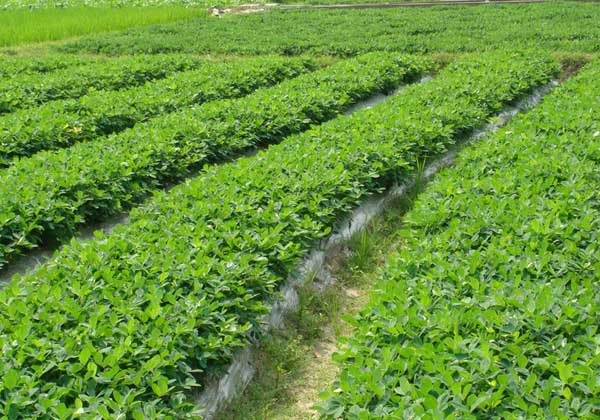
Peanut, originally named groundnut, its seed is also called peanut kernel, with the laudatory name "longevity fruit," belonging to the seed part of the six major organs of plants. The fruit skin is rough, mostly with a checkered pattern, and inside the fruit there is a semi-transparent thin skin belonging to protective tissue, mainly light red in color, with a few being dark purple. It belongs to the Rosales order, Fabaceae family, an annual herbaceous plant, with stems erect or prostrate, 30-80 cm long, wing petals and keel petals separate, pods 2-5 cm long, 1-1.3 cm wide, inflated, with thick pod walls, flowering and fruiting period from June to August. Mainly distributed in Brazil, China, Egypt, and other places. It is a raw material for producing edible vegetable oil, and peanut kernels can be processed into by-products.
Planting Conditions
1. Peanut has a certain adaptability to slightly acidic soil and is a pioneer crop for developing red soil; however, relatively high soil acidity requires the application of calcareous fertilizers such as lime to neutralize it. It is a short-day crop but is not very sensitive to photoperiod. It requires relatively high heat and can only be sown when the daily average temperature is stably above 12°C; during the main growth period, a temperature of 20-28°C is required, and when the autumn temperature drops to around 11°C, pod development stops. The average accumulated temperature during the growth period in China's peanut production areas is around 3500°C. The growth period is 100-150 days, and individual late-maturing varieties can reach 180 days. Generally, early-maturing varieties have a short seed dormancy period, late-maturing varieties have a long dormancy period, and dragon-type varieties have the strongest dormancy. The dormancy of peanut seeds is not only affected by the seed coat but is also related to certain hormone-like substances in the embryo. Dormancy can be broken by using chemical substances such as ethephon and kinetin, sun-drying seeds, and promoting germination at suitable temperatures.
2. Peanut rhizobia in the soil are attracted by root exudates, enter cortical cells through epidermal cells, divide and multiply, causing the cells to be stimulated and form root nodules. This period is a parasitic relationship, and only afterward, when the nitrogen fixation activity of rhizobia strengthens, does it become symbiotic. At the end of the peanut growth period, due to root breakage and nodule rupture, rhizobia return to the soil and live saprophytically. The suitable temperature for rhizobia reproduction is 18-30°C, moisture at about 60% of the soil's maximum water-holding capacity, and pH 5.5-7.2. When nitrate nitrogen in the soil is excessive, it inhibits rhizobial nitrogen fixation, so nitrogen application should be appropriately controlled in the early growth stage. Increasing the application of phosphorus, potassium, and calcium fertilizers can promote rhizobial reproduction and improve nitrogen fixation capacity.
Peanut Sowing
1. Sowing time. When the soil temperature at 5 cm depth is stably at 12°C in spring, pearl bean-type peanuts can be sown. From late April to early May, plastic film mulching cultivation can be slightly advanced by 7-10 days.
2. Sowing density and method. Ridge planting: ridge spacing 50 cm, hole spacing 13-17 cm, i.e., 120,000-150,000 holes/hectare, with two seeds per hole. Plastic film mulched bed planting: one bed with two rows, small row spacing 40 cm, hole spacing 13-17 cm, two seeds per hole, i.e., 120,000-150,000 holes/hectare.
Field Management
1. Ridge Cultivation
① Clearing seedlings to promote root development: carried out when seedlings have basically emerged. First pull out weeds around the seedlings, then scrape away the soil to expose the cotyledons above the ground. Be careful not to damage the roots. About half a month after clearing, fill the soil back to cover the holes.
② Intertillage and weeding: carry out intertillage and weeding 3 times during the seedling stage, cluster stage, and flowering stage. Master the principle of "shallow, deep, shallow," and be careful to prevent burying seedlings with soil during intertillage at the seedling stage; during intertillage at the flowering stage, prevent damaging the pegs.
③ Hilling: carry out hilling half a month after flowering, not too thick, with 3 cm being appropriate.
2. Film Mulching Cultivation
During the period from mulching to emergence, when holes in the film are found or the coverage is not tight, promptly use soil to press and cover again and seal tightly. When seedlings break through the film and arch up the soil and begin to expose true leaves, scrape away the soil on the film to expose the cotyledons to the ground surface. When missing holes are found, immediately replant with pre-germinated seeds. Before flowering, carry out one intertillage and weeding in the furrow. During the period from flowering and pegging to pod filling, according to the peanut growth condition, spray 500 times diluted Xianke topdressing essence on the leaf surface to replace root topdressing, or spray 0.2%-0.3% monopotassium phosphate 500 times solution 2-3 times, or spray peanut dwarfing multi-harvest or Diguo Zhuangdiling to increase nutrient transport, promote fruit development, and improve peanut yield. During this period, if drought occurs, irrigate promptly.
3. Continuous Cropping Methods
① Land preparation: land preparation must be fine, and autumn land preparation is essential, with deep plowing to 30 cm, fine harrowing multiple times, ensuring the soil is loose on top and firm below, with good permeability, and ridges should be formed in autumn and compacted. Through the low-temperature effect in winter, kill the fungi in the soil that cause peanut stem rot and root rot, reducing the occurrence of diseases and pests.
② Fertilization: in continuous cropping cultivation of peanuts, organic fertilizer must be increased, and with autumn plowing, apply 4000-5000 kg of high-quality farmyard manure per mu. At sowing, mainly apply phosphorus and potassium fertilizers, with 15 kg of diammonium phosphate and 8 kg of potassium sulfate per mu. In early to mid-August, spray 2% monopotassium phosphate on the leaf surface twice, and at the same time use peanut-specific microbial preparations containing nitrogen-fixing bacteria, phosphate-solubilizing bacteria, potassium-solubilizing bacteria, and appropriate amounts of medium and trace elements, which has a significant effect on disease prevention and control.
③ Variety selection: strengthen quarantine, strictly prohibit introducing seeds from diseased areas. Select disease-resistant and high-yield varieties and replace varieties in a timely manner. Before shelling peanuts, choose sunny weather and sun-dry the seeds for 2-3 days. Combined with shelling, select first-grade seeds that are large and plump, with bright skin color, high full-pod rate, good uniformity, clear reticulation, moderate size, attractive appearance, and high germination vigor and germination rate.
④ Management: after emergence, if there are missing seedlings or broken rows, replant with pre-germinated seeds. After full emergence, carry out seedling clearing to promote root development, using hands to scrape away the floating soil at the root zone of seedlings to expose the two cotyledons. About 15 days after clearing, fill the soil back to cover the holes. Carry out three intertillage and weeding operations during the seedling stage, cluster stage, and flowering stage. The first intertillage should be shallow to prevent excessive soil burying the stems and affecting lateral branch development; just loosen the surface soil and remove weeds thoroughly. The second intertillage is at the nodule formation stage, and this intertillage can be slightly deeper, generally around 6 cm. The third intertillage is at the flowering stage, and this intertillage should be especially careful to avoid damaging the pegs, with a depth of around 5 cm. That is, master the principle of "shallow, deep, shallow." Hilling 15 days after flowering should be 3 cm, not too thick. Strengthen the prevention and control of diseases and pests, and prevent and control diseases as early as they are found.
4. Land Preparation and Fertilization
① Land preparation: after the previous crop is harvested in autumn, stubble is removed, and after autumn plowing, harrowing, and compaction, new ridges are made. For plots prepared for plastic film mulching cultivation, make beds with a bottom width of 75-80 cm, bed height of 5 cm, and bed surface width of 65-70 cm, with small ridges 20-25 cm wide and 15 cm high between beds for taking soil during sowing.
② Fertilization: along with autumn land preparation and ridging, apply decomposed barnyard manure, kang pit soil, composted green manure, etc. Apply 15,000-30,000 kg/hectare, with furrow application for ridge planting and broadcast application for bed planting. For ridge planting cultivation, farmyard manure can also be applied in furrows before sowing in the sowing year. At sowing, apply 150-225 kg/hectare of diammonium phosphate and 75-120 kg/hectare of potassium sulfate as seed fertilizer. For acidic soil, apply lime along with base fertilizer. If the pH value (acidity-alkalinity) is 6.0-6.5, apply 450 kg/hectare of lime; if pH is 5.5-6.0, apply 675 kg/hectare of lime.
Disease and Pest Control
1. Viral Diseases
Peanut viral diseases: except for bud blight, which is mainly transmitted by thrips, other diseases such as mild mottle disease, yellow mosaic disease, and common mosaic disease are transmitted through seeds and aphids. Seed-borne diseases are the main primary infection source for the prevalence of these diseases. The level of seed transmission rate is mainly affected by the disease onset period; early onset means high seed transmission rate. The seed virus-carrying rate is negatively correlated with seed size: large seeds have a low virus-carrying rate, and small seeds have a high virus-carrying rate. Under conditions where virus sources and susceptible varieties exist, the timing and quantity of aphid occurrence are the main factors for the prevalence of viral diseases. The aphids that transmit viruses are mainly winged aphids active in the field. Generally, if aphids occur early and in large numbers during the peanut seedling stage, it is likely to cause severe disease prevalence; otherwise, the disease is mild. Low rainfall, mild climate, and dryness during the peanut seedling stage easily lead to large aphid outbreaks, causing disease prevalence; otherwise, it is mild. The control methods are as follows.
① Use virus-free or low-virus seeds to eliminate or reduce primary infection sources. Virus-free seeds can be obtained through isolated propagation.
② Select varieties such as Yuhua No. 1, Haihua No. 1, and Yuhua No. 7, which are lightly susceptible and have low seed transmission rates, and choose large kernels as seeds.
③ Promote plastic film mulching technology; plastic film has a certain aphid-repelling effect and can reduce the damage of viral diseases.
④ Timely clear weeds in and around the field to reduce aphid sources.
⑤ Do a good job in disease quarantine and prohibit transferring seeds from diseased areas.
⑥ Chemical control of aphids: at sowing, use 3% carbofuran granules to cover seeds, with a dosage of 2.5-3 kg per mu; or use 25% phorate (812) to cover seeds, with a dosage of 0.5 kg per mu. After peanut emergence, check promptly, and when aphids are found, promptly spray 40% dimethoate emulsifiable concentrate 800 times solution plus Xingaozhimо 800 times solution to enhance efficacy and prevent aphid virus transmission.
2. Brown Spot Disease
Crop rotation: the host range of peanut leaf spot disease is relatively narrow, infecting only peanuts. Rotating with other crops prevents the pathogen from finding a suitable host, reducing damage and effectively controlling disease occurrence. The rotation cycle should be more than 2 years. The control methods are as follows.
① After peanut harvest, promptly clear diseased leaves from the field. When using manure composted from diseased plants, it must be fully decomposed before use to reduce disease sources.
② Although there are no highly resistant varieties to leaf spot disease in production, there are large differences in disease tolerance among varieties. Generally, varieties with thick leaves and dark leaf color are more resistant. In severe disease areas of Henan, it is advisable to choose varieties with relatively strong disease tolerance such as Yuhua No. 1, Haihua No. 1, Yuhua No. 4, and Yuhua No. 7.
③ Strengthen management to enhance plant disease resistance: rational close planting, scientific fertilization, and effective measures to make plants grow robustly and enhance disease resistance.
④ At the early stage of disease onset, the first spraying should begin. The agents can be selected from 50% carbendazim wettable powder 1500 times solution; or 50% thiophanate-methyl wettable powder 2000 times solution; or 80% zineb wettable powder 400 times solution; or 80% mancozeb 400 times solution; 75% chlorothalonil wettable powder 600-800 times solution; or Kangku Ning 700 times solution; or 0.3-0.5 degree Baumé lime sulfur mixture, etc. Afterward, spray once every 10-15 days, for 2-3 consecutive sprays, with 50-75 kg of spray solution per mu each time. Since peanut leaf surfaces are smooth, appropriately adding an adhesive when spraying can achieve better control effects. Kangku Ning has relatively good effects on brown spot disease, mancozeb also has good control effects on net blotch, and carbendazim should not be used in areas where leaf spot and rust occur together.
3. Bacterial Wilt
It damages the vascular bundle of peanuts and can rapidly kill a large number of plants in a short period. Peanut bacterial wilt can occur throughout the entire growth period from seedling stage to harvest, generally starting around flowering, with the full flowering stage being the peak onset period. The pathogen mainly infects the roots, causing the root tips to become discolored and soft-rotted, with vascular bundle tissue turning dark brown and extending from bottom to top to the top of the plant. After cross-cutting the diseased part and squeezing it by hand, cloudy milky-white bacterial fluid can be seen flowing out. Infected plants initially show the first and second leaves at the top of the main stem first showing water-loss wilting, and after the trend expands, all leaves on the whole plant wilt from top to bottom, with dull leaf color but still green. It takes 7-15 days from infection to death of the plant, and the pods and pod stalks on the plant become brown and wet-rotted.
Control methods: crop rotation can effectively control the occurrence of bacterial wilt. Since peanut bacterial wilt has a relatively wide host range, crop arrangement should be well considered during rotation. Rotation with sweet potato, corn, millet, or paddy-upland rotation is more suitable, with a rotation cycle of 3-5 years. For chemicals, 25% Dikushuang can be made into toxic soil to cover seeds, or 1000 times solution can be used to drench roots; or streptomycin 200 mg/kg-400 mg/kg (200 ppm-400 ppm) can be used to soak seeds or drench roots.
4. Rust Disease
Peanut rust disease commonly occurs in peanut production areas in southern China and is a relatively serious disease. There is also a trend of expansion and spread in northern peanut production areas. Peanut rust mainly damages leaves, and when the disease is severe in later stages, it also damages petioles, stems and branches, pod stalks, and pod shells. It generally begins to cause damage from the flowering stage, first occurring on leaves at the bottom of the plant, then gradually extending upward to the top leaves, causing leaf color to turn yellow. At the early stage of onset, white spots the size of needle tips first appear on the underside of leaves, while corresponding yellow small spots appear on the upper side of the leaves. Later, the lesions on the underside of leaves become light yellow and gradually expand, appearing as yellow-brown raised areas. After the epidermis ruptures, touching them by hand can cover the hand with rust-colored powder. In severe cases, the entire leaf turns yellow and dries up, and the whole plant dies, looking like fire from a distance. It not only severely reduces yield but also affects quality.
Control methods: in addition to selecting disease-resistant varieties, strengthen field management, increase the application of organic fertilizer and phosphorus and potassium fertilizers, do a good job in drought prevention and drainage, cultivate strong seedlings, and improve plant disease resistance. When the disease plant rate in the field reaches 10%-20%, you can choose 50% colloidal sulfur 150 times solution; or Dixo sodium 600-800 times solution; or 75% chlorothalonil 800 times solution; or 1:2:200 (copper sulfate: quicklime: water) Bordeaux mixture; or 25% triadimefon wettable powder 3000-5000 times solution, spraying once every 10 days or so, for 3-4 consecutive sprays. Dixo sodium should not be used continuously and should be alternated with other agents, with 60-75 kg of spray solution per mu each time.
5. Leaf Spot Disease
At onset, symptoms first appear on lower leaves, then gradually spread to upper leaves. In the early stage of the disease, brown small spots are produced, gradually developing into round or irregular lesions. Brown spot disease lesions are relatively large, with a yellow halo around the lesions, while black spot disease lesions are smaller, lighter in color than brown spot disease, with neat edges and no obvious halo. In humid weather or prolonged rainy conditions, lesions can merge with each other into irregular large spots, causing leaves to scorch and severely affecting photosynthesis. If it occurs on petioles, stems, or pegs, mild cases produce oval dark brown or brown lesions, while severe cases cause the entire stem or peg to turn black and die, greatly reducing peanut yield. The control methods are as follows.
① Eliminate pathogen sources: after peanut harvest, promptly clear pathogen residues left in the field, and do not randomly discard or pile them. For plots with pathogen residues, timely plowing should be carried out to accelerate the decomposition of pathogen residues and prevent the pathogen from re-infecting peanuts.
② Select disease-resistant varieties: relatively resistant varieties are generally those with upright growth, thick leaves, dark color, and large peanut kernels, or early-maturing varieties. In plots with relatively severe disease, these varieties must be selected for planting.
③ Strengthen cultivation management: sow at the appropriate time, plant at reasonable density, apply more organic fertilizer, and apply a small amount of additional phosphorus and potassium fertilizer to promote robust peanut growth and improve disease resistance.
④ Chemical control: timely spraying at the early stage of disease onset can reduce the disease. Relatively good agents: 80% mancozeb 400 times solution, 70% thiophanate-methyl 1000-1500 times solution, 50% carbendazim 1000-1500 times solution. When spraying, pay attention to even and thorough spraying, spraying once every 7-10 days, for 2-3 consecutive sprays, which can basically control the occurrence of the disease.
6. Witch's Broom Disease
The disease usually begins to occur when peanuts flower and peg. Diseased plants have clustered branches and leaves, shortened internodes, and severe dwarfing, mostly at 1/2 the height of healthy plants. Diseased plant leaves become smaller and thicker, dark in color and brittle in texture. Axillary buds sprout in large numbers, and the small weak stems and leaves grow densely into clusters. Normal leaves gradually turn yellow and fall off, leaving only clustered branches. In the middle and late stages of disease development, floral organs become leaf-like. Pegs cannot enter the soil, or enter very shallowly, or turn upward into a steelyard hook shape. Roots shrivel, and there are few or no pods.
Control methods: plant disease-resistant (tolerant) varieties. Sow at the appropriate time: spring peanuts should be sown early at the appropriate time, and autumn peanuts should be sown late at the appropriate time. Strengthen fertilizer and water management to improve disease resistance. Eradicate leguminous weeds and green manure and other suspicious hosts near the field to reduce primary infection sources. At the early stage of disease onset, promptly pull out diseased seedlings and promptly control leafhoppers, which can reduce disease occurrence.