What conditions are needed for growing green beans? A detailed explanation of the growing environment requirements
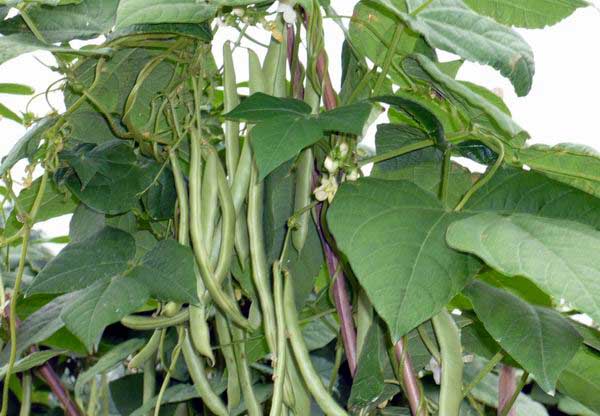
Green beans originated in Central and South America and were introduced to Asia between the 17th and 19th centuries. Green beans can be widely grown in both northern and southern China. Today, the editor will share with you the growing conditions for green beans.
Temperature requirements
Green beans like warmth and are not tolerant of frost. The temperature range for seed germination is 20-30°C; below 10°C or above 40°C, they cannot germinate. Seedlings are sensitive to temperature changes. After a short period at a low temperature of 2-3°C, they begin to lose chlorophyll, and 0°C causes frost damage.
Light requirements
It is a short-day plant, but different varieties respond differently to photoperiod and can be divided into 3 types: first, the photoperiod-sensitive type; second, the photoperiod-insensitive type; and third, the moderately photoperiod-sensitive type.
Water requirements
Green beans have a well-developed root system and many lateral roots, and are relatively drought-tolerant but not waterlogging-tolerant. Seed germination requires full water absorption, but too much water leads to oxygen deficiency in the soil, and the seeds easily rot. The suitable field water capacity during the plant growth period is 60-70% of the maximum water capacity. The flowering period has strict water requirements, and the suitable relative air humidity is 65-80%.
Soil and nutrient requirements
Green beans are best cultivated in soil with a deep plow layer, loose texture, abundant humus and good drainage. Sandy loam, loam and general clay soils can all support growth, but they should not be cultivated in low-lying wet land or heavy clay. The suitable pH is 6-7. It should not be too acidic or too alkaline. Green beans absorb large amounts of nitrogen and potassium, and less phosphorus. They also need a certain amount of calcium fertilizer.