Detailed Explanation of Key Garlic Cultivation Techniques and Field Management Methods
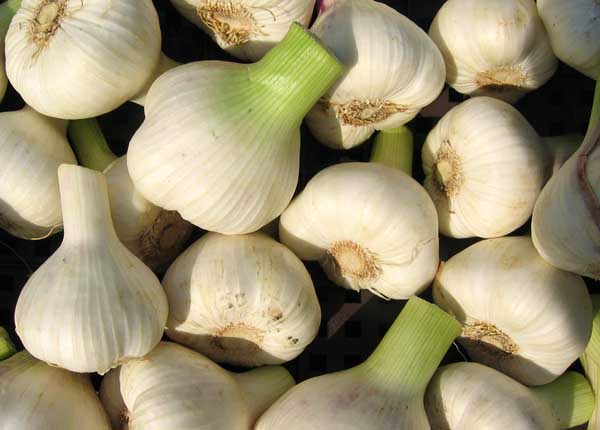
Garlic was introduced to China from the Western Regions during the Qin and Han dynasties. Through artificial cultivation and breeding, it has anti-cancer properties and is widely loved and eaten by the public. Garlic grows vigorously, has strong cold resistance, a high bolting rate, and stores well, making it suitable for autumn planting. The cultivation techniques for garlic are introduced as follows.
Growth Habits
Garlic has string-like fibrous roots; its ability to absorb water and nutrients is relatively weak, and the bulbs grow and expand in the soil, so garlic should be cultivated on plots with loose soil, good drainage, and rich organic matter. Although garlic has wide adaptability, sandy loam is still preferable. Because sandy loam is loose, it is suitable for root development, with early greening, early bolting, large bulbs with a strong pungent flavor, and easy harvesting.
1. Temperature: Prefers cool conditions, with a suitable temperature of -5-26°C. Garlic seedlings have the strongest cold resistance at the 4-5 leaf stage, which is the most suitable seedling stage for overwintering.
2. Light: Garlic that has completed vernalization begins flower bud and bulb bud differentiation under long-day conditions of more than 13 hours and relatively high temperatures, while under short-day and cool conditions, it is only suitable for stem and leaf growth.
3. Water: Prefers moisture and is afraid of drought.
4. Soil and nutrition: It has low requirements for soil, but fertile loam rich in organic matter, loose and breathable, with strong water retention and drainage performance is more suitable.
Planting Preparation
After the previous crop is harvested, the plot for planting garlic should be plowed and sun-dried immediately, and before sowing, the land should be leveled again and beds made. Base fertilizer should be applied before plowing. Because garlic has a long growth period, high population density, and high fertilizer demand, generally 5000-8000 kg of high-quality organic fertilizer such as manure or barnyard manure is applied per mu; combined with 20-30 kg of phosphorus and potassium fertilizer. Organic fertilizer must be fully decomposed. If raw fertilizer is used, it will burn the garlic roots during fermentation and also cause underground pests, especially severe occurrences of root maggots.
1. Land preparation. The plowing depth is generally about 20 cm. It should be finely plowed, leveled, and compacted, with no obvious clods, achieving "level, loose, fine, clean." The length of the beds should be determined according to the water source; beds 80-100 m long and 4.2-4.4 m wide can be made; beds 40-50 m long and 4.2-4.4 m wide can also be made.
2. Seed selection. Manually peel off the skin and separate the cloves, remove the garlic base plate and stem plate, and grade them by large, medium, small, and central cloves. Small cloves are handled according to specific circumstances. The seed selection requirements are pure white with no red streaks, no wounds, no sugaring, and no glossy skin. In principle, each clove should weigh about 5 g. Seed size is the key to obtaining high yield.
3. Timely sowing. Garlic should be sown at the right time. The planting time is from the end of White Dew to the beginning of Autumn Equinox (late September to early October), when the temperature is around 17°C. Before sowing, sun-dry the garlic cloves for 1-2 d.
4. Reasonable close planting. Generally, the row spacing is 20 cm, the plant spacing is 16-17 cm, and about 20,000 plants per 667 sq m. The method is to open furrows with a rake or furrow opener, with a furrow depth of about 5 cm. After planting, cover the garlic with about 1 cm of soil on top, and remember to water when planting.
Field Management
1. Irrigation
Garlic has a relatively large water requirement, and generally needs watering 4 times throughout the growing period.
① Film-covering water: After garlic is sown, it should be watered promptly, sufficiently and thoroughly, without missing a single plant, with 100 cubic meters of water per 667 sq m. This watering both meets the needs of garlic planting and facilitates plastic film mulching.
② Seedling-strengthening water: Generally watered around early April or when the ground temperature is above 15°C.
③ Bolting water: Water with this as soon as the garlic scape just emerges.
④ Bulb-expanding water: Water with this after pulling the garlic scapes.
2. Plastic film mulching. Plastic film mulching is the key to increasing garlic yield. It can raise ground temperature, accelerate organic matter decomposition, reduce water evaporation, and satisfy garlic's environmental needs. After watering for film covering, when the ground has slightly settled, cover with film using a mulching machine or manual method. Regardless of the method, the film must be pulled tight and both sides pressed firmly to prevent strong autumn and winter winds from lifting the film.
3. Releasing seedlings. When garlic sprouts just break through the soil, promptly pierce the plastic film to let the seedlings emerge outside the film. Generally, in the morning or evening, when the temperature is low and the film has little elasticity, lightly pat the film with a new broom or gently rake it with bamboo rake tines.
4. Manual weeding. During the garlic growing period, the temperature is relatively low, and weed damage mainly occurs after the Spring Festival. Because of plastic film mulching, manual weeding is used. The method is to use thick iron wire or 8 mm steel bars bent into a "7" shape to make a small hook, pierce a small opening in the film, and remove small weed seedlings.
5. Pulling garlic scapes. When the upper part of the garlic scape begins to curl upward from below, it is the best time to pull the scapes. The method is to gently pull by hand every day from 11 a.m. to 3 p.m.
6. Fertilization
The fertilization principle for green food garlic is mainly organic fertilizer, with formula application of a small amount of chemical fertilizer; mainly base fertilizer, with topdressing as a supplement.
① Base fertilizer: In late September, apply 5000 kg of high-quality farmyard manure (fully decomposed barnyard manure, compost, cake fertilizer), 20 kg of urea, and 10 kg of potassium sulfate per 667 sq m. It is required to spread evenly, then deeply plow the land.
② Topdressing: In early April of the second year, along with watering for seedling strengthening, apply 10 kg of quick-acting urea per 667 sq m. In mid-April, dissolve 0.5 kg of monopotassium phosphate in 50 kg of water and spray per 667 sq m.
Pest and Disease Control
Because green food garlic cultivation is mainly based on organic fertilizer, the plants have strong disease resistance, and in addition the temperature during the garlic growing period is low, so garlic pests and diseases occur relatively lightly. The commonly occurring pests and diseases are leaf blight and garlic maggots.
1. Blight. Leaf blight is a major disease in the garlic growth process. When the damage is severe, garlic does not bolt easily, thereby affecting garlic yield. The general control method is: in mid-April at the early stage of onset, use 100 g of 75% chlorothalonil wettable powder per 667 sq m, dilute with water, and spray once.
2. Garlic maggots. Garlic maggots do not occur commonly in general years. For plots where garlic maggots occur relatively heavily, combined with land preparation, when opening furrows for garlic planting, apply 40 kg of plant ash per 667 sq m into the furrows, which can effectively control the occurrence of garlic maggots. However, when garlic maggot damage is relatively severe, chemical control can be used. The control method is in late April to use 100 mL of 50% phoxim emulsifiable concentrate per 667 sq m, dilute with water, and pour the solution onto the garlic roots.
3. Phytophthora blight
[Symptoms] Leaves show water-soaked grayish-green discoloration from the leaf tip downward, as if scalded by water, with faint cloud-like patterns on the lesion surface, and the boundary between diseased and healthy parts is not obvious. Lesions are generally not very distinct; for example, sparse white mold appears and easily disappears when dry.
[Occurrence pattern] The pathogen overwinters in diseased residues as mycelium, oospores, and chlamydospores. It is generally spread by rain splash and irrigation water, invading through stomata. This disease is prone to occur during continuous rainy weather or in low-lying, poorly drained planting sites.
[Control methods]
① Select disease-resistant varieties according to local conditions.
② Strengthen fertilizer and water management to improve plant resistance.
③ Spray pesticides early for prevention, using 70% fosetyl-aluminum-manganese-zinc 1000-fold solution or.
4. Garlic leaf blight
[Disease characteristics] Leaf blight mainly damages garlic leaves, starting at the leaf tip or other parts of the leaf. Initially, small flower-white round spots appear, then expand into irregular or elliptical gray-white or gray-brown lesions, with black mold-like material growing on the upper part. In severe cases, all diseased leaves wither and die, with many small black particles scattered on them. When the damage is severe, the whole plant does not bolt.
[Occurrence pattern] The pathogen overwinters as mycelium or perithecia with diseased residues left in the soil or on garlic bulbs. In the second year, under suitable conditions, ascospores cause primary infection, and conidia produced on diseased parts cause secondary infection.
[Control methods]
① Before sowing, treat seeds with chemicals plus new high-fat film for seed dressing and soaking. After splitting the garlic bulbs, use 50% carbendazim wettable powder at 0.3% of the weight of garlic seed for seed dressing.
② Do not practice continuous cropping; rotate to other vegetables. Promptly clean up diseased and residual plants, burn or deeply bury them to reduce sources of inoculum.
③ Strengthen field management. Fertilize reasonably, plant reasonably densely, open furrows and drain water in time, lower temperature, and enhance plant disease resistance.
④ Carry out chemical control promptly at the early stage of onset. Use 70% fosetyl-aluminum-manganese-zinc wettable powder 500-700-fold, once every 7-10 days, for 2-3 consecutive treatments.
5. Purple blotch
[Disease characteristics] In the field, onset mostly begins at the leaf tip or the middle of the flower stalk, then spreads to the lower part after a few days. Initially, slightly sunken small white spots appear, with a slightly purple center. After expansion, they become yellow-brown spindle-shaped or elliptical lesions. When humidity is high, black mold-like material is produced on the diseased part, namely the pathogen's conidiophores and conidia. Lesions often have concentric rings and tend to break at the diseased part. Infected bulbs during storage show the neck becoming dark yellow or reddish-brown and soft-rotted.
[Control methods] At the early stage of onset, spray 75% chlorothalonil wettable powder 500-600-fold solution, or 64% oxadixyl-mancozeb wettable powder 500-fold solution, 40% dimethomorph wettable powder 500-fold solution, 58% metalaxyl? mancozeb wettable powder 500-fold solution, or 50% iprodione wettable powder 1500-fold solution, once every 7-10 days, for 3-4 consecutive treatments, all with relatively good results.
6. Garlic soft rot
[Disease characteristics] Garlic soft rot is a bacterial disease, and low temperature and high humidity favor its occurrence. After garlic is infected, onset first occurs at the leaf margin or midrib, forming yellow-white striped lesions along the leaf margin or midrib that can run through the entire leaf. When humidity is high, the diseased part becomes yellow-brown and soft-rotted. Generally, the lower leaves are affected first, then it gradually spreads to the upper leaves until the whole plant turns yellow and dies. Pest control for disease prevention: because pests create wounds on garlic that facilitate invasion by soft rot bacteria, and some pests carry the bacteria internally or externally and directly transmit the disease. Therefore, controlling pests is very important for controlling soft rot. Early attention should be paid to controlling underground pests such as wireworms and mole crickets. From the seedling stage onward, pests such as striped flea beetles and root maggots should be controlled.
[Chemical control] Before onset or at the early stage of onset, use 72% agricultural streptomycin 3000-4000-fold solution, or 47% kasugamycin-copper oxychloride WP 750-fold solution, 50% amobam 1000-fold solution, or new phytomycin 3000-4000-fold solution, spraying once every 5-7 d, for 2-3 consecutive treatments depending on the disease condition. Focus should be on lightly diseased plants and the plants around them, and care should be taken to spray the stem base of plants near the soil surface.
Harvesting and Storage
1. Harvest. The garlic harvest season is generally in mid-to-late May, around Grain Full. When garlic leaves turn yellow and the cloves protrude, it can be harvested. Use a special tool, a garlic puller, during harvest, without breaking or bruising. After harvest, garlic should be dried promptly so it dries thoroughly, while also preventing exposure to strong sunlight and sugaring. The usual method is: cover the garlic bulbs with garlic leaves and dry them in the field for 10 h, then cut off the garlic roots (when cutting, be sure to cut flat and clean, and never injure the garlic body), and place in a ventilated place to continue drying. When the garlic stalks are about 80-90% dry, cut the garlic stalks 2 cm below the bulbs, bag them, and place in a ventilated place to continue drying, but they must not be directly exposed to strong sunlight. After garlic harvest, promptly remove the residual plastic film.
2. Grading. Thoroughly dried garlic bulbs should be graded by bulb size and quality. Green food garlic is divided by specification into special-grade bulbs (transverse diameter ≥70 mm, stalk length ≤15 mm), first-grade bulbs (transverse diameter ≥60 mm, stalk length ≤15 mm), second-grade bulbs (transverse diameter ≥50 mm, stalk length ≤15 mm), and third-grade bulbs (transverse diameter<50mm,梗柄长≤15mm=;按外观形态、品质分为一等、二等、三等。
3. Packaging. Green food garlic should be packaged separately according to specification and grade, with consistent unit weight and consistent size specifications. Packaging boxes or bags should be clean, dry, breathable, pollution-free, and odorless. The green food logo design should be standardized. The packaging should indicate product name, variety, net content, place of origin, distribution unit, packaging date, etc.
4. Storage and transportation. The storage area for green food garlic must have clear markings and be placed in a dedicated constant-temperature warehouse for storage. It is prohibited to store non-green food products and green food products together. Dedicated transport tools are used for green food transportation, and they should be cleaned according to procedures before loading to ensure that garlic products are not contaminated during transportation.