Key Technical Points and Management Methods for Greenhouse Vegetable Cultivation
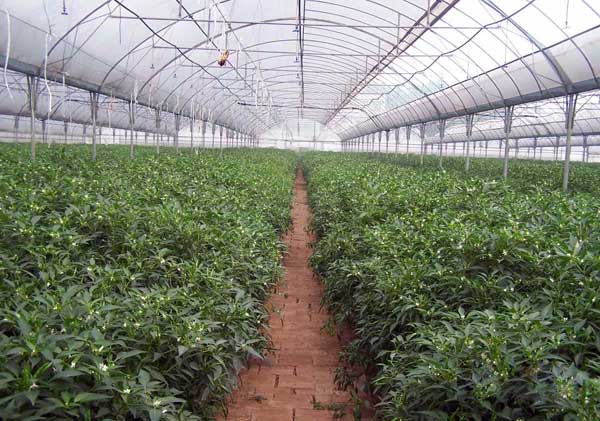
Greenhouse vegetable cultivation is a relatively common technique with good insulation performance. It is well loved because people can eat off-season vegetables at any time. Generally, greenhouses for vegetables use a structural framework mainly made of bamboo and steel, then covered with one or more layers of insulating plastic film. This simple structure creates a complete greenhouse space.
Greenhouse Construction
1. Frame Types and Structures
There are many types and structures of plastic greenhouses. At present, the two most widely promoted and applied are the assembled galvanized thin-wall steel pipe type (referred to as steel pipe greenhouse) and the bamboo-wood round arch type greenhouse. They are mainly used for spring early-maturing cultivation and winter delayed cultivation of summer vegetables such as tomato, sweet (hot) pepper, eggplant and cucumber, as well as for seedling raising and hybrid seed production. There is also a small bamboo-frame tunnel, often used alone or in combination with a large greenhouse (that is, a small tunnel inside a large greenhouse), for winter and spring seedling raising of eggplant and gourd vegetables and spring early-maturing cultivation.
Steel pipe greenhouses have two specifications: one has a center height of 2.2 m, a width span of 4.5 m, a length of 20 m and an area of 90 sq m; the other has a center height of 2.5 m, a width of 6 m, a length of 30 m and an area of 180 sq m. The service life is generally 15 years.
In order to reduce production costs, bamboo-frame greenhouses can also be used. The frame is built with moso bamboo or small round wood, about 2 m high and 4-5 m wide, with a general service life of 3 years.
2. Covering Materials
Greenhouse covering materials include the following:
① Ordinary film: made from polyethylene or polyvinyl chloride as raw material, film thickness 0.1 mm, colorless and transparent. Service life is about half a year.
② Multi-functional long-life film: made by adding an appropriate amount of anti-aging agent and surfactant during the polyethylene blow molding process. The multi-functional film produced by Zhejiang Xinguang Plastics Factory has a width of 7.5 m and a thickness of 0.06 mm. Its service life is twice that of ordinary film, and the greenhouse temperature at night is 1-2°C higher than with other materials. Moreover, the film is not prone to water droplet formation, has good covering effects, low cost and high benefit.
③ Straw mat and straw fan: woven from rice straw, with good insulation performance, used as night insulation material.
④ Polyethylene high-foaming flexible sheet: a white plastic flexible sheet with many bubbles, 1 m wide and 0.4-0.5 cm thick, lightweight and rollable, with insulation performance similar to straw mats.
⑤ Non-woven fabric: a kind of polyester filament, a cloth-like material that is not woven. It is divided into black and white types, with different densities and thicknesses. The commonly used specification is 50 g. Besides insulation, it is also often used as a sunshade net.
⑥ Sunshade net: a kind of woven plastic filament net. Commonly used types are black and silver-gray, with several density specifications, and different shading rates. It is mainly used for sunshade and rain protection in summer, and can also be used as winter insulation covering.
3. Greenhouse Erection
Choose a place facing the sun, sheltered from wind, high and dry, with good drainage and without soil-borne infectious diseases to erect the greenhouse.
4. Plastic Film Maintenance
① When installing the film, try to avoid mechanical damage to the greenhouse film, especially for bamboo-frame greenhouses. Before installing the film, the protruding parts on the frame surface should be flattened first, or wrapped with old cloth. When fixing with springs, a layer of old newspaper should be added at the clamping groove. In addition, care should be taken to avoid long-term contact between new and old films, so as to avoid accelerating the aging of the new film. Operate carefully during ventilation.
② Film exposed to freezing or sunlight will accelerate aging. Steel pipes exposed to the sun in summer can rise to 60-70°C, thereby accelerating film aging and breakage.
③ During use, the film inevitably develops holes, which should be promptly repaired with adhesive or tape.
Environmental Characteristics and Regulation
Because greenhouses are covered with plastic film, they form a relatively closed special microclimate different from open fields. To carry out greenhouse vegetable cultivation, one must understand the characteristics of the greenhouse environment and adopt corresponding regulation measures to meet the conditions for vegetable growth and development, thereby obtaining high quality and high yield.
1. Environmental Conditions Inside the Greenhouse
(1) Light: depends on the solar radiation intensity outside the greenhouse, the optical characteristics of the covering material and the degree of contamination. The light transmittance of new plastic film is 80-85%, while that of old film polluted by dust and mud is often below 40%. When water droplets condense on the film surface, the diffusion effect of the droplets can reduce the light inside the greenhouse by 10%-20%. The frame, the film-pressing lines and the trellises of tall vegetables all shade light. In greenhouse management, factors that weaken light inside the greenhouse should be avoided and eliminated as much as possible.
(2) Temperature
① Temperature variation pattern: The daily variation trend of air temperature inside the greenhouse is the same as in the open field, but the diurnal temperature difference is large. During the day with sufficient light, if the film is sealed, the temperature inside the greenhouse rises quickly, reaching a maximum of 40-50°C, more than 20°C higher than outside. On cloudy and rainy days, the warming effect is poor, and the minimum nighttime temperature inside the greenhouse is generally 1-3°C higher than outside. The soil temperature inside the greenhouse is more stable than the air temperature, usually 10-20°C. The air temperature inside the greenhouse also varies by position. In the transverse distribution of the greenhouse, it is high in the middle and low on both sides, so plants in the middle of the greenhouse are often taller than those on both sides. In the longitudinal distribution of the greenhouse, during the day when there is sunlight, the temperature is high at the top and low at the bottom, while at night and on cloudy days it is the opposite.
② Temperature inversion phenomenon: In polyethylene-covered greenhouses, on clear nights with light wind in winter, the temperature inside the greenhouse sometimes becomes lower than outside. The reasons are: at night, the air temperature outside is higher at higher places than at lower places. Due to wind disturbance, the near-ground layer outside the greenhouse can obtain heat replenishment from the upper air, while inside the greenhouse, because of the obstruction of the covering, this part of heat cannot be obtained. In winter, daytime is cool, the soil stores little heat, and polyethylene film has a relatively high long-wave radiation rate and slightly poor insulation, so effective heat radiation from the ground is large and heat loss is great, thus causing the temperature inside the greenhouse to be lower than outside.
③ Temperature regulation: Greenhouse temperature regulation is mainly carried out through ventilation and heating. Using film removal for ventilation is the most common method to reduce and control the daytime air temperature inside the greenhouse. Using shading materials to reduce the amount of light received by the greenhouse can also prevent the air temperature inside from becoming too high.
In winter, in order to reduce heat loss and increase air and soil temperature, the greenhouse film should be covered as tightly as possible. Windbreaks can be set around the greenhouse, and small tunnels can be set inside the greenhouse, with multiple layers of covering such as straw sheets, non-woven fabric and foam plastic. Heating measures can also be used to raise the temperature, such as using heating wires to raise soil temperature. Where conditions permit, factory waste heat, geothermal water or coal stoves can be used to raise the temperature inside the greenhouse. Placing water bags (plastic bags filled with water) inside the greenhouse takes advantage of water's high specific heat: during the day the water bags absorb a large amount of solar energy and convert it into heat energy for storage, and at night they gradually release it, which can raise the greenhouse temperature.
(3) Regulation of Air Humidity
① Variation pattern of air humidity in the greenhouse: Plastic film has strong sealing properties, so the exchange between the air inside the greenhouse and the outside air is hindered, and water vapor from soil evaporation and leaf transpiration is difficult to diffuse away. Therefore, humidity inside the greenhouse is high. During the day, under ventilation conditions, the relative air humidity inside the greenhouse is 70-80%. On cloudy and rainy days or after irrigation, it can reach above 90%. The relative air humidity inside the greenhouse decreases as temperature rises, and at night is often 100%. The humid air inside the greenhouse condenses into a water film or water droplets when encountering cold, adhering to the inner surface of the film or to the plants.
② Regulation of air humidity: Excessive air humidity inside the greenhouse not only directly affects vegetable photosynthesis and absorption of mineral nutrients, but also favors the germination and infection of pathogen spores. Therefore, ventilation should be carried out to promote exchange between the highly humid air inside the greenhouse and the lower-humidity air outside, which can effectively reduce the relative humidity inside. Heating with ground heating wires inside the greenhouse can also reduce relative humidity. Using drip irrigation technology combined with plastic film mulching cultivation to reduce soil moisture evaporation can greatly reduce air humidity (by about 20%).
(4) Air Composition Inside the Greenhouse
Due to film covering, air flow and exchange inside the greenhouse are restricted. When vegetable plants are tall and branches and leaves are lush, the carbon dioxide concentration in the greenhouse air changes dramatically. Before sunrise in the morning, due to crop respiration and soil release, the carbon dioxide concentration inside the greenhouse is 2-3 times higher than outside (about 330 PPM); after 8-9 o'clock, as leaf photosynthesis increases, it can drop below 100 PPM. Therefore, after sunrise, ventilation should be carried out as appropriate to replenish carbon dioxide inside the greenhouse in time. In addition, artificial carbon dioxide fertilization can be carried out at a concentration of 800-1000 PPM, used after sunrise and before ventilation. Artificial application of carbon dioxide has a very significant yield-increasing effect under conditions of weak light and low temperature in winter and spring.
In low-temperature seasons, the greenhouse is often sealed for insulation, and it is very easy to accumulate toxic gases such as ammonia, nitrogen dioxide, sulfur dioxide and ethylene, causing harm. When ammonia in the greenhouse reaches 5 PPM, water-soaked spots appear at the leaf tips of plants, which then turn black and die; when nitrogen dioxide reaches 2.5-3 PPM, irregular green-white spots appear on the leaves, and in severe cases the entire leaf except the veins is bleached. The production of ammonia and nitrogen dioxide is mainly caused by improper use of nitrogen fertilizer. The production of carbon monoxide and sulfur dioxide is mainly caused by coal heating with incomplete combustion or poor coal quality. Because film aging (plastic pipes) can release ethylene and cause premature plant senescence, excessive use of ethylene products is also one of the reasons.
In order to prevent the accumulation of harmful gases in the greenhouse, fresh manure must not be used as base fertilizer, nor should undecomposed manure be used as topdressing; ammonium carbonate is strictly prohibited as topdressing. When urea or ammonium sulfate is used as topdressing, it should be applied with water or applied in holes followed by timely soil covering; fertilizer dosage should be appropriate and not excessive; in low-temperature seasons, appropriate ventilation should also be carried out to expel harmful gases. In addition, coal quality should be good and fully burned. Where conditions permit, hot air or hot water pipes should be used for heating, and the exhaust gas after combustion should be discharged outside the greenhouse.
(5) Soil Moisture and Salinity
Soil moisture distribution in the greenhouse is uneven. The soil near the two sides of the frame has greater moisture because more water seeps in from outside the greenhouse and because water droplets on the film flow down there. The middle of the greenhouse is relatively dry. For cucumbers and eggplants planted in greenhouses in spring, especially those under plastic film cultivation, soil moisture is often insufficient and seriously affects quality. It is best to lay soft drip irrigation tapes and apply fertilizer and water at any time according to actual needs, which is an effective yield-increasing measure. Because the greenhouse is covered for a long time and lacks rainwater leaching, salts move upward with groundwater from below, which easily causes excessive accumulation of salts in the cultivated layer and leads to salinization. Therefore, attention should be paid to appropriate deep plowing, application of organic fertilizer, and avoidance of long-term application of fertilizers containing chloride ions or sulfate ions. Topdressing should be light, and soil testing and fertilizer recommendation is best. There should be a certain period each year without film covering, or in summer only a sunshade net should be used for shaded cultivation, so that the soil can be leached by rainwater. When soil salinization is severe, flooding to press down salts can be used, with very good results. In addition, the use of soilless cultivation technology is a fundamental measure to prevent soil salinization.
Annual Crop Rotation Arrangement for Greenhouse Vegetables
If a greenhouse is only used for early-maturing cultivation of solanaceous fruits in spring, it is used for only 4-5 months a year, and the utilization rate and benefit are not high. If the greenhouse is also used for cultivation, seedling raising and seed production in autumn, winter and summer, production benefits can be improved.
1. Seedling Raising-Cultivation Type
Its characteristics are winter seedling raising → spring early-maturing cultivation → summer seedling raising → autumn-winter cultivation. Winter seedling raising is generally from November to mid-to-late March of the following year, raising seedlings of solanaceous fruits, gourds and beans. Planting is done in mid-to-late March for spring early-maturing cultivation. From June to August, seedlings such as cabbage, cauliflower and tomato are raised. In autumn and winter, autumn tomato, cucumber, leafy vegetables, celery, scallion and garlic, etc. are cultivated.
2. Cultivation Type
Mainly cultivation of vegetables, combined with seedling raising. There are mainly two forms: first, spring early-maturing cultivation of eggplant, tomato, cucumber and pepper, summer planting of fast-growing vegetables, autumn cultivation of cucumber, tomato, cabbage and cauliflower, and winter cultivation of celery, spinach, lettuce and scallion-garlic vegetables; second, intercropping and relay intercropping, with spring early-maturing cultivation of tomato and pepper, planting loofah beside the greenhouse arch poles in April-May to let it climb along the arch poles, or planting winter melon at the edge of the bed in the later stage of tomato growth and using the tomato trellis for vine climbing; planting lettuce and choy sum in autumn; and raising seedlings in winter.
3. Seed Reservation and Seed Production Type
There are mainly two methods: one is mainly seed reservation and production of solanaceous and gourd vegetables in spring, with the rotation mode of winter seedling raising → spring seed production and reservation → autumn cultivation of celery, cabbage, etc.; the other is mainly seed collection and reservation of self-incompatible crucifers in winter and spring, with seedling raising in summer and cultivation of solanaceous and gourd vegetables in autumn.
Several Forms of Greenhouse Vegetable Cultivation
1. Early-Maturing Cultivation of Spring Summer Vegetables
Early-maturing cultivation of solanaceous and gourd vegetables is the most commonly applied project in greenhouse cultivation. Open-field cultivation is generally planted from late March to mid-April and harvested from early May to July. Greenhouse cultivation can be planted earlier from January to March and harvested from late March to July. It comes to market earlier, has higher yield, and the flowering and fruiting period is prolonged, with obvious economic benefits. In addition, according to market demand, warm-loving green leafy vegetables such as amaranth, Malabar spinach and water spinach can be sown earlier for earlier listing.
(1) Selection of Varieties (Combinations)
For early-maturing tomato varieties, choose Zaofeng and Japanese Dahong × Aihong; for medium-maturing varieties, choose Zhesa No. 5, Sukang No. 4 and No. 5, etc. For sweet pepper, choose excellent varieties with early maturity, disease resistance, high yield and good market suitability. Hot pepper: Jizhua × Jilin F1, Zaofeng No. 1; sweet pepper: Jiapei No. 3; eggplant: Minqie No. 1, Pingtung Long Eggplant; cucumber: Jinchun No. 2 and No. 3, etc.
(2) Planting
Film covering and greenhouse covering should be done 10 days before planting. Apply 3000 kg of manure or decomposed garbage fertilizer, 2000 kg of human excrement and urine, and 50 kg of compound fertilizer per mu, applied in deep furrows or throughout the whole layer, and turned into the soil. For tomato, divide one greenhouse into 4 beds, with bed plus ditch 1.5 m, using double-row planting, row spacing 75 cm, plant spacing 20-30 cm, planting 2500-3000 plants per mu. Pepper is planted at 3000 plants per mu. Eggplant plant spacing is 40-50 cm, planting 2000-2400 plants per mu. Cucumber is planted at 2000-2400 plants per mu.
(3) Field Management
① Temperature management: Do not ventilate within one week after planting, and mainly maintain warmth. Especially for eggplant and cucumber, a relatively high temperature should be maintained appropriately to help seedling recovery. After seedling recovery, a relatively high temperature should still be maintained. The optimum temperature for tomato seedling growth is 20-25°C during the day and 10-15°C at night; the optimum growth temperature for eggplant is 20-30°C, and when the temperature is below 15°C it causes poor pollination and fertilization; the optimum growth temperature for sweet (hot) pepper is 25-28°C; for cucumber it is 28-30°C, and the nighttime temperature must not be lower than 10°C. In mid-to-late May, the temperature gradually rises, and the skirt film can be gradually removed. During the seedling stage, the film removal ventilation time is from 9:00-10:00, and after 15:00-16:00 in the afternoon the door should be closed and the film covered.
② Fertilizer and water management: After planting and seedling recovery, use dilute human excrement and urine or livestock manure as the seedling-promoting fertilizer. For tomato, ① at the first truss fruit enlargement stage, compound fertilizer 10 kg/mu; at the beginning of enlargement of the 2nd-3rd truss fruits, compound fertilizer 30 kg/mu; at the beginning of enlargement of the 4th-5th truss fruits, compound fertilizer 20 kg/mu. ② For sweet (hot) pepper, after applying the seedling-promoting fertilizer, keep the field moist throughout the growth period, not too dry and not waterlogged, and apply light fertilizer frequently. Generally, topdress once every two harvests with compound fertilizer 10 kg/mu, and increase the fertilization amount to 20 kg/mu during the full fruiting period. Eggplant topdressing is similar to pepper, and cucumber is topdressed once every two harvests.
③ Trellising and pruning: Tomato and cucumber should be supported with inserted bamboo to support the plants and guide vines onto the trellis, which is beneficial for fruiting. Tomato should use the double-stem pruning method: keep the first lateral bud above the first flower truss, and remove all axillary buds and branches below it. For eggplant, keep the first branch below the first flower and fruit, and remove all others. Sweet (hot) pepper flowering and fruiting is very regular. When growth, flowering and fruiting are excessive and plant vigor is low, remove the upper flowers and fruits to facilitate normal growth of the lower flowers and fruits.
④ Preserving flowers and fruits: In spring, temperatures are low. For tomato, the first and second truss flowers need hormones to preserve flowers and fruits to increase early yield. Use 40 PPM of 4-CPA (fruit-setting hormone) to dot the pedicel; for eggplant, dot the flower 1-2 days before opening (trumpet-shaped) or spray with 15 PPM of 4-CPA; pepper can also be sprayed with 4-CPA.
Flower and fruit preservation treatment should be carried out when the temperature is below 15°C. When it is above 15°C and light is sufficient, do not treat. Concentration must be strictly controlled and not too high, so as to avoid side effects.
2. Delayed Autumn-Winter Cultivation of Summer Vegetables
The harvest period for delayed autumn-winter cultivation of summer vegetables is generally from October to December. If stored and kept fresh, it can be extended to the Spring Festival, with high economic benefits.
① Tomato: sown in early July, seedling age 30 days, planted from late August to September, harvested from October to December. Varieties selected are Zhesa No. 7 and Zaofeng.
② Cucumber: direct-sown from late July to mid-August, harvested from September to November. Varieties selected are Jinyan No. 4, Jinchun No. 4, Autumn Cucumber No. 1 and Xiafeng, etc.
③ Autumn tomato: flowers that open before mid-September often drop due to excessively high nighttime temperature, while flowers that open after October are not easy to set fruit due to low temperature. Therefore, both require spraying with 10-15 PPM of 4-CPA to spray flowers, or using 40 PPM concentration to coat the pedicel, to prevent flower and fruit drop.
3. Leafy Vegetable Cultivation
In addition to tall vegetables such as gourds and eggplants, greenhouses can also cultivate leafy vegetables with relatively high economic value, such as Malabar spinach, water spinach, western celery and lettuce, for spring advance, autumn delay, and overwintering cultivation, so as to avoid freezing damage, promote growth, increase yield, extend supply, and achieve off-season listing, with good economic benefits.
For warm-loving and heat-tolerant leafy vegetables, such as Malabar spinach and water spinach, greenhouse cultivation can be sown in September-October, with insulation covering in the later period for earlier listing. Combined with conventional cultivation, annual supply can basically be achieved. Vegetables such as lettuce that prefer cool conditions but are relatively intolerant of frost have the most suitable open-field sowing time from late August to early September and in spring from March to April. If sown from November to March of the following year, they are cultivated in greenhouses.
4. Summer Shaded and Rain-Protected Seedling Raising and Cultivation
In southern regions from late June to early August, strong light, high temperature, thunderstorms and typhoon rainstorms seriously affect vegetable production and early autumn vegetable seedling raising. In recent years, the application of sunshade nets and non-woven fabric has promoted the role of greenhouses in summer seedling raising and cultivation.
(1) Effects of Greenhouse Shade Covering
① Shading effect: The sunshade net significantly reduces light intensity inside the greenhouse. The larger the density specification, the better the shading effect. At the same specification, black has a better shading effect than silver-gray. Generally, the shading rate of black is 42%-65%, and that of silver-gray is 30%-42%.
② Cooling effect: The temperature inside the greenhouse decreases due to sunshade net covering, especially the surface and the soil cultivated layer have the greatest temperature reduction. From 10:00 in the morning to 2:00 in the afternoon, the upper temperature of the greenhouse can reach as high as 37-40°C, while the temperature around plants at the surface is 22-26°C and the soil temperature is between 18-22°C, suitable for crop growth.
③ Moisture conservation and rainstorm protection: Evaporation inside the greenhouse is reduced, soil water content is higher than in the open field, and the surface soil is moist. Because the sunshade net has a certain mechanical strength and is relatively dense, it can break rainstorms into fine rain, preventing vegetable leaves from being damaged by rainstorms, and the soil is not easily compacted, with large porosity and good aeration. Covering the outside of the greenhouse plastic film with a sunshade net has an even better effect.
(2) Precautions for Shade Covering Cultivation
① Choose a sunshade net with suitable specifications according to the vegetable type. Usually, for short-term covering of summer and autumn green leafy vegetables, choose a black sunshade net; for summer seedling raising of autumn and winter vegetables, choose a silver-gray sunshade net, which can also repel aphids. For seed reservation or delayed cultivation of solanaceous and gourd vegetables, it is best to use both net and film together.
② Covering period: generally July-August. At other times, the light intensity is suitable for vegetable growth, and if there is no heavy rainstorm, covering is not necessary.
③ Shading management: The sunshade net cannot be left on the greenhouse frame for a long time, especially the black sunshade net. Only at noon on sunny days with scorching sun in summer and autumn will the light intensity under the net reach near saturation. It is best to cover from 10:00-11:00 in the morning and remove the net from 4:00-5:00 in the afternoon. In the 3-4 days before removing the net, gradually shorten the covering time so that seedlings and plants gradually adapt to the open-field environment.
5. Soilless Cultivation of Greenhouse Vegetables
Relatively successful experience: soilless cultivation of leafy vegetables and annual cultivation of lettuce can produce 8-9 crops a year, with an annual yield of 10000 kg per mu. The growth period varies with temperature from high to low, generally about 20-40 days. Tomato can be planted in two seasons, spring and summer, in one year, with an annual yield per mu of up to 10000 kg. Cucumber can be cultivated year-round, with very good economic benefits.
Prevention and Correction Measures for Pests, Diseases and Physiological Disorders
Greenhouses are used to grow vegetables most of the time, especially in winter, providing suitable ecological conditions for the overwintering and reproduction of pests and diseases, making vegetable pests, diseases and physiological disorders increasingly serious. Therefore, the prevention and control of pests and diseases and overcoming crop physiological disorders are the key to successful greenhouse vegetable cultivation. In addition to timely prevention and control of pests and diseases in various cultivation varieties and periods, chlorothalonil fumigation should be used irregularly to eliminate pathogens. For underground pests, carbofuran is used for control.
1. Physiological Disorders in Greenhouse Cultivation and Their Correction Measures
(1) High-temperature physiological disorders: mainly manifested as effects on flower bud differentiation. For example, under high temperature and long-day conditions, cucumber produces more male flowers and fewer differentiated female flowers; when tomato and pepper flower buds differentiate under high temperature, the flowers become smaller and develop poorly.
① Sunscald: main symptoms are that in the initial stage the leaves fade, then become milky white, and finally turn yellow and die.
② Flower and fruit drop, and deformed fruits appear. High temperature, especially nighttime high temperature, not only delays the differentiation of female flowers in the first inflorescence of tomato, but also affects the normal physiological function of stamens, preventing normal pollination and causing flower and fruit drop.
③ Affecting normal pigment formation: The harm of high temperature during fruit ripening is manifested as poor coloring. When tomato ripens, if the temperature exceeds 30°C, lycopene formation is slow; if it exceeds 35°C, lycopene is difficult to form, and the fruit shows mixed-color fruits with alternating yellow and red colors.
④ Preventive measures: mainly strengthen ventilation to lower leaf surface temperature. Sunshade net covering can also be used, and cold water spraying can also be used to lower greenhouse temperature.
(2) Physiological Disorders from Toxic Gases
① Ammonia poisoning: when ammonia reaches a concentration of 0.1%-0.8% in the air, it can harm vegetables. If it is a sunny day with high temperature, ammonia volatilizes at a high concentration, and 1-2 hours can cause cucumber plants to die.
② Preventive measures: organic fertilizer must be fully decomposed before application, and chemical fertilizer should be applied in small amounts and frequently.
2. Typical Physiological Disorder Symptoms of Cucumber and Tomato and Corrective Measures
(1) Cucumber vine excessive growth; flower topping, with shortened internodes near the growing point, forming clusters of mixed male and female flowers, and the top of the cucumber seedling does not produce new heart leaves but shows a clustered flower head; yellowing leaves and acute wilting.
① Causes: biased application of nitrogen fertilizer. Low temperature in early spring, large diurnal temperature difference, insufficient sunlight, poor root activity, and insufficient soil nutrients during seedling raising.
② Preventive measures: transplant at the right time, and add small arch tunnels in the early stage to raise temperature. Strengthen ventilation, apply fertilizer correctly, and manage water, temperature and sunlight well.
(2) Deformed Fruits of Cucumber and Tomato
During the flowering period of tomato, excessive nutrition, especially excessive nitrogen and phosphorus fertilizer, particularly in winter or early spring, before and after flower bud differentiation, when encountering several days of low temperature of 6-8°C, deformed fruits will appear. Treatment with excessively high concentration of hormones, or low temperature during treatment, insufficient light, dry air, or extremely poor nutritional conditions, can cause flowers that would originally drop to be treated with hormones, inhibiting the abscission layer, but they receive little photosynthetic product and form granular fruits, pointed fruits and sour fruits.