Detailed Explanation of Okra Cultivation Techniques and Management Methods
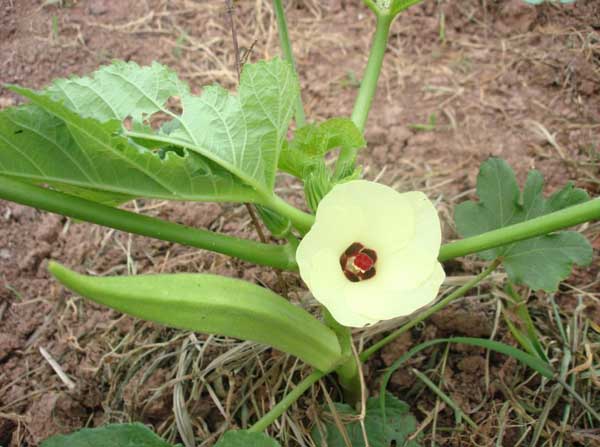
Okra, also known as okra pod, goat horn bean, and goat horn pepper, is an annual herbaceous plant of the Malvaceae family, grown for its tender pods, though the tender flowers and leaves are also edible. It originated in Africa and later spread to the Americas. The largest okra production area is now there——the southern United States, where Americans have given it an easier-to-remember name——"plant Viagra." It is now cultivated in Jiangsu, Shandong, Guangxi, Chongqing, Anhui, Heilongjiang, Shaanxi and other places in China, with seeds available from Jiangsu Changjing Garden and Guangdong and other places.
Growing Conditions
Okra prefers warmth and fears severe cold, with strong heat tolerance. It stops growing below 8°C; when the temperature is 13°C and the soil temperature is around 15°C, the seeds can germinate. However, the optimum temperature for both seed germination and the growing period is 25-30°C. When the monthly average temperature is below 17°C, flowering and fruiting are affected; when the night temperature is below 14°C, growth is slow, plants are short, leaves are narrow, flowering is reduced, and flower drop increases. At the optimum 26-28°C, there is more flowering, a higher fruit-setting rate, faster fruit development, higher yield, and better quality.
1. Water
Okra is drought-tolerant and moisture-tolerant, but not waterlogging-tolerant. Excessive soil moisture during the germination period easily induces seedling damping-off disease. Drought during the fruiting period results in poor plant growth and inferior quality, so the soil should always be kept moist.
2. Light
Okra is particularly sensitive to light conditions, prefers strong light, and requires long photoperiods and sufficient light. Sunny plots should be selected, ventilation should be enhanced, and reasonable close planting should be observed to avoid mutual shading that affects ventilation and light penetration.
3. Soil
Nutrition: Okra has broad adaptability to soil and is not particular about soil fertility, but loam or sandy loam with deep, loose, fertile soil and good drainage is preferable. Fertilizer should be mainly nitrogen in the early growth stage, while more phosphorus and potassium fertilizer is needed in the middle and late stages. However, too much nitrogen fertilizer makes plants prone to excessive vegetative growth, delays flowering and fruiting, and raises the fruit-setting node position; insufficient nitrogen fertilizer causes poor plant growth and affects flowering and fruit setting.
Growth Cycle
1. Germination period
From sowing to the flattening of 2 cotyledons is the germination period, requiring about 10-15 days. At the optimum temperature of 25-30°C, seedlings can germinate and emerge 4-5 days after sowing. Usually, direct seeding in open fields takes about 7 days for seedlings to emerge, and plastic film mulching can advance emergence by 2-4 days.
2. Seedling period
From the flattening of 2 cotyledons to the opening of the first flower, about 40-45 days are needed. Generally, after the cotyledons fully expand, the first true leaf unfolds after 15-25 days. Thereafter, one true leaf appears every 2-4 days, with the first and second true leaves being round. Growth is slow during the seedling period, especially when the soil temperature is too low.
3. Flowering and fruiting
The period from the first flower to the end of harvest requires about 85-120 days. The first flower opens 50-55 days after emergence. The first and second flowers take slightly longer from flowering to harvest. Thereafter, as the temperature rises, the harvest time shortens. Usually, the first harvest can be made about 70 days after sowing. At the optimum daytime temperature of 28-32°C and night temperature of 18-20°C, harvest can be made 4 days after flowering. After flowering and fruiting, okra grows faster and its vigor increases, especially under high temperatures; in July, one true leaf unfolds every 3 days, while in September it takes 4-5 days for one true leaf to unfold.
Cultivation Season
Okra prefers warmth and fears frost, so the entire growth period should be arranged within the frost-free period, and the flowering and fruiting period should fall in the warm and humid season of each region. For open-field cultivation, sowing is mostly from April to June and harvesting from July to October across the north and south. In North China, sowing is generally from mid-to-late April to May. In cold northern regions, solar greenhouses and plastic tunnels are often used for centralized seedling raising, and planting in the field is done after the late spring frost in early spring.
Land Preparation and Bed Making
Okra is unsuitable for continuous cropping and cannot follow fruit vegetables, to avoid root-knot nematodes. It is best to choose root vegetables, leafy vegetables, and similar crops as the previous crop. Soil with deep, fertile, loose layers and good water and fertilizer retention, such as loam, is preferable. After harvesting the previous crop before winter, deep plow in time, spread 75,000 kg of decomposed barnyard manure and 300 kg of nitrogen-phosphorus-potassium compound fertilizer per hectare, mix evenly, rake level, and make beds. Open-field cultivation method: row spacing 40 cm, plant spacing 12 cm, bed furrow width 50 cm. If planted in a single row along field edges, roadsides, or riversides, plant spacing is 12 cm, with 3 plants per hole, providing good ventilation and light and convenient management.
Sowing and Seedling Raising
Direct seeding is the main method. Before sowing, soak seeds in warm water at 20-25°C for 12 hours, then wipe dry, and germinate at 25-30°C for 48 hours. When half the seeds show white radicals, sowing can begin. Dig holes at row spacing 40 cm and plant spacing 12 cm, first water thoroughly, sow 2-3 seeds per hole, cover with 2-3 cm of soil, and plant about 6,000 holes per mu.
1. Direct seeding method. Okra is mostly directly seeded. Soak seeds for 12 hours before sowing, then germinate at 25-30°C; seeds begin to sprout after about 24 hours, and sowing is done when 60%-70% of seeds have "broken their mouths." Hole sowing is preferable, with 3 plants per hole and a hole depth of 2-3 cm. In each region, sow at the appropriate time after the final frost period; water first, then sow, and then cover with about 2 cm of soil.
2. Seedling transplanting method. In northern regions, seedlings are mostly raised in cold frames and solar greenhouses in early to mid-March. The seedbed soil is prepared by mixing 6 parts garden soil, 3 parts decomposed organic fertilizer, and 1 part fine sand. Soak seeds and germinate before sowing, level the seedbed, sow in spots at 10 cm spacing between plants and rows, and cover with about 2 cm of soil. After sowing, keep the seedbed soil temperature at 25°C; seedlings will germinate and emerge in 4-5 days. The seedling age is 30-40 days, and transplanting is done when seedlings have 2-3 true leaves. It is best to use plastic pots, nutrient soil blocks, and other root-protecting seedling measures to cultivate strong seedlings of the right age. Open-field planting is not suitable for seedling cultivation, as plants are prone to lodging when wind or rain is too heavy during the growing period; although direct seeding uses more seed, the plant root system goes deep into the soil and is not prone to lodging.
Field Management
1. Thinning. The first thinning is done when the heart leaves break, removing weak and small seedlings. The second thinning is done at 2-3 true leaves, keeping strong seedlings. Final thinning is done at 3-4 true leaves, leaving 1 plant per hole.
2. Cultivation, weeding, and hilling. After seedlings emerge or transplanting, when temperatures are relatively low, cultivate twice in succession to raise soil temperature and promote seedling recovery. Before the first flower opens, strengthen cultivation to allow moderate seedling restraint and promote root development. After flowering and fruiting, plant growth accelerates, and cultivation should be done after each watering and topdressing; before the rows close, cultivate and hill soil to prevent lodging. In areas with heavy summer rainstorms and wind, it is best to insert bamboo poles about 1 m long or branches near the plants to prevent lodging.
3. Watering and Fertilizing
① Watering: Okra requires relatively high air and soil humidity during the growing period. When water is lacking within 20 days after sowing, manual sprinkler irrigation in the morning and evening is suitable. After seedlings are somewhat larger, mechanical sprinkler irrigation or furrow irrigation can be used. The hot summer season coincides with the peak harvest period of okra, when water demand is high and surface temperature is high; watering should be done before 9 a.m. and after sunset in the afternoon, avoiding watering under high temperatures, which can damage roots. During the rainy season, pay attention to drainage to prevent seedling death. Throughout the growing period, keep the soil moist.
② Topdressing: On the basis of sufficient base fertilizer, topdressing should be applied appropriately, and nitrogen fertilizer should not be applied alone. The first is the seedling-uniforming fertilizer, applied after emergence, with 90-120 kg of urea per hectare. The second is the seedling-promoting fertilizer, applied in furrows after final thinning or transplanting, with 225-300 kg of compound fertilizer per hectare. During the flowering and fruiting period, apply one heavy fertilizer application of 30,000-45,000 kg of diluted human manure, or 300-450 kg of nitrogen-phosphorus-potassium compound fertilizer. In the middle and late growth stages, apply multiple light topdressings as appropriate to prevent premature plant senescence.
4. Plant adjustment. Under normal conditions, okra grows vigorously, with thick main and lateral branches and large leaves, which often delays flowering and fruiting. The branch-twisting method can be adopted, that is, twisting the petiole into a curved, drooping shape to control vegetative growth. In the middle and late growth stages, promptly remove old leaves on the nodes below harvested tender fruits, which can improve ventilation and light conditions, reduce nutrient consumption, and prevent the spread of pests and diseases. For tender fruit harvesting, timely pinching can promote fruiting on lateral branches and increase early yield.
Harvesting
Okra takes about 55 days from sowing to the formation of the first tender fruit. Thereafter, the entire harvest period lasts 90-120 days, and the whole growth period can reach about 150 days or even longer. The standard for harvesting commercial fresh okra fruit is a fruit length of 8-10 cm, bright green appearance, and seeds inside not yet hardened. If harvest is not timely, the flesh becomes aged, fiber increases, and commercial edible value is greatly reduced. Generally, after the first fruit is harvested, harvest once every 2-4 days initially, and as temperature rises, the harvest interval shortens.
In the peak fruiting period in August, harvest once a day or every other day. After September, as temperatures drop, harvest once every 3-4 days. When harvesting, use scissors and wear gloves to avoid the bristles or prickly tubercles on stems, leaves, and fruits scratching the skin, which causes intense itching; at this time, washing with soapy water or lightly roasting over fire can reduce the degree of pain and itching. Usually, tender fruits harvested 4 days after flowering have the best quality. Yield is mostly about 2,000-3,000 kg per mu.
Pest and Disease Control
1. Phytophthora blight
Okra can be infected at both the seedling and adult plant stages. When seedlings grow beyond 20 cm, phytophthora blight lesions spread from the leaves to the main stem, making the stem thinner and discolored, until the whole plant wilts or collapses. Leaf infection mostly starts from the lower leaf tips or leaf margins of the plant; in the early stage, the lesions are dark green, water-soaked, and irregular in shape, and after expansion they turn brown. Control: At the early stage of disease, spray with 72% mancozeb + cymoxanil WP (Curzate) 500x solution, or 69% dimethomorph + mancozeb WP 900x solution, or 64% oxadixyl + mancozeb WP 400x solution, or 58% metalaxyl + mancozeb WP 500x solution once every 7-10 days, for 2-3 treatments.
2. Viral disease
Okra viral disease is a major disease in okra production, and is more severe at the adult plant stage than at the seedling stage. After infection, the whole plant is affected, especially the tender leaves at the top, which show mosaic or brown mottled patterns. Early infection results in stunted plants, few or no fruits. Control methods: do not save seeds from diseased fields, choose disease-resistant varieties, and at the early stage of disease use 5% ningnanmycin WP 400-500x solution, or 20% virus A WP 400x solution, or 15% plant disease spirit 1000x solution, or 83% resistance enhancer 100x solution for 3 treatments, once every 7-10 days.
3. Poisonous hairy caterpillar
It mainly damages okra at the seedling stage, often feeding on leaf mesophyll after emergence and causing notches, and in severe cases leaving only leaf veins. Control: Spray with 10% chlorfenapyr EC 1500x solution, or 5% fipronil SC 1500x solution, or abamectin EC + fenvalerate EC 3000x solution.
4. American leafminer
It can cause damage throughout the entire growth period of okra, mainly damaging leaves. It can be controlled with 1.8% avermectin EC 5000x solution, or 52.25% chlorpyrifos + cypermethrin EC 1000x solution, or 48% chlorpyrifos EC 1000x solution, or 5% fipronil SC 800x solution.
5. Aphids
They can occur throughout the entire growth period of okra, with heavier damage at the adult plant stage. Imidacloprid-type pesticides such as 10% Yibianjing, 10% Yashijing, and 10% Dagongchen can be used at 3000x solution.
6. Ants
After okra flowers, ants often gather on the floral organs and cause damage. For control, spray with 48% chlorpyrifos EC 1000x solution or 5% fipronil EC 1500x solution, or mix 0.3% fipronil solution with sawdust and scatter it where ants emerge for trapping and killing. Because the harvest interval of okra is short, the pesticides used must be selected from those suitable for pollution-free vegetables, and when spraying, try not to spray on floral organs or tender fruits.
7. Cutworm
Cutworms hide by day and come out at night, and often bite through the main stem at the seedling stage, causing broken seedlings. Commonly, sugar-vinegar liquid is used to lure and capture them, or they are dug out and caught in the early morning, and specialized pesticides can also be used to kill them.