What Is Chinese Toon? Getting to Know This Spring Seasonal Vegetable
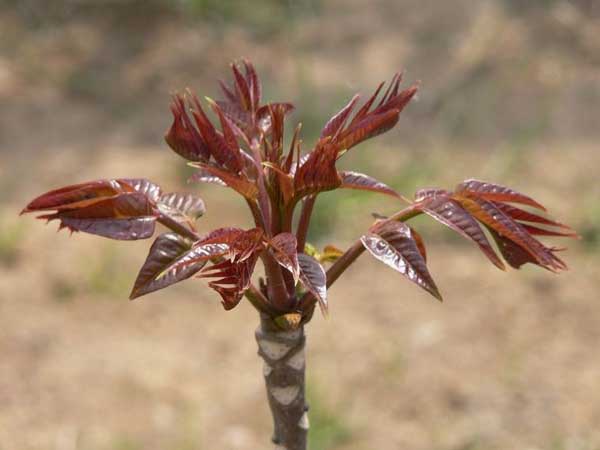
Chinese toon is also known as Chinese toon sprouts, xiangchun, chunzhuangtou, big red toon tree, chuntian, and so on. Its root has two layers of bark, also called chunbaipi. It is native to China and distributed across a wide range of areas north and south of the Yangtze River, belonging to the Meliaceae family. It is a deciduous tree with male and female flowers on separate plants, even-pinnately compound leaves, panicles, bisexual white flowers, and elliptical capsule fruits with winged seeds; the seeds can be used for propagation.
The Chinese toon tree is tall and large, and besides providing toon sprouts for eating, it is also a preferred tree species for landscaping. Toon sprouts are rich in nutrients and have dietary therapeutic effects, mainly treating externally contracted wind-cold, rheumatic arthralgia, stomach pain, dysentery, and so on. Chinese toon is a tall arbor tree, native to China. People have long been accustomed to eating Chinese toon, and as early as the Han Dynasty it spread throughout the north and south of the Yangtze River. In ancient farmers' markets, Chinese toon was called chun, and tree of heaven was called chu.
Chinese toon is native to central and southern China. It is cultivated from southern Liaoning in the northeast, to Gansu in the west, from southern Inner Mongolia in the north, to Guangdong and Guangxi in the south, and to Yunnan in the southwest, with the most planting especially in Shandong, Henan, and Hebei. The Xinyang area of Henan has relatively large areas of artificial forest, and there are natural distributions in the Qinling Mountains of Shaanxi and the Xiaolong Mountains of Gansu. Its vertical distribution is in mountainous and vast plain areas below 1500 m above sea level, reaching up to 1800 m above sea level, and its cold hardiness zone is 6-11. Potou Village, Zhuangmo Town, Xinfu District, Xinzhou City, Shanxi Province, is famous far and near because its climate suits the growth of Chinese toon; this village is known in Xinzhou for its abundant production of Chinese toon and walnuts. Ximou Village, Yantai City, Shandong Province, is famous for cultivating edible Chinese toon. Because its soil and water are fertile and the climate is suitable for Chinese toon cultivation, it has considerable economic benefits.
Chinese toon wood is yellow-brown with red ring bands, has beautiful grain, is hard in texture, glossy, highly rot-resistant, does not warp, does not crack, is not easily deformed, and is easy to work. It is an excellent wood for furniture, interior decorations, and shipbuilding, and has long enjoyed the reputation of “Chinese mahogany.” Its bark can be used for papermaking, its fruit and bark can be used as medicine, and it can also be planted as a vegetable, giving it very high value. It is an important timber tree species in the low mountain, hilly, or plain areas of North China, Central China, and East China, and is also an ornamental and street tree species. In gardens, it is arranged in open woodland as an upper-layer tree species, with shade-tolerant flowers and trees planted beneath it. Chinese toon is an important timber tree species for deep, fertile soil in the low mountain, hilly, or plain areas of North China, East China, and Central China, and a greening tree species for “four-side” planting.