Detailed Explanation of Cultivation Techniques and Management Methods for the Chinese Prickly Ash Tree
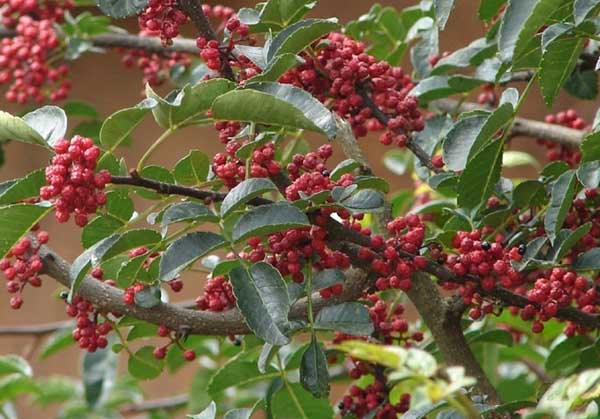
The Chinese prickly ash tree (Zanthoxylum bungeanum) is a shrub with relatively high economic value and is an important woody oil and spice tree species. Because of its strong adaptability, wide distribution and high returns, it is deeply welcomed by the public. However, the Chinese prickly ash tree likes water but is not tolerant of waterlogging and fears violent winds, so seedling nurseries should not be planted on mountain tops, in wind gaps, or in cold, shady high-mountain areas.
Seedling Raising Techniques
1. Seed collection. There are many varieties of the Chinese prickly ash tree. When collecting seeds, select plants that are more than 10 years old, grow vigorously, bear fruit early, have high yields and excellent quality as mother trees for seed collection. The collected seeds should be dried in the shade and must not be exposed to the sun, to prevent high temperatures from damaging them and causing loss of germination capacity.
2. Seed treatment. After the seeds are dried in the shade, remove the shrivelled grains with a winnowing machine. They can be soaked for two days in alkaline water or washing powder water (5 kg of seeds plus 50 grams of alkali or washing powder), rubbed by hand to wash off the oil, and then rinsed clean with clear water.
3. Nursery land preparation. The nursery land should preferably be yellow loam or sandy loam with drainage and irrigation conditions. First carry out ploughing, and in combination with ploughing apply about 3000 kg of composted manure per mu or 50 kg of ammonium phosphate, then rake level and make ridges or beds.
4. Sowing time and method. Generally carried out in winter and spring, before the Beginning of Spring. The sowing method can be bed sowing or semi-high bed sowing; the sowing rate is 20 kg per mu for selected seeds and about 40 kg per mu for unselected seeds.
5. Nursery land management. After sowing, keep the seedbed moist. When the seedlings emerge and grow to 4 cm—5 cm, thinning can be carried out, with a plant spacing of 10 cm-12 cm being suitable. When the pepper seedlings are young, manual or chemical weeding should be used; a hoe must not be used, to avoid injuring the seedlings and disturbing the roots. In June—July, urea can be applied as a top dressing 3-4 times, with an interval of about 15 days each time, 5-7.5 kg per mu each time, or about 300 kg of decomposed human excrement and urine is suitable. When the seedlings grow to more than 60 cm, they can leave the nursery for afforestation.
Land Preparation and Afforestation
Different types of afforestation sites adopt different land preparation methods. Generally, large-pit afforestation is used; when the slope is relatively steep, horizontal ditch afforestation is used. The specification of the pit should be greater than 30×30×30 cm, and farmyard manure and calcium magnesium phosphate fertilizer, etc. should be placed in the pit as base fertilizer.
1. Afforestation specification. Plant spacing 3×4 m, 56 plants per mu.
2. Afforestation time. Generally carried out in winter and spring, before the Beginning of Spring. In areas where winter and spring are too dry, it can also be carried out in the rainy season, but it should be completed before the Beginning of Autumn. When planting, remove some leaves to reduce evaporation, so as to help increase the survival rate.
Production Management
1. After planting, loosen the soil and weed 2-3 times in the same year. Starting each autumn, shallow digging within the canopy of the Chinese prickly ash tree and deep digging outside the canopy should be carried out together with fertilization, without injuring the roots. When fertilizing, emphasis should be placed on phosphorus and potassium fertilizers to maintain vigorous growth.
2. Mounding soil to store water and conserve moisture. When cultivating and weeding, pay attention to mounding soil around the roots of the Chinese prickly ash tree, piling the soil high at the root collar. This can both keep warm and prevent freezing, and also prevent excessive water accumulation at the roots.
3. Training and pruning
Training and pruning can help the Chinese prickly ash tree form a reasonable tree framework, and can also promptly remove diseased and pest-infested branches, allowing it to make full use of light energy and air, promote root growth, help it bear fruit earlier, and increase fruit yield.
① Pruning time. For young, vigorous trees, autumn pruning is good; for old, weak trees, spring and summer are good. Pruning immediately after harvest each year is the best time.
② Pruning methods. Pruning is divided into thinning and heading back. Thinning can promote flowering and fruiting, while heading back is beneficial for producing strong new shoots. Thinning means cutting off from the base of the branch, mainly cutting off overly dense branches, crossing branches, overlapping branches, slender weak branches, dry withered branches and diseased weak branches; heading back mainly means cutting off part of the branch, cutting off vigorous nutrient branches, water sprouts, senescent branches and unnecessary lateral branches.
③ Training. The ideal tree form should have a low trunk or no trunk, with the main framework branches evenly distributed. There are mainly two tree forms: the “open-center shape” and the “multi-branch clump shape”.
Harvesting and Storage
1. Picking. At present, the picking method is still manual fruit picking, and branches must not be broken off with leaves.
2. Drying in the sun. Except for those used as seeds, which must not be exposed to the sun, in generally good weather they can be dried in one to two days. During the drying process, remove impurities.
3. Storage. Put the sun-dried Chinese prickly ash (do not separate the seeds) into a jar or plastic bag, seal it well, and it can be stored for a long time.
Development and Utilization
1. Economic value. Chinese prickly ash products have a very wide range of uses. They are not only an indispensable seasoning for people, but also a raw material for making paint and soap. The extracted essence can be used as a fragrance additive for high-grade cosmetics and foods, etc.
2. Greening and beautification. The Chinese prickly ash tree is resistant to drought, tolerant of barren soil, and highly adaptable. It can be used for afforestation on mountains to conserve soil and water, and can also be planted in courtyards to beautify the environment and provide fruit for one's own consumption. Because it has thorns, it can also be planted at field edges, on field ridges, and around orchards, to develop ridge economy and cultivate green fences.
3. Processing and utilization. In order to expand benefits and broaden the paths for rural people to become prosperous, the processing and production of Chinese prickly ash products must be run well. At present, the mainly developed products are prickly ash powder, spicy powder, prickly ash oil, spicy oil, etc.
Pest Control of the Chinese Prickly Ash Tree
There are many species of pests of the Chinese prickly ash tree in our country, with about 132 known species. Such as scarab beetles, prickly ash flea beetles, prickly ash swallowtail butterflies, prickly ash nettle moths, large bagworms, black cicadas, prickly ash aphids, prickly ash scale insects, prickly ash red spiders, prickly ash gall midges, prickly ash tiger longhorn beetles, etc. Now mainly introduce the prickly ash tiger longhorn beetle, prickly ash scale insect, and prickly ash red spider.
1. Prickly ash tiger longhorn beetle
[Morphological characteristics] The adult body length is 19-24 mm, the body is black, and the whole body has yellow fine hairs. The head is densely covered with fine punctures, and the antennae have 11 segments, about 1/3 of the body length. The legs are the same color as the body. There are 2 black spots in the middle of the elytra, and a nearly circular black spot at 1/3 of the wing surface. The egg is long oval, 1 mm long and 0.5 cm wide, white when newly laid, and yellowish brown before hatching. The newly hatched larva has a pale yellow head and a milky white body; after the 2nd-3rd instar, the head is yellowish brown, and the older larva has a yellow-white body with bluish-white intersegmental areas. The pupa is milky white at first, then gradually turns yellow.
[Living habits] The prickly ash tiger longhorn beetle has one generation every two years, and mostly overwinters as larvae. In May, adults emerge one after another; in late June, adults crawl out of the tree trunk and bite and feed on healthy branches and leaves. Adults are active on sunny days, and most active before rain when it is sultry. In mid-July, they mate at a height of 1 m on the trunk and lay eggs deep in cracks in the bark, 1-2 eggs per place; one female can lay 20-30 eggs in her lifetime. Generally, eggs hatch from August to October, and larvae overwinter in the trunk. In April of the following year, larvae feed on the bark part, and yellow-brown mucus flows out of the insect tunnel, commonly known as “prickly ash oil”. In May, larvae bore into and feed on the xylem and discharge frass out of the tunnel. The boring tunnel is generally 0.7 cm×1 m, flat-round, inclined upward at a 45° angle to the trunk. The larva has 5 instars in total, and pupates in the boring tunnel as a mature larva. In June, the affected pepper trees begin to wither.
[Control methods]
① Remove the source of insects: promptly collect the plants that withered and died in the current year, and burn them in a centralized manner.
② Manual capture: manually capture adults on sunny mornings and afternoons in July.
③ Biological control: Sclerodermus sichuanensis is a natural enemy of the prickly ash tiger longhorn beetle. On sunny days in July, release this natural enemy on the affected plants at a standard of 5-10 Sclerodermus sichuanensis per affected plant. Practice has proved that the use of Sclerodermus sichuanensis to control the prickly ash tiger longhorn beetle has a good effect.
2. Prickly ash scale insect
Prickly ash scale insects are the general term for scale insects of the superfamily Coccoidea under the order Homoptera that harm the Chinese prickly ash tree, including Drosicha corpulenta, Pseudaulacaspis pentagona, Parlatoria pergandii, and Lepidosaphes pyrorum, etc. Their common characteristic is that they rely on their unique piercing-sucking mouthparts to suck the sap of plant buds, leaves and tender branches. This causes withered tips, yellow leaves, weakened tree vigor, and death in severe cases.
[Morphological characteristics] The body is mostly relatively small, with females and males of different forms. The female is fixed on leaves and branches, and the body surface is covered with waxy secretions or a scale shell. Generally, scale insects lay eggs under the scale shell. The newly hatched nymph has no waxy covering or scale shell yet, and crawls on leaves and branches seeking a suitable feeding position. After the 2nd instar, it becomes fixed and begins to secrete wax or form a scale shell.
[Living habits] Prickly ash scale insects occur in one generation or several generations a year, and large numbers of nymphs and adults can be seen in May and September.
[Control methods] Because the body surface of adult scale insects is covered with wax or a scale shell, chemicals are difficult to penetrate and the control effect is poor. Therefore, the key to scale insect control is the nymph stage.
① Physical control: In winter and spring, use grass bundles or brushes to wipe out and kill overwintering females on the trunk or branches and male pupae inside cocoons.
② Chemical control: Systemic insecticides can be selected, such as omethoate 1000 times; especially 40% Supracide 800-1000 times has a good effect.
③ Biological control. Scale insects have many natural enemies in nature, such as some parasitic wasps, ladybugs, green lacewings, etc.
3. Prickly ash red spider (hawthorn spider mite, hawthorn red spider)
[Morphological characteristics] The female adult body is oval, 0.55 mm long, with a raised back, fine wrinkles, and bristles arranged in 6 rows. Females are divided into overwintering and non-overwintering types; the former is bright red, the latter dark red. The male adult is smaller than the female adult, about 0.4 mm. The egg is spherical, translucent, with a smooth, glossy surface, orange-red. In the later laying period, the color gradually becomes lighter. The newly hatched larva is milky white, round, with 3 pairs of legs, and pale green. The nymph body is nearly oval, with 4 pairs of legs, and emerald green.
[Living habits] It occurs 6-9 generations a year, and overwinters as fertilized female adults. It begins to cause damage when the Chinese prickly ash tree sprouts. The first-generation larvae begin to appear during the inflorescence elongation stage, and the damage is most severe during full bloom. After mating, eggs are laid on both sides of the main veins on the underside of leaves. The prickly ash red spider can also reproduce by parthenogenesis, and its offspring are males. The severity of occurrence each year has a great relationship with the temperature and humidity of the region; high temperature and drought are conducive to its occurrence.
[Control methods]
① Chemical control: The key period must be grasped. In April-May, during the peak hatching period and high-incidence period of the harmful mites, use 25% fenbutatin oxide 500 times, 73% propargite 3000 times for control; or use the systemic insecticide omethoate 1000 times; 40% Supracide 800-1000 times.
② Biological control: Harmful mites have many natural enemies, such as some predatory mites, ladybugs, etc. Broad-spectrum insecticides should be used as little as possible in the field to protect natural enemies.
4. Prickly ash gall midge
The prickly ash gall midge, also known as the pepper stem gall midge. It can cause the affected tender branches to form columnar galls due to tissue proliferation stimulated by the damage, hindering the growth of the affected branches, which later dry up, and often cause the tree to age and die.
[Control methods]
① Cut off pest-infested branches, and promptly apply a wound-healing and anti-corrosion film at the pruning cut to protect the wound, prevent the invasion of pathogens, promptly collect diseased and pest-infested branches and burn or bury them deeply, and in coordination apply Tree Protection General on the tree body to prevent pathogens from settling and multiplying on the tree body, so as to reduce the survival rate of pathogens.
② Sufficient fertilizer and water, eradicate weeds, and spray Prickly Ash Strong Pedicel Agent once each at the flower bud stage, young fruit stage and fruit expansion stage of the Chinese prickly ash tree, to improve the disease resistance of the Chinese prickly ash tree. At the same time, it can make the prickly ash peel thick, the pepper fruit strong, the color bright, and the natural taste fragrant and rich.
③ Chemical control. After harvesting the Chinese prickly ash, promptly spray targeted chemicals plus New High-fat Film to enhance the efficacy, prevent the invasion of airborne pathogens, and use cotton dipped in chemicals to dab on the galls, and spray Tree Protection General throughout the orchard for disinfection.
Disease Control of the Chinese Prickly Ash Tree
During the growth and development process of the Chinese prickly ash tree, due to unsuitable environment or attack by pathogenic bacteria, diseases often occur that affect the growth, fruiting and setting of fruit, and product quality of the pepper tree. Common diseases include Chinese prickly ash dodder, Chinese prickly ash rust, Chinese prickly ash root rot, Chinese prickly ash leaf fall disease, Chinese prickly ash anthracnose, Chinese prickly ash canker, Chinese prickly ash dry tip disease, Chinese prickly ash dead branch disease, Chinese prickly ash leaf spot disease, Chinese prickly ash plaster disease, etc. Now mainly introduce Chinese prickly ash root rot, Chinese prickly ash rust and Chinese prickly ash plaster disease.
1. Chinese prickly ash root rot
Chinese prickly ash root rot often occurs in nurseries and adult pepper orchards. It is a soil-borne disease caused by Fusarium solani. The roots of affected plants become discolored and rot, with a peculiar odor; the root bark separates from the xylem, and the xylem turns black. The aboveground parts have small yellow leaves, and branch development is incomplete; in severe cases the whole plant dies.
[Control measures]
① Reasonably adjust the layout, improve pepper orchards with poor drainage and a damp, shady environment, and make them ventilated and dry.
② Do a good job in seedling-stage management, strictly select nursery sites, and disinfect the soil with 15% triadimefon 500-800 times. Use high beds and deep ditches, and apply heavy base fertilizer. Promptly pull out diseased seedlings.
③ When transplanting seedlings, soak the roots in 50% thiophanate-methyl 500 times for 24 hours. Disinfect the soil with quicklime. And drench the roots with thiophanate-methyl 500-800 times, or 15% triadimefon 500-800 times.
④ In April, drench the roots of adult trees with 15% triadimefon 300-800 times, which can effectively prevent the disease. Root drenching in summer can slow down the severity of the disease, and root drenching in winter can reduce the overwintering structures of the pathogen.
⑤ Promptly dig out diseased and dead roots and dead trees, and burn them to eliminate sources of infection.
2. Chinese prickly ash rust
Chinese prickly ash rust is one of the important leaf diseases of the Chinese prickly ash tree. It is widely distributed in the Chinese prickly ash cultivation areas of Shaanxi, Sichuan, Hebei, Gansu and other provinces. In severe cases, the Chinese prickly ash tree defoliates early, directly affecting the fruit set of the following year. At the early stage of the disease, 2-3 mm water-soaked chlorotic spots appear on the upper surface of the leaves, and yellow-orange blister-like structures, which are uredinia, appear on the underside of the leaves opposite the lesions. This disease is caused by Coleosporium zanthoxyli. The urediniospore and teliospore stages occur on the Chinese prickly ash tree. The occurrence of Chinese prickly ash rust is mainly related to climate. Wherever rainfall is abundant, especially under conditions of abundant rainfall and many rainy days in the third quarter, damage is very likely to occur.
[Control measures]
① Chemical prevention: Before the disease occurs, spray Bordeaux mixture or 0.1-0.2% Baume lime-sulfur mixture, or from early June to late July spray the Chinese prickly ash tree with carboxin 200-400 times for protective spraying.
② Chemical control: For those already diseased, spray 15% triadimefon wettable powder 1000 times to control the production of uredinia. At the peak of the disease, spray 1:2:200 Bordeaux mixture, or 0.1-0.2 Baume lime-sulfur mixture, or 15% wettable triadimefon powder 1000-1500 times.
③ Strengthen fertilizer and water management, eradicate weeds, and prune reasonably. In late autumn, promptly remove dead branches, fallen leaves and weeds and burn them.
④ Cultivate disease-resistant varieties; Chinese prickly ash varieties with strong disease resistance can be mixed and planted.
3. Chinese prickly ash plaster disease
Chinese prickly ash plaster disease is a common disease of the Chinese prickly ash tree, and its pathogen is Septobasidium of the Basidiomycota. The basidiocarp is like a plaster and clings tightly to the branches and trunk of the Chinese prickly ash tree. In mild cases it causes poor growth of branches and trunk and few fruits; in severe cases it leads to the death of branches and trunk. In many areas, the death of branches and trunks, few fruits, and small fruits of the Chinese prickly ash tree are all related to plaster disease. The occurrence of plaster disease is related to tree age, humidity and variety. According to surveys, Chinese prickly ash plaster disease mainly occurs in shaded, humid adult pepper orchards; in addition, the occurrence of this disease is related to damage by scale insects. Plaster disease uses the honeydew secreted by scale insects as nutrition, so in pepper orchards with severe scale insect damage, plaster disease occurs severely.
[Control measures]
① Strengthen management, prune appropriately, remove dead branches and fallen leaves, and reduce the humidity of the pepper orchard.
② Control planting density; especially in old mature pepper orchards at full fruit stage, if too shaded, appropriate thinning should be carried out.
③ Apply 4-5 degrees Baume lime-sulfur mixture to smear the diseased spots.
④ Strengthen the control of scale insects.
4. Chinese prickly ash gummosis
Chinese prickly ash gummosis is caused by fungi and has strong infectivity, rapidly causing necrosis, rot and gum exudation of the phloem at the base of the trunk, leading to leaf yellowing and branch death.
[Control measures]
① Clear the orchard and disinfect. In winter, cleaning should be thorough. Gather diseased and pest-infested branches and leaves and burn or bury them deeply, and at the same time spray Tree Protection General for whole-orchard disinfection.
② Spray chemicals at the appropriate time, do a good job in prevention, and promptly increase the application of organic fertilizer. At the early stage of the disease, promptly spray chemicals for sterilization. At the gum exudation site, promptly apply Tree Protection General to control Chinese prickly ash gummosis, which can clear the conducting vessels and improve the stress resistance of the plant.
③ Sufficient fertilizer and water, eradicate weeds, and spray Prickly Ash Strong Pedicel Agent once each at the flower bud stage, young fruit stage and fruit expansion stage of the Chinese prickly ash tree, to improve the disease resistance of the Chinese prickly ash tree. At the same time, it can make the prickly ash peel thick, the pepper fruit strong, the color bright, and the natural taste fragrant and rich.
④ Chemical control. Gummosis (dry rot) often occurs together with longhorn beetles and jewel beetles, so longhorn beetles and other pests and diseases should be controlled in a timely manner, and in coordination spray targeted chemicals plus New High-fat Film to enhance the efficacy, prevent the invasion of airborne pathogens, and spray Tree Protection General throughout the orchard for disinfection.