Detailed Guide to Pepper Planting Time: When Is the Best Time to Plant
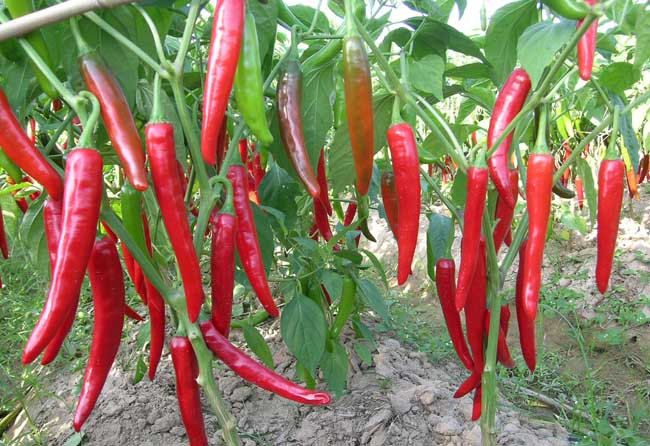
The growth of peppers begins with the germination stage. After sprouting and sowing, they generally emerge in about 5-8 days, and the first true leaf appears in about 15 days; the period until flower buds become visible is the seedling stage. From the first flower cluster to the setting of the first pepper is the flowering stage. From fruit set to uprooting is the fruiting stage. The suitable temperature for peppers is between 15 and 34 degrees. The suitable temperature for seed germination is 25-30 degrees, and germination takes 5-7 days; seeds do not germinate below 15 degrees or above 35 degrees. The seedling stage requires a relatively high temperature, preferably 25-30 degrees during the day and 15-18 degrees at night. Seedlings are not tolerant of low temperatures, so attention must be paid to cold protection. If peppers are exposed to 35 degrees, it will cause flower and fruit drop.
Planting Time and Seedling Raising Techniques
Reasonable planting time and correct seedling raising techniques are essential conditions for obtaining high yields in pepper cultivation. Below, let us take a look at the planting time and seedling raising techniques for peppers.
1. Seedling raising time: If peppers are cultivated in spring in protected facilities, sowing and seedling raising are generally carried out in January-February.
2. Seedling raising facilities: A solar greenhouse can be used; or an insulated improved open cold bed; or a plastic tunnel, small arched shed with plastic film mulching and straw curtains.
3. Seed treatment
① Chemical seed soaking: To prevent the common and frequently occurring pepper anthracnose, viral diseases and bacterial spot disease, select high-quality and high-yield varieties. First pre-soak the seeds in clean water for 5 hours, then remove them in batches, drain them, and soak them in a 1% copper sulfate solution, a 10% trisodium phosphate solution and a 2% sodium hydroxide solution for 10 minutes each to disinfect and sterilize. Then remove them, wash them clean with water, and carry out sprouting.
② Conventional warm water seed soaking: Use an amount of water 5 times that of the seeds. Pour the seeds into 55-degree water and stir immediately. After the water temperature drops to 30 degrees, soak for another 8 hours. This method has a sterilizing effect on pepper scab and sclerotinia disease.
4. Sprouting: Wrap the soaked seeds in a damp cloth and place them in a warm place to sprout. Each day, control the temperature at 28—30℃ for 16—18 hours and at 16—20℃ for 6—8 hours. Every 12 hours, turn them over and rub-wash them once with 30℃ warm water so that they are heated and warmed evenly, which helps them sprout uniformly and strongly. Generally, after 5—7 days, when more than 80% have sprouted, the temperature can be lowered to 10℃ or they can be spread indoors for low-temperature sprout hardening for 6—8 hours, and then they are ready for sowing.
5. Sowing: The seedbed soil is best if it is soil in which solanaceous vegetables have not been planted for three years. The seedbed soil should be sieved, and 10 kg of high-quality organic fertilizer should be applied per square meter of seedbed. The seedbed should be 10 cm high and leveled. Before sowing, water thoroughly to the bottom, and after the water has completely seeped down, cover with a layer of fine soil, spread the sprouted seeds evenly on top, cover with 5 mm of soil after sowing, and promptly cover with plastic film and set up a small arched shed to increase temperature and preserve moisture, promoting early emergence. After 70% of the seeds have emerged, remove the plastic film in time, and when all have emerged, cover with another 5 mm of soil.
6. Thinning: When the cotyledons of the seedlings are fully expanded, thin them in time. Remove the overly dense and crowded, diseased, deformed and poorly growing weak seedlings. After thinning, cover with soil again to protect the roots. Temperature management: 25 degrees—30 degrees. Maintain a relatively high soil temperature. Gradually lower the shed temperature and control irrigation 10 days before lifting the seedlings, so as to shorten the seedling recovery time after planting.
7. Seedling separation and transplanting: When the seedlings grow to 4-5 true leaves, carry out seedling separation and transplanting. Transplant at a hole spacing of 7x7 cm, with 2—3 plants per hole, cover between the holes with prepared fine seedbed soil, and fill firmly.
After reading about the planting time and seedling raising techniques for peppers, below the editor will introduce the common disease control techniques during pepper cultivation!
Common Disease Control in Pepper Cultivation
1. Bacterial wilt
[Disease characteristics] When a plant becomes diseased, the top leaves of the diseased plant wilt during the day and recover on cloudy days or in the morning and evening. After 2-3 days, the leaves remain green but the whole plant wilts. When the diseased stem is cut open, the vascular bundle appears brown. When the cut is immersed in water, a white turbid bacterial fluid flows out from the cut.
[Disease pattern] Pepper bacterial wilt is a bacterial disease. It becomes severe when the soil temperature reaches 20℃-25℃, the air temperature reaches 30℃-37℃, and the soil moisture content reaches above 25%. When heavy rain is followed by sudden clearing, the temperature rises rapidly, humidity is high, and transpiration is large, the pathogen is highly active, diseased plants increase, and the damage is severe. The pathogen develops suitably when the soil pH is 6.6.
[Control methods]
① Select disease-resistant varieties.
② Adjust the soil pH, applying 50-100 kg of lime per mu.
③ Implement crop rotation to prevent continuous cropping or repeated cropping.
④ Check in time. If diseased plants are found, immediately pull them out and burn them; spread lime powder in the holes; in the early stage of the disease, 100-200 PPM agricultural streptomycin or one pack of kasugamycin can be mixed with 150 jin of water to drench the soil, with continuous control 3 times, and root irrigation once every 10-15 days, for 2-3 consecutive times.
2. Phytophthora blight
[Disease characteristics] The disease can occur throughout the entire growth cycle. When seedlings are infected, it mostly occurs at the stem base. When seedlings become diseased, the stem base appears dark green, water-soaked, soft-rotted or damping-off, namely seedling damping-off; in some cases the stem base appears dark brown, and the seedlings wither and die. When leaves are infected, the lesions are round or nearly round, 2-3 cm in diameter, with yellow-green edges and a dark brown center. When fruits are infected, it begins at the stalk end, initially producing dark green water-soaked spots, which rapidly turn brown and soft-rot. Under high humidity, a white mold layer grows on the surface, namely the pathogen's sporangiophores and sporangia. After drying, dark brown streak spots form, and the branches and leaves above the diseased part rapidly wither.
[Disease pattern] The pathogen overwinters in the soil or diseased tissues as mycelium and oospores. The oospores spread through rain and irrigation water splashing. The optimum temperature for pathogen development is 23℃-31℃. High temperature and high humidity are favorable for the occurrence of the disease.
[Control methods]
① If pepper phytophthora blight is transmitted through the soil, pesticide root irrigation must be used for control.
② The key control period is mid-to-late June? the peak flowering and fruit-bearing stage of peppers, generally carried out within 1-2 days after the first watering for root irrigation.
③ Effective pesticides are 25% metalaxyl or 58% metalaxyl mancozeb, used as a 500-fold dilution for root irrigation, with 0.3-0.4 jin per hole giving the best effect.
3. Powdery mildew
[Disease characteristics] Pepper powdery mildew is caused by the fungus Leveillula taurica of the Ascomycota subphylum. Leaves, both old and young, can be infected. In the field, it mainly spreads through airflow. The disease is prone to epidemic under slightly dry conditions. On the upper surface of diseased leaves, small chlorotic yellow spots first appear, then expand into chlorotic yellow mottling with indistinct edges. On the underside of the diseased part, a white powdery substance is produced. In severe cases, the lesions are densely distributed, causing the entire leaf to turn yellow, and a large number fall off, forming bare stems, seriously affecting yield and quality.
[Control methods]
① When planting, select varieties with relatively good disease resistance and mix the seeds with New High Lipid Film (it can repel underground pests and diseases, isolate virus infection, does not affect the imbibition function for germination, strengthens respiration intensity, and increases the seed germination rate).
② Before planting, deeply plow the soil and spray an 800-fold dilution of New High Lipid Film to sterilize and disinfect, preserve temperature and conserve moisture.
③ During each growth period of peppers, spray Pepper Stem Strengthener in a timely manner to enhance internal nutrient transport and improve the pepper's resistance to external pathogens.
④ In the early stage of the disease, spraying a 1000-fold dilution of Duoyangqing plus a 3000-fold dilution of DuPont Fuxing and applying New High Lipid Film has an especially good effect.