When to Plant Celery? A Detailed Guide to Planting Times
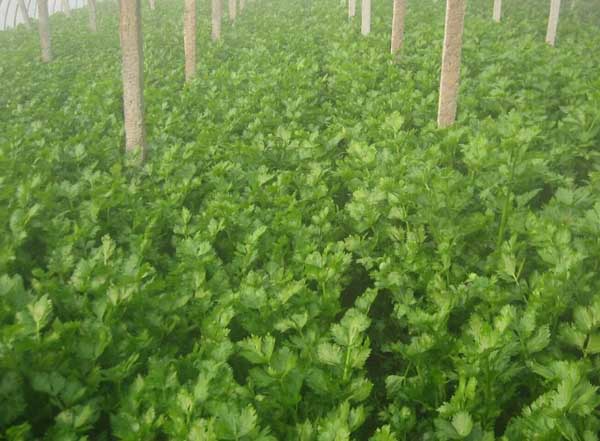
Celery is a cool-season vegetable that thrives with vigorous vegetative growth, high yields and good quality under cool climates and short-day conditions. In most parts of our country, autumn is the most suitable season for celery growth. Therefore, open-field celery is mainly grown in autumn, occupying the largest area, but celery has strong adaptability, and as long as suitable varieties are chosen and corresponding measures are taken in planting, it can also be grown in spring, summer and winter. At present, quite a number of regions and cities in our country have achieved a four-crop cultivation pattern of spring, summer, autumn and winter, basically forming a cultivation system capable of year-round production and supply.
Celery Planting Times
1. Planting time for spring celery
In the north, seedlings are raised under protection from January to March, transplanted to open fields from March to April, and harvested from May to July. In the Yangtze River basin, March is the suitable sowing period; sowing too early means the seedlings, after receiving a certain amount of low temperature, easily pass through the vernalization stage and bolt prematurely, while sowing too late means entering the hot summer later on, affecting yield and quality.
2. Planting time for summer celery
After the last frost in spring, seedlings are raised in open fields, transplanted from June to early July, and harvested and marketed from August to September. In the hot and rainy season, summer celery grows poorly, with many dead seedlings and low yields, so the planting area is not large.
3. Planting time for autumn celery
In the north, seeds are sown and seedlings raised from June to early July, transplanted from August to early September, and harvested from October to November. In the Yangtze River basin, sowing is from early July to early September, with harvest from October to December; late-sown crops finish harvest before bolting in March to April of the following year - winter celery. In the Yangtze River basin and the south, it can be grown in open fields, sown from September to November, and harvested from December to April of the following year. In the north, it can be grown under protection.
Now that you have seen the celery planting times, let the editor briefly introduce celery cultivation techniques for you below!
Celery Cultivation Techniques
1. Sowing and raising seedlings
① Seedbed selection: Celery prefers a cool climate, so its seedbed should be chosen as a site with loose, deep, fertile soil, convenient drainage and irrigation, and relatively cool shade. Apply 100 kg of lime per mu, deeply plow it into the soil, and burn and sun it until it turns white.
② Land preparation and bed making: Make beds about 1 m wide, apply 2000 kg of human and animal manure per mu, dry it in the sun, then break up and level the bed surface; during soil preparation, add 1 kg of carbofuran to eliminate earthworms.
③ Seed soaking and sprouting: Put the seeds in a cloth bag, tie one end of a long rope around it and lower it into well water to soak for 48 hours, then hang the seeds in the well about 0.5 m above the water surface to sprout; they will germinate in 3-4 days. When more than 80% of the seeds have germinated, they can be sown. If there is no well, sprouting can be done in an underground cave or in the refrigerator's cold storage compartment, that is, after soaking in cool water for 48 hours, take them out and dry the surface moisture, then wrap them well and put them in the cold storage compartment for 24 hours.
⑤ Timely sowing: Sowing periods: summer celery, around Great Heat (late July); autumn celery, End of Heat (late August) to White Dew (early September); winter celery, Autumn Equinox (late September) to Frost's Descent (late October); spring celery, Rain Water (late February) to Awakening of Insects (early March).
⑥ Sowing rate: 500 g of seed is needed for 1 mu of field, and 1 mu of seedbed can sow 2 kg of celery seed. When sowing, mix the germinated seeds with old chaff ash or dry fine soil and broadcast evenly. After sowing, pat the bed surface lightly and sprinkle water with a watering can. Then, cover with a plastic arch shed in winter, and cover with a shade net in summer to cool down and protect against rain.
2. Seedbed management: Generally, water once every evening on good-weather days, and water once in the morning and once in the evening on hot, dry days. After the seedlings emerge uniformly, begin topdressing, applying light manure water once every 5—7 days, and pay attention to controlling aphids.
3. Soil preparation and fertilization: For celery cultivation, choose sandy loam rich in organic matter with strong water and fertilizer retention. Spread 150 kg of quicklime per mu, deeply plow it into the soil, bake and sun it until it turns white, and make beds about 1.67 m wide. Apply 1D0 kg of rapeseed cake, 200 kg of human and animal manure, 20 kg of urea, 40—50 kg of phosphate fertilizer and 10—15 kg of potash fertilizer per mu, shallowly turn them into the soil, level and finely break up the soil, and leave it idle for 4—5 days before transplanting.
4. Transplanting: When the seedlings reach 50 60 days of age and 12 15 cm in height, they can be pulled up and transplanted. Spray an insecticide once (such as deltamethrin) before pulling the seedlings, and water 3—4 hours before pulling the seedlings to fully moisten the bed soil. The transplanting row spacing is 16—26 cm, the clump spacing is about 1 cm, with 4—5 plants per clump, and water each plant well to settle the roots as you transplant.
5. Field management: After transplanting the seedlings, before they survive, water every morning and evening to settle the roots, and pay attention to checking the seedlings and filling in gaps to ensure a full stand. After transplanting and survival, apply manure water frequently to keep the soil moist. Before the rows close, shallowly cultivate 2—3 times. In hot and dry seasons, during the early growth stage, cover the large shed or small arch shed with a shade net or build a frame covered with straw for shade. In particularly dry conditions, you can lead water in for furrow irrigation in the morning and evening when the water temperature is lower; never let water rise above the bed surface, and drain it quickly once the bed is moist, so as to maintain normal celery growth.
6. Pest and disease control: The main diseases of celery are late blight and leaf spot, which can be controlled with zineb, carbendazim or chlorothalonil; the main pest is aphids, which can be controlled with deltamethrin or dimethoate.