Detailed Explanation of Key Celery Cultivation Techniques and Management Methods
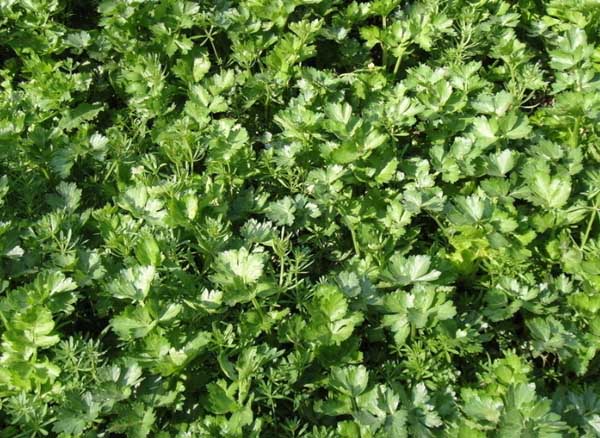
Celery cultivation in China began in the Han Dynasty and has a history of more than 2000 years. At first it was grown only as an ornamental plant, and later as a food crop. Through continuous domestication and breeding, the slender-petiole celery cultivar type was formed, namely Chinese celery (benqin).
The Growing Environment of Celery
1. Temperature. Celery originated along the Mediterranean coast and is a shallow-rooted vegetable of the Apiaceae family that prefers a cool and mild climate. The optimum temperature for seed germination is 18-25°C, with a minimum of 4-6°C; the seedling stage is best at 15-20°C, and it can tolerate short periods of -4-5°C low temperature and around 30°C high temperature, while the roots can overwinter at low temperatures of about -15°C. The suitable temperature for the vegetative growth period is 16-20°C; growth is poor above 20°C, and diseases occur easily, causing a decline in quality.
2. Light. Low temperature and long-day conditions can promote flower bud differentiation at the shoot apex, so spring sowing easily leads to premature bolting; during the vegetative growth period of celery, high temperature and strong light increase the fiber content and make the quality poor. Therefore, celery is suited to protected environments, and cultivation with early spring and late autumn extension is especially best.
3. Water. The celery root system is shallow, mostly around 12-18 cm, so it is not drought-tolerant and requires moist soil and air conditions. Especially during the peak growth period, when the soil surface is covered with white fibrous roots, sufficient water is even more necessary; otherwise growth stagnates, the mechanical tissue in the petioles becomes well developed, and both yield and quality decline.
4. Soil and nutrition. Celery is suited to loam or clay loam rich in organic matter and with strong water- and fertilizer-holding capacity. For every 100 kg of celery produced, 40 g nitrogen, 14 g phosphorus and 60 g potassium are required. Nitrogen deficiency makes plants short and small, and petioles easily age and become hollow, with nitrogen deficiency in the early and late stages having the greatest impact. In addition, celery has a relatively strong need for boron; when boron is deficient, celery petioles easily split, and 0.5-0.75 kg of borax can be applied per mu.
Celery Cultivation Techniques
Celery has strong adaptability to the environment. By using different cultivar combinations in different seasons and supporting them with various protective facilities, it can be produced year-round across both north and south China. The main cropping seasons are as follows.
1. Open-field cultivation cropping seasons
① Autumn celery: seedlings raised in early summer, grown during the cool autumn season, harvested about one month after frost, with a growing period of 120-150 days.
② Spring-summer celery: seedlings raised under protection 80-90 days before the last frost, transplanted 20-30 days before the last frost, grown in spring and summer, and harvested before and after the high-temperature season.
③ Overwintering celery: in areas where the lowest average winter temperature is above -5°C, seedlings or small plants can overwinter directly in the open field; in areas around -10°C, windbreaks and ground mulching with grass are used for overwintering; in areas below -12°C, autumn celery root stocks are mostly stored for overwintering and planted after the thaw the following spring.
2. Protected facility cultivation cropping seasons
Celery under protected cultivation is mainly for overwintering, winter-spring and late-autumn extension, and can be planted alone on a large scale or intercropped and relay-cropped with cucumber and tomato.
① Solar greenhouse overwintering celery: shaded seedling raising from June to August, transplanting from August to October, and harvesting by picking outer leaves in stages from December to April of the following year.
② Improved sunny border winter-spring celery: sowing and seedling raising from late August to early September, transplanting from mid-October to early November, and harvesting from April to May.
③ Autumn protected cultivation celery: autumn greenhouse celery is generally sown in late June, transplanted in mid-to-late August, and harvested from mid-October to mid-November; celery can also be grown as a late-autumn extension crop in small arched sheds covered with straw mats, mostly with seedling raising in mid-to-late June, transplanting in early September, and entering the peak harvest period in mid-December.
Excellent Celery Cultivars
1. Chinese celery (benqin)
① Jinnan Shiqin No. 1: bred by the Agricultural Science Station of Shuanggang Town, Jinnan District, Tianjin. This cultivar has strong growth vigor, bolts late, and has few branches. The petioles are solid and of good quality, and it is disease-resistant and widely adaptable. The average single plant weight is 0.5 kg, and the average yield per mu is 5000-10000 kg. It is suitable for open-field and protected cultivation in spring and autumn throughout the country.
② Jinnan Dongqin: a new celery cultivar released in 1995 by the Tianjin Hongcheng Celery Research Institute. This cultivar has relatively thick petioles, is light green, and has a palatable aroma. The plant height is 90 cm, the single plant weight is 0.25 kg, and it has very few branches. It is most suitable for production under winter protection.
③ Tiegan Celery: the plant is tall, the leaves are dark green and glossy, the petioles are green, solid or semi-solid, the single plant weight is 0.25 kg, and the yield per mu is about 5000 kg.
2. Western celery (celeriac-type celery / xiyang qincai)
① Italian Winter Celery: the plant has strong growth vigor, the plant height is 85 cm, and the petioles are thick and solid; the petiole base is 1.2 cm wide and 0.95 cm thick, crisp and tender in texture, with few fibers and a strong medicinal aroma, and the average single plant weight is about 250 g. It can tolerate short periods of -10°C low temperature and 35°C high temperature. It is a main western celery cultivar planted in both north and south China, and is especially suitable for winter, spring and late-autumn extension cultivation in small and medium arched sheds, improved sunny borders and solar greenhouses in northern China.
② Meiqin: a western celery cultivar introduced from the United States, with a plant height of about 90 cm and a spread of 42 cm × 34 cm. The petioles are green, up to 44 cm long, 2.38 cm wide and 1.65 cm thick; the leaf sheath base is 3.92 cm wide, solid, tender and crisp in texture, with very few fibers. The average single plant weight is about 1 kg, and it is suitable for both raw and cooked use. It is late-maturing, with a growing period of 100-120 days, tolerant of both cold and heat, and also tolerant of storage. It is slightly susceptible to black heart disease and does not bolt easily. The plant and row spacing should be slightly larger than for Chinese celery, preferably 25 cm × 25 cm, with 8000-9000 plants per mu.
Pest and Disease Control of Celery
The main pest of overwintering cultivated celery is aphids, and the specific control methods are as described above. Diseases have a relatively large impact on celery yield and quality, and the main diseases are celery leaf spot and celery late blight.
1. Celery leaf spot
[Symptoms] Celery leaf spot, also called early blight, mainly damages the leaves. At first, yellow-green water-soaked spots appear, which later develop into round or irregular shapes, 4-10 mm in size. The lesions are grayish brown, and the edge color is slightly darker but not distinct. In severe cases, the lesions expand and merge into patches, eventually causing the leaves to wither and die. On the stems or petioles, the lesions are elliptical, 3-7 mm, grayish brown, and slightly sunken. When the disease is severe, the whole plant lodges. Under high humidity, grayish white mold layers grow on all the above diseased parts.
[Control measures] ① Choose disease-tolerant cultivars. Such as Jinnan Shiqin No. 1. ② When necessary, soak seeds in 48°C warm water for 30 minutes. ③ Plant at a reasonable density and irrigate scientifically to prevent excessively high humidity in the field. ④ In the early stage of the disease, spray with 50% thiophanate-methyl wettable powder at 500 times dilution, or 77% copper hydroxide wettable powder at 500 times dilution; 5% chlorothalonil dust can also be used at 1 kg per mu each time; or 45% chlorothalonil smoke agent can be applied at 200 g per mu each time, once every about 9 days, applied continuously or alternately 2-3 times.
2. Celery late blight
Celery late blight has become an important disease of winter-spring protected cultivation celery and has a great impact on celery yield and quality.
[Symptoms] Celery late blight is also called leaf blight. Leaves, petioles and stems can all be infected. In one type, old leaves become diseased first. The lesions on the leaves are mostly scattered, of varying sizes, 3-10 cm in diameter; at first they are light brown oil-soaked small spots, then gradually expand, with brown necrosis in the center and mostly dark red outer edges, and the boundary between diseased and healthy tissue is obvious, with a few small black dots scattered in the middle. In the other type, it is initially not easy to distinguish from the former, but later the center becomes yellowish white or grayish white. Many small black granules gather at the edges, and the lesions are often surrounded by a yellow halo, with lesion diameters varying. When the petioles or stems are infected, the lesions are brown, oblong and slightly sunken, with small black dots scattered in the middle.
[Control measures] ① Disinfect the seeds. ② Strengthen field management, never use flood irrigation, and pay attention to cooling and reducing humidity. ③ Before the celery rows close, fumigate with 45% chlorothalonil smoke agent at 200-250 g per mu each time; or spray 5% chlorothalonil dust at 1 kg per mu each time. ④ In the early stage of the disease, spray 75% chlorothalonil wettable powder at 600 times dilution; or 64% oxadixyl-mancozeb wettable powder at 500 times dilution; or 40% carbendazim-sulfur suspension concentrate at 500 times dilution, once every 7-10 days, for 2-3 consecutive times.