When to plant green beans? An introduction to the best planting time
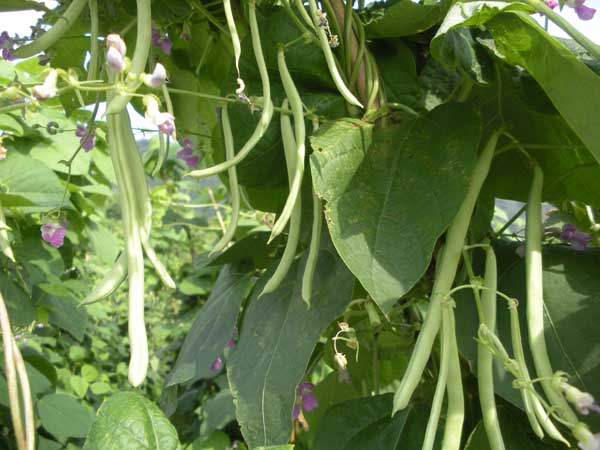
Green bean is another name for the common bean, also known as: kidney bean, haricot bean, snap bean, sword bean, etc. It is an annual herbaceous plant and one of the common vegetables on the dining table. Green beans can be planted in both spring and autumn, and are deeply loved by growers; they are widely cultivated in both northern and southern China.
The planting time of green beans
February to April (autumn sowing can also be done in August to September). The specific spring sowing period is: in Northeast China, late April to mid-May; in most of Northwest and North China, April, and in the northern plateau areas, early May; in East China, late March to early April; in most of Central and Southwest China, late February to early March; in Yunnan, late January to early February; in South China, December to April of the following year. Autumn sowing: in North and Northwest China, July to early August; in Central China, late July to early August; in East China, late July to early September; in Southwest China, early August; in South China, late August to October.
The growing environment of green beans
1. Temperature: The common bean likes warmth and is not tolerant of frost. The temperature range for seed germination is 20-30°C; below 10°C or above 40°C, germination cannot occur. Seedlings are sensitive to temperature changes; when exposed to a low temperature of 2-3°C for a short time, they begin to lose chlorophyll, and 0°C causes frost damage.
2. Light: It is a short-day plant, but different varieties respond differently to the photoperiod and can be divided into 3 types: first, the photoperiod-sensitive type; second, the photoperiod-insensitive type; third, the moderately photoperiod-sensitive type.
3. Water: The common bean has a well-developed root system with many lateral roots, is relatively drought-tolerant but not waterlogging-tolerant. Seed germination requires sufficient water absorption, but too much water causes a lack of oxygen in the soil, and the seeds easily rot. The suitable field water capacity during the plant's growing period is 60-70% of the maximum water capacity. The flowering period has strict water requirements, and its suitable relative air humidity is 65-80%.
4. Soil and nutrients: The common bean is best cultivated in soil that is deep, loose, rich in humus and well-drained. Sandy loam, loam and ordinary clay can all support its growth, but it should not be cultivated in low-lying wetlands and heavy clay. The suitable pH is 6-7. It should not be too acidic or too alkaline. The common bean absorbs a lot of nitrogen and potassium, and less phosphorus. It also needs a certain amount of calcium fertilizer.
Planting times of different varieties of green beans
1. Dwarf common bean: In late February, raise seedlings in nutrient pots in a cold bed, using 3.5 kg of seed per mu. Plant out in early April: bed width 1 m, ditch width 50 cm, 2 rows per bed, hole spacing 23 cm, with 2—4 plants clustered per hole. Harvest from late May to mid- and late June, with a yield of 750—1000 kg per mu.
2. Pole common bean: In early March, using varieties such as “Fengshou No. 1” and “Xining Common Bean”, sow seeds and raise seedlings in nutrient pots in a cold bed, using 2.5—3 kg of seed per mu. In late March, plant out under plastic low tunnels, with row spacing 66 cm, hole spacing 26 cm, and 2 plants clustered per hole. Harvest from mid-May to mid-June, with a yield of more than 1500 kg per mu.
Field management for green bean cultivation
1. Fertilizer and water management
① Green beans like dryness and fear moisture. Especially during the sowing period, if it is too wet, the seeds will rot and no seedlings will emerge. Therefore, before sowing, first water the holes with an appropriate amount of water. After emergence, if the soil is dry, water once every 5-6 days; if the soil is not dry, do not water; if the soil is too dry, furrow irrigation can be used, and once the water layer reaches half the furrow, drain it immediately; do not irrigate with water left overnight; pay attention to drainage on rainy days. During the flowering and pod-setting period, keep the soil moist and irrigate more, but also prevent excessive water, because overly vigorous plant growth causes an imbalance between vegetative growth and reproductive growth and leads to flower and pod drop. Do a good job of drainage in rainy weather, so that the field dries once the rain stops.
② Under suitable environmental conditions, the earlier the topdressing is applied, the more obvious the effect. However, during the seedling stage, do not apply too much nitrogen fertilizer or apply nitrogen fertilizer alone. For direct sowing, apply the first topdressing when compound leaves appear; for seedling transplanting, apply the first topdressing 3-4 days after planting out, so that the seedlings recover growth. After that, apply topdressing another 2-3 times. For climbing varieties, topdress before vines are drawn and trellises are set up. The amount of topdressing per mu each time is about 1500 kg of 20%-30% dilute decomposed manure, preferably with 2.5 kg each of potassium sulfate and calcium superphosphate added. During the pod-setting period, topdressing increases gradually in the order of the early flowering and pod-setting stage and the tender pod harvest stage. Climbing varieties require more fertilizer and more applications than dwarf varieties. In the early flowering and pod-setting stage of green beans, apply an appropriate amount of nitrogen fertilizer; in the full flowering and pod-setting stage, apply heavy topdressing to meet the needs of rapid pod growth. The application amount is about 2500-5000 kg of 50% human and livestock manure per mu, and 15 kg of calcium superphosphate should also be added, diluted with water and poured on, or when the soil is wet, mixed with fine soil and applied in holes. The number of applications is 1-3 times. For dwarf green beans, the pod-setting period is short, and no further topdressing is applied afterward. For pole green beans, the pod-setting period is longer, and 2-3 more topdressings should be applied as appropriate afterward depending on growth and pod setting. In addition, during the full flowering and pod-setting stage, topdress by foliar spraying 2-3 times with 0.3% potassium dihydrogen phosphate plus 0.2% urea, which has a significant yield-increasing effect.
2. Intertillage, weeding and trellising
When the vines begin to grow, carry out shallow intertillage 1-2 times, and combine it with weeding. After that, generally do not intertill again; if there are weeds, pull them out. If the soil is compacted, loosen it with a hoe, but do not go close to the roots. At the same time, in the later period, combine with earthing up 1-2 times, mounding the soil from the furrows onto the beds. When the plant vines develop, set up trellises in time and guide the vines.
3. Disease control
In addition to agricultural control measures such as using disease-resistant varieties, selecting fields where leguminous crops have not been planted for more than two years, planting on high beds, rational topdressing, cleaning the field, and removing diseased plant residues, highly effective, low-toxicity and low-residue pesticides can be selected for control.
① For anthracnose, spray with 800 times anthracnose Fumei, 1000 times anthracnose No. 2, 1000 times Shibaogong, 1000 times Daconil and 2000 times Shigao, etc.
② For root rot, use 800 times Dexon, 1000 times Genfuning and 3000 times Luheng No. 1 plus 500 times Shouduo solution to drench the roots.
③ For phytophthora blight, attention should be paid to preventive spraying. You can choose 800 times copper oxychloride, 1000 times mancozeb, and 1000 times Haoshengling for spraying, once at the seedling stage and 2-3 times during the flowering and pod-setting period. In the early stage of the disease, therapeutic agents can be used, such as spraying 1000 times Ridomil, 1000 times Jinglei Ridomil, 1000 times Shadufan, and 1000 times Anke solution. In addition, diseased plants found should be pulled out promptly.
④ For rust control, you can choose 300 times sulfur suspension concentrate, 1000 times thiophanate, 1000 times triadimefon, 2000 times Shigao, and 8000 times Amistar solution for spraying; for sooty mold, you can use 1000 times thiophanate, 800 times carbendazim, 1000 times chlorothalonil, and 1000 times Fuxing solution for alternate spraying control.
4. Pest control
① The most important thing in controlling the bean pod borer is to achieve “treat the flowers, not the pods”. Seize the time to apply pesticide during the flowering period (that is, the young larval stage), and master spraying at 6-9 a.m. when the flowers are open. You can choose 1000 times Shachongshuang, 2000 times Yitaibao, 3000 times Tianwangxing, 1000 times Lesiben, 2000 times Kungfu and 1000 times Badan solution for spraying control.
② Aphids are mainly controlled by chemical agents. You can choose 800 times Keyaxing, 2000 times Yashijue, 1500 times Gaoxiao Dagongchen, 6000 times Kangfuduo, 2000 times imidacloprid, and 8000 times Actara solution for spraying control.
③ Mites are mainly spider mites (red spiders) and tea yellow mites (white spiders). When 2%-5% of the leaves in the field are damaged by spider mites or when the first leaf damaged by tea yellow mites appears in the field, pesticide should be sprayed for control. The control agents can be 600 times Kangman 23, 800 times Chaoli, 1000 times Mieshaoli and 1000 times Manke solution for spraying control.