Key Points of Chayote Cultivation Techniques and a Detailed Guide to Planting Methods
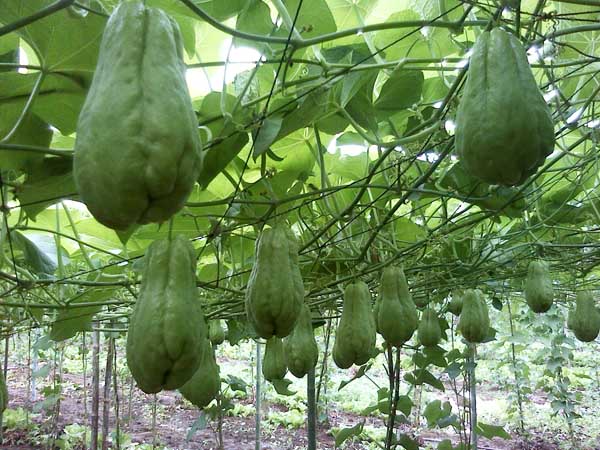
Chayote, also known as wax gourd melon, fist melon, and ten-thousand-year melon, is a perennial climbing herbaceous plant of the genus Sechium in the Cucurbitaceae family. Chayote is rich in nutrients, low in calories, and has high edible value. It is suitable for eating raw, in cold dressed dishes, stir-fried, boiled, in soups, or as a filling. Chayote stores well and is easy to transport, making it an ideal green health food that fills the gap during the off-season for melons, fruits, and vegetables in winter and spring.
Cultivation Techniques for Chayote
Chayote prefers warmth and can tolerate relatively high temperatures; it can only grow normally above 20°C. The fruit development stage requires slightly lower temperatures, and the root system dies when the soil temperature is below 5°C. Chayote is suited to relatively fertile soil with good water retention. It is relatively tolerant of fertilizer and has very strong resistance to pests and diseases.
1. Three-dimensional cultivation in vegetable fields: Protected cultivation can be adopted. Chayote is intercropped and relay-cropped with vegetables such as cucumber, kidney bean, tomato, and pepper, making use of the differences in time and space between the growth and fruiting of chayote and the intercropped vegetables, as well as the vegetables' requirements for nutrients, water, fertilizer, air, and temperature, to achieve rational pairing and the goal of efficient three-dimensional cultivation.
2. Field planting in vegetable gardens: Chayote is a shallow-rooted crop and is best grown in fertile vegetable garden soil. Around “Jingzhe” (Awakening of Insects), plant it at the same time as greenhouse cucumbers, tomatoes, and other vegetables, with the same management; generally, 20 plants per mu is appropriate.
Field Management of Chayote
1. Seedling stage: When planted in a small arched shed in a courtyard, only light watering is needed during the seedling stage; if growth is vigorous, do not apply additional fertilizer. Pay attention to ventilation and light during the day, and protect against freezing at night. For chayote seedlings planted in greenhouses or large sheds, water and fertilize at the same time as the intercropped and relay-cropped vegetables.
2. Trellising stage: Chayote has a very strong ability to branch from lateral shoots. In the early stage, promptly remove the lateral buds at the base. When pruning, pinch off the growing tip at about 30 cm to 50 cm on the main vine, and select 2 to 3 vigorous secondary vines per plant. When the secondary vines reach 150 cm, pinch off the growing tips again, leaving 3 tertiary vines each. Pay attention to adjusting the trellis surface, remove tendrils promptly, and, depending on the growth vigor of the main vine, suppress the strong and support the weak so that growth is evenly distributed across the trellis surface.
3. Flowering and fruiting stage: Chayote takes about 170 days from sowing to flowering and fruiting, and tender fruit can be harvested 15 to 20 days after flowering. The fruit matures in 40 to 50 days, and each plant can produce 200 to 300 fruits. When picking, be sure to handle them gently to avoid bruising. Chayote can be marketed during the harvest season, or placed in cardboard boxes or fruit baskets lined with plastic film; at a room temperature of 10°C to 25°C, with suitable humidity and ventilation, it can be stored for 4 to 6 months without changing its flavor, remaining crisp and fresh, and is deeply loved by consumers.