When is the planting time for tomatoes?
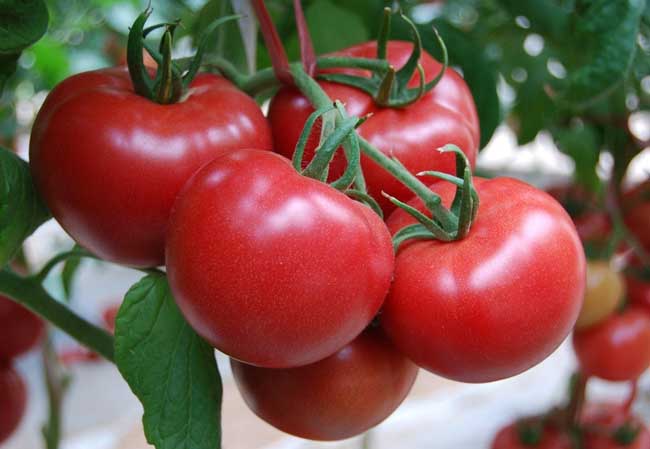
Tomatoes like warmth. The suitable temperature during the day is 25-28°C, and at night 16-18°C. Below 15°C, tomato seed germination, pollination and fertilization, and tomato reddening are affected: below 10°C, growth is slow and reproductive development is inhibited; at 5°C, stems and leaves stop growing; at 2°C, they suffer cold damage; at 0°C, they are frozen to death. Above 35°C, reproductive development is affected; above 40°C, physiological disorder occurs and they die from heat. Sufficient light and a suitable temperature difference are beneficial for nutrient accumulation and ripening, promote healthy plant development, prevent excessive vegetative growth, enhance the disease resistance and stress resistance of tomatoes, and increase yield.
Tomato planting time
In general, tomatoes are divided according to different planting and harvest times into spring tomatoes, autumn-winter crops, winter-spring crops, and overwintering crops, etc. Below let us look at their planting times separately!
1. Planting time for spring tomatoes
The suitable seedling age for open-field spring tomato cultivation is 50—70 days, that is, sowing should be carried out 50—70 days before transplanting. For example, in the Shenyang area at 41°N, spring-crop tomatoes are sown and raised in protected facilities in February, and transplanted in the open field after the late frost in early May.
Spring tomatoes are generally transplanted immediately after the local late frost period, when the soil temperature at a depth of 5—10 cm in the plow layer stably passes 12°C. For example, the average late frost period in Shenyang over the years is May 2, and the suitable transplanting period is generally May 6—10. In the Yangtze River Basin, it is generally around Qingming; in North China, around Guyu; and in Northeast China, generally around Lixia. With windbreaks, plastic film mulching, and leeward, sunny, high, dry sandy land, transplanting can be done earlier. Transplanting should also be determined according to weather conditions. In cloudy, rainy, or windy weather, transplanting should be appropriately delayed. Within the suitable transplanting period, early transplanting should be seized. Shaanxi tomatoes are mainly planted according to the market time, and there are mainly two seasons a year. One is delayed cultivation after autumn, starting seedling raising after July and August, and they can be marketed successively from around November. The other is early spring cultivation, with seedling raising in November and December, and marketing in May and June.
2. Planting time for autumn-winter crops
Autumn-winter crops are generally sown and raised from mid-to-late July to early-to-mid August, and transplanted from mid-to-late August to early September. Film is covered from mid-to-late September to early October, and harvesting is from late November to early February of the following year.
3. Planting time for winter-spring crops
Winter-spring crops are sown from early November to early December, transplanted from mid-to-late January to early February of the following year, and harvested from early-to-mid March to June.
4. Planting time for overwintering crops
Overwintering crops belong to single large-crop cultivation. They are generally raised from mid-to-late September to early October, transplanted in November, and harvested starting in January of the following year.
Tomato seed treatment
1. Hot water seed soaking
Hot water seed soaking is an effective measure to break seed dormancy, promote seed germination, sterilize and prevent disease, and enhance seed resistance. The specific method is:
① Soak the seeds in clean water for 1-2 hours.
② Remove them and put the seeds into warm water at 55°C, maintain the water temperature evenly and soak for 15 minutes, then continue soaking for 3-4 hours before accelerating germination. When soaking seeds in hot water, generally use one part seeds and two parts water. At the same time, stir continuously and quickly so that the seeds are heated evenly and to prevent scalding the seeds.
③ Keep adding hot water to maintain the water temperature at 55°C. This disinfection method can prevent the occurrence of tomato leaf mold, canker, early blight, and other diseases.
2. Chemical disinfection
① Trisodium phosphate seed soaking: first soak the seeds in clean water for 3-4 hours, remove and drain them, then put them into a 10% trisodium phosphate solution and soak for 20 minutes, wash them clean with clean water, and then accelerate germination. This method has a relatively obvious effect on tomato viral disease.
② Formalin solution seed soaking: put pre-soaked swollen seeds into a 1% formalin solution and soak for 15-20 minutes. During soaking, the container should be sealed to prevent the liquid from volatilizing, then take them out, wrap them in a wet cloth, place them in a sealed container and keep them there for 2-3 hours, rinse them repeatedly with clean water, and then soak the seeds and accelerate germination. This method can reduce or control the occurrence of tomato early blight.
③ Soak seeds in 0.1% potassium permanganate solution for 15—30 minutes, which can effectively reduce the occurrence of tomato mosaic virus disease and early blight.
④ Put pre-soaked tomato seeds into 1000 mg/kg agricultural streptomycin solution and soak for 30 minutes, which has a good effect on controlling bacterial wilt.
Tomato seedling-raising techniques
1. Determine the sowing rate
Generally, tomato seeds contain about 300 seeds per gram. According to the transplanting density, the usual seed rate is 20-30 grams per 667 sq m of field. Each square meter of sowing bed can be sown with 10-15 grams. If the seed germination rate is lower than 85%, the sowing rate should also be appropriately increased. Seeds need to first be soaked in warm water for 6-8 hours so that the seeds fully swell, then placed under a temperature condition of 25-28°C to sprout for 2-3 days. For seeds soaked in chemicals, simply rinse the seeds clean with clean water and then directly accelerate germination. During germination, suitable temperature, moisture, and air need to be provided. For this reason, check and turn the seeds frequently so that the seeds remain loose, and also wash them with clean water 1-2 times a day to renew the air and maintain humidity. For germination, it is best to use an incubator. Seeds that have been germinated emerge quickly and uniformly after sowing, which is conducive to cultivating robust seedlings.
2. Preparation of the sowing bed
Before sowing tomatoes, enough sowing beds should be prepared according to the planting plan. To prevent disease hazards, the seedling bed should be chemically disinfected before sowing. In most areas of China, especially in the north, before sowing it is necessary to first irrigate the sowing bed with enough bottom water. The amount of irrigation water should be such that the water content of the 8-10 cm deep soil layer in the bed soil reaches saturation. Generally, no more water is irrigated before seedling transplanting. In the south or in areas with a relatively high groundwater level, before sowing only a small ditch is opened on the bed surface, water is poured with a kettle in a small amount, and sowing is done after the water seeps in. Later, according to the growth of the seedlings, an appropriate amount of water is sprayed with a watering can to prevent soil compaction. After the bottom water seeps down, thinly spread a layer of sifted fine soil on the bed surface. Sowing beds are divided into cold beds and hot beds. A cold bed is a seedling-raising sunny bed or a seedling-raising bed set up in a plastic tunnel. It is a method of raising seedlings by using sunlight to raise temperature. A hot bed, on the basis of a cold bed, uses artificial heating equipment to increase the temperature of the seedling bed, and is a method of raising seedlings.
3. Determine the sowing period
Determine the suitable sowing period through comprehensive consideration of factors such as planting season, climatic conditions, cultivation method, and seedling-raising facilities. For example, for spring open-field cultivation, the Beijing area usually sows and raises seedlings from mid-February to early March. For autumn open-field cultivation, south of the Yangtze River such as Shanghai and Nanjing, sowing from late July to early August gives the best results, while in eastern Sichuan sowing in early July gives higher yield. The yield is also relatively high. In some areas where tomato diseases occur severely, appropriately delaying the sowing period by 1-2 months, and then through measures such as dense planting, early pinching, and increasing fertilizer and water, can also obtain a relatively high yield.
4. Sowing method
Usually there are broadcast sowing, drilling, and dibbling. After sowing, soil should be covered immediately, and the soil used for covering should be sifted fine soil. The thickness of the covering soil is about 0.8-1.0 cm, and the thickness should be uniform. After sowing, for each square meter of seedling bed, mix 8 grams of 50% carbendazim wettable powder with fine soil and evenly spread it thinly on the bed surface, which can prevent the occurrence of damping-off of seedlings. For seedling beds in winter and spring, plastic film also needs to be covered on the bed surface. For seedling beds in summer and autumn, shade nets or straw need to be covered on the bed surface, and the covering should be removed when 70% of the seedlings emerge.
5. Management during emergence
In general, if the seedling bed temperature is relatively high, the heat preservation conditions are good, and the seeds have been pre-germinated, they can emerge 2-3 days after sowing; otherwise, it takes 5 days or longer to emerge.
6. Seedling stage management
Tomato seedling stage management is mainly the control of temperature and light.
① Seedbed management from sowing to emergence: this period refers to the period from sowing to the full expansion of the two cotyledons. For spring open-field tomato cultivation, the seedling-raising period is arranged in the cold season in all areas, and the bed temperature must be controlled at 25-28°C during the day and 15-18°C at night. When using cold beds or hot beds for seedling raising, during this period solar energy should be fully used to increase the bed temperature, and coverings should be used to maintain a relatively high bed temperature. Before emergence, generally do not remove the film or open the windows for ventilation. When the young shoots begin to emerge, if the covering soil is too thin and seed-shell lifting is found, cover with soil again immediately. See the table below for temperature management during the winter and spring seedling-raising period.
② Seedbed management from emergence to before seedling transplanting: this period is mainly about adjusting the temperature and humidity of the seedling bed, timely thinning, covering with soil, improving light conditions, and preventing seedling-stage diseases. After the two cotyledons of the seedlings fully expand, the bed temperature should be appropriately lowered, controllable at 20-25°C during the day and 10-15°C at night, to prevent excessive growth. 4-5 days before seedling transplanting, in order to adapt to the lower temperature of the transplanting bed, improve the survival rate after transplanting, and promote seedling recovery, the bed temperature can be lowered by another 2-3°C at this time. For cold bed seedling raising, especially hot bed and greenhouse seedling raising, the ventilation openings should be gradually enlarged during the day, the ventilation time should be prolonged, and straw mats or thin mats should also be gradually uncovered earlier and covered later to prolong the light time. Damping-off or blight that easily occurs at the seedling stage is often caused on bad-weather days by not carrying out proper ventilation and air exchange and by covering for a long time with straw mats, films, and other coverings, causing the air humidity in the seedling bed to gradually increase. During this period, special attention should be paid to protecting the cotyledons, improving light conditions, timely thinning, water and fertilizer management, and reasonable soil covering.
Tomato pest and disease control
1. Tomato uneven ripening
Tomato uneven ripening is a physiological disease, also called rib rot or stripe rot or band rot. It mainly harms the fruit. Below is an introduction for everyone. There are two common types:
※ Brown discoloration type: it begins to occur at the young fruit stage, mainly harming the 1st to 2nd truss fruits. During the fruit expansion stage, local browning appears on the fruit surface, the fruit surface is uneven, and individual fruits become tea-brown and hard or develop necrotic spots. When the diseased fruit is cut open, it can be found that the vascular bundles in the peel show tea-brown striped necrosis, the fruit core becomes hard, or the flesh turns brown, losing commercial value.
※ White discoloration type: it mainly occurs during the period when green-ripe fruit turns red. Its symptom is uneven coloring of the fruit. In mild cases, the fruit shape changes little; in severe cases, green protrusions appear near the fruit stalk, the reddened part is slightly sunken, and the light and surface show uneven red and green.
[Disease symptoms]Tomato rib rot generally cannot be seen on the stems and leaves, but when the stem at 70 cm from the root is cut open, the vascular tissue of the stem can be seen to have brown lesions and has already been destroyed, causing the above fruit symptoms. This is different from viral disease.
[Cause of disease]Because it is a physiological disease, the degree of damage depends on the variety (large-fruited red tomato Wanda is not easily infected), sunshine hours, light intensity, and the ratio of nitrogen, phosphorus, and potassium in the soil.
[Control method]Mainly work hard on management, appropriately increase light, scientifically determine the sowing and transplanting periods, and use formula fertilization. For those that already show the above symptoms, multi-element fertilizer can be sprayed.
2. Hollow tomato fruit
Hollow tomato fruit refers to fruit that has cavities between the peel and the gelatinous flesh. Although hollow fruit does not have a very large impact on tomato yield, it seriously affects its commercial quality and reduces economic benefits, so attention must be paid to it in production.
Hollow tomato fruit is a physiological disease, and varieties with few locules are prone to it. There are many reasons for the formation of hollow tomato fruit, such as improper timing of hormone spraying, insufficient light, insufficient watering during the peak fruiting period, too many fruits retained, and inability to supply nutrients. The growth vigor of tomato varieties differs, so according to the characteristics of each variety, pinching should be done in time so that vegetative growth and reproductive growth develop in balance.
3. Tomato bacterial spot disease
Tomato bacterial spot disease is also called bacterial leaf spot disease or bacterial leaf spot rash disease. It generally reduces yield by 10-30%, and in severe cases can reach more than 50%.
[Damage characteristics]Tomato bacterial spot disease mainly harms leaves, stems, flowers, petioles, and fruits.
① Infected leaves: produce dark brown to black irregular spots, 2-4 mm in diameter, with or without a yellow halo around the spots.
② Petioles and stems: the symptoms are similar, producing black spots, but there is no yellow halo around the lesions. The lesions easily connect into patches, and in severe cases can make a section of the stem turn black.
③ Damaged flower buds: many black spots form on the sepals. When they connect, the sepals dry up and cannot flower normally.
④ Young tender fruit: the initial small spots are slightly raised, and when the fruit is near maturity, the area around the lesions often still remains green for a relatively long time. The flesh near the lesions is slightly sunken, the area around the lesions is black, and the center is lighter in color and slightly sunken.
[Occurrence pattern]The pathogen of tomato bacterial spot disease is Pseudomonas syringae pv. tomato. The pathogen can overwinter on tomato plants, seeds, diseased residues, soil, and weeds, can survive for 20 years on dry seeds, and can spread over long distances with seeds. Sowing infected seeds can cause seedlings to become diseased, and after the seedlings become diseased, it is transmitted to the field and spreads through rain, insects, and farming operations, causing an epidemic. In the field, as long as initially 10% of plants are diseased, it can infect the entire plot. Conditions below 25°C and with relative humidity above 80% are favorable for disease occurrence.
[Control method]
① Agricultural control: strengthen quarantine to prevent infected seeds from being introduced into non-epidemic areas, select disease-resistant and disease-tolerant varieties, establish disease-free seed fields, use disease-free seedlings, practice crop rotation with non-solanaceous vegetables for more than 3 years, and in farming operations such as pruning, removing side shoots, and harvesting, attention should be paid to avoiding the spread of disease. In arid areas, use drip irrigation or furrow irrigation, and avoid sprinkler irrigation as much as possible.
② Seed treatment: soak seeds in warm water at 55°C for 30 minutes, or soak seeds in 0.6% acetic acid solution for 24 hours, or soak seeds in 5% hydrochloric acid for 5-10 hours, or soak seeds in 1.05% sodium hypochlorite for 20-40 minutes. After soaking, rinse off the chemical solution with clean water, let them dry slightly, and then accelerate germination.
③ Chemical control: at the initial stage of disease, choose 77% Kocide wettable powder 400-500 times solution, 53.8% Kocide 2000 dry flowable 600 times solution, 20% thiabendazole (Longkejun) suspension 500 times solution, 14% copper ammonia complex aqueous solution 300 times solution, or 0.3%-0.5% copper hydroxide solution for control, spraying once every 10 days or so, for 3-4 consecutive sprays.
4. Green shoulder fruit
[Damage symptoms]After the fruit turns red, green areas or patches remain on the shoulder of the fruit or near the fruit stalk and never turn red. The fruit is red and green mixed, the flesh in the green areas is relatively hard, the fruit tastes sour, and the mouthfeel is poor.
[Cause]It occurs when nitrogen fertilizer is applied excessively and tomato plants grow too vigorously, especially when there is much nitrogen fertilizer, little potassium fertilizer, boron deficiency, and dry soil, the disease is most severe.
[Control method]During the fruit expansion stage, supplement potassium in time and spray a compound micro-fertilizer containing potassium and boron.
5. Tea-colored fruit
[Damage symptoms]After the fruit matures and turns red, brown is exposed within the red, making the fruit appear tea-brown. The fruit appearance is dull, the glossiness is poor, and the commercial quality is obviously reduced.
[Cause]High temperature and weak light are the root causes of tea-colored fruit. When the temperature during the fruit ripening period is lower than 24°C, chlorophyll will increase and delay the formation of lycopene, causing the appearance of tea-colored fruit. Excessive or over-application of nitrogen fertilizer and deficiency of potassium and boron also easily cause tea-colored fruit in greenhouses with crop rotation and soil salinization if fertilizer is applied excessively.
[Control method]Carry out fruit ripening treatment, and prevent alternating dry and wet conditions or excessive dryness and wetness. Or over-apply nitrogen fertilizer, and prevent excessive vegetative growth.
6. Blossom-end rot fruit
[Damage symptoms]The disease occurs at the young fruit stage when the fruit is the size of a table tennis ball to a chicken egg. At first, the top of the fruit (the blossom end) is initially water-soaked dark green or dark gray, and soon becomes dark black. The flesh loses water, and the top becomes flat or sunken. The lesions sometimes have concentric rings. The peel and flesh are tough and generally do not rot. When the air is humid, the diseased fruit rots.
[Cause]The direct cause is calcium deficiency. Fourth, fruits treated with growth regulators are prone to blossom-end rot.
[Control method]① Prevent applying too much nitrogen and potassium fertilizer while also applying a large amount of quick-acting fertilizer at one time. ② Prevent the soil from drying out and increase the amount of irrigation water. ③ After entering the fruiting stage, spray 0.1%-0.3% calcium chloride aqueous solution once every 7 days, and calcium fertilizers such as Greenfinch No. 3 can also be sprayed continuously.
7. Sunscald fruit
[Damage symptoms]The sunburned part of the fruit shows large areas of chlorotic white spots. The surface is glossy and translucent leathery, and sunken. Later, the diseased part turns yellow, wrinkles sometimes appear on the surface, it shrinks and hardens, and the flesh necroses, becoming brown blocky.
[Control method]Reasonably dense planting, excessive pruning and removal of side shoots, when selecting and retaining flower clusters and pruning and tying vines, arrange the flower clusters on the inner side of the trellis, relying on their own leaves for shading. When pinching the growing point, leave 2 leaves above the last fruit truss to shade the fruit truss. Ventilate in time, lower the greenhouse temperature, cover with shade nets, and avoid strong light.
[Cause]The part of the fruit exposed to direct sunlight is burned because the temperature is too high.