Detailed explanation of high-yield cowpea cultivation techniques to help you grow a good harvest
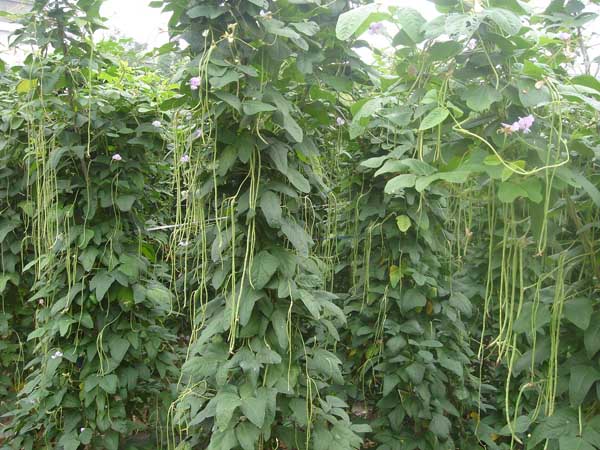
Cowpea requires high temperatures and has strong heat tolerance. Its suitable growth temperature is 20-25°C. It can still set pods normally at high temperatures above 35°C in summer and does not drop flowers. However, it is not tolerant of frost. Under prolonged low temperatures below 10°C, growth is inhibited. Cowpea is a short-day crop, but long cowpea grown as a vegetable mostly belongs to the neutral-light type and is not very strict about sunlight requirements. For example, varieties such as Red Beak Swallow and Zhijiang 28-2 can be cultivated in spring, summer, and autumn in the south. Cowpea has wide adaptability to soil, and can be planted in any field as long as drainage is good and the soil is loose. The pods are tender, and sufficient fertilizer and water are required during the pod-setting period.
Sowing and raising seedlings
Early-maturing cowpea cultivation generally requires strong seedlings. The sowing period should be determined according to local climatic conditions, cultivation facilities, and management measures. For cultivation under small arch sheds, sowing can be done in mid-to-late March; for cultivation in large greenhouses, sowing can be done in early-to-mid March; for cultivation under large greenhouses with small sheds inside, sowing can be done from late February to early March. In some areas, the sowing period is delayed until late April or early May, and direct seeding can be used.
Before sowing, select seeds that are large, plump, free of pests and diseases, and undamaged, and choose sunny weather to sun-dry the seeds for 1-2 days. If necessary, dress the seeds with chemicals before sowing. Before sowing, prepare the seedbed. The nutrient soil in the seedbed should be no less than 5 cm thick. The seedbed soil should be moderately dry and moist, not too wet, otherwise the seeds are prone to rot. When sowing, scatter the seeds in the seedbed soil, with the seeds not overlapping. After sowing, cover with loose fine soil 1.5-2 cm deep, press lightly, then spread sparse rice straw, and cover with plastic film to keep warm and moist. After sowing, control the seedbed temperature at 25-30°C.
Seedlings begin to emerge 4-5 days after sowing. When about 30% of the seeds have emerged, promptly remove the plastic film and rice straw. When most of the seeds have emerged, lower the seedbed temperature so that the daytime temperature remains around 20°C, with a maximum not exceeding 25°C, and the nighttime minimum temperature not lower than 15°C. If the temperature is too high, the small arch shed can be opened to cool down, but cold wind must be prevented from blowing directly into the seedbed to avoid cold damage. Start hardening the seedlings 4-5 days after full emergence. During seedling hardening, the nighttime minimum temperature must not be lower than 10°C. Transplant when the first pair of true leaves has formed but has not yet fully unfolded. To protect the root system, nutrient pot seedling cultivation can be used where conditions permit.
Land preparation and application of base fertilizer
Cowpea is not tolerant of waterlogging and has a long growth period. It requires more nutrients during the growth period. Choose soil with high and dry terrain, deep soil layers, rich organic matter, and convenient drainage and irrigation. Apply base fertilizer 10-15 days before transplanting after land preparation. Generally, apply 1500-2000 kg of fully decomposed human manure or chicken and duck manure, 15-20 kg of superphosphate, and 75-100 kg of plant ash per mu. It can be applied in furrows or broadcast. After land preparation, the bed surface width is 100-110 cm, the ditch width is 40 cm, and the bed height is 20-25 cm. After leveling the bed surface, cover with plastic film.
Transplanting
Although cowpea has a well-developed root system, its root regeneration ability is relatively weak, so it is suitable to transplant small seedlings. Generally, transplant when the cotyledons have unfolded and the first pair of true leaves has not yet fully unfolded; those raised in nutrient pots can be transplanted appropriately later. Transplanting should be done on a sunny day at the end of a cold spell and the beginning of warm weather. Before transplanting, water the seedbed thoroughly, then lift the seedlings, and discard abnormal seedlings such as those with missing cotyledons or distorted true leaves. Cowpea is transplanted in double rows, with a hole spacing of 24-27 cm and 2-3 plants per hole. When transplanting, the opening in the plastic film should be small. After transplanting, water the roots immediately, then seal the opening with soil.
Management after transplanting
1. Replanting missing seedlings
After transplanting, check promptly, and replant missing seedlings or seedlings with damaged basal leaves in a timely manner. After replanting, water thoroughly promptly to ensure that these seedlings can grow in sync with other normal seedlings.
2. Water management
After cowpea has recovered from transplanting and before flowering and pod setting, water must be strictly controlled, otherwise it will cause excessive vegetative growth, raise the flowering node position, and stimulate lateral bud germination, easily causing empty vines in the middle and lower parts of the plant (no pods). Generally, after transplanting, water once every 3-5 days to help the seedlings recover, and then in principle do not water. Too much water at the early flowering stage will cause excessive vegetative growth, consume too many nutrients, and prevent flower buds from receiving enough nutrients, causing flower and pod drop. After pod setting, the plant enters vigorous growth, growing stems and leaves while continuing to flower and set pods, and water demand increases. More water should be supplied to promote pod elongation and expansion, increase the number of pods set, and maintain good plant vigor. Generally, start watering when young pods are 2-3 cm long, then water once every 5-7 days, but prevent waterlogging after rain.
3. Topdressing
The principle of topdressing cowpea is “apply less before flowering, apply more after flowering, and apply heavily during the pod-setting period.” Generally, after the seedlings survive, apply one seedling-promoting fertilizer, with 1000 kg of 15%-20% decomposed human manure per mu. After flowering, apply 1500 kg of 20% concentration decomposed human manure. After pod setting, apply 2000 kg of 20% concentration decomposed human manure and 10 kg of superphosphate, then apply once every 1 week thereafter; alternatively, apply 15 kg of compound fertilizer per mu each time. In the later growth stage of cowpea, heavy topdressing can be applied continuously 2-3 times, with 15-20 kg of compound fertilizer each time, to promote vigorous plant growth, continue to produce flower clusters, increase the pod-setting rate, extend the harvest period, and increase yield.
4. Trellising in time
Generally, when the plants begin to “throw vines,” trellises should be set up to guide the vines, preventing them from tangling with each other, so as to facilitate ventilation and light penetration and reduce flower and pod drop. Generally, use bamboo poles 2-2.5 m long to build a herringbone trellis, inserting one pole per hole. Insert the bamboo poles into the soil 15-20 cm deep at a distance of 10-15 cm from the plant base. Place one bamboo pole at the crossing point of the upper 4/5 and tie it tightly with rope as a crossbeam. After trellising, guide the vines counterclockwise 2-3 times so that the stems and vines grow along the trellis, and then let them grow naturally. The bamboo poles used for cowpea trellising are relatively long, so operate carefully when setting up the trellis to avoid piercing the greenhouse film with the pole tips. After trellising, especially after entering the harvest period, promptly remove old leaves and diseased leaves at the base according to plant growth conditions.
Pest and disease control
Common cowpea diseases include rust, gray mold, sclerotinia, and anthracnose. Pests are mainly aphids, pod borers, thrips, and so on. Measures should be taken to control them promptly.
Harvesting
Cowpea reaches the initial harvest stage 40-50 days after transplanting. Generally, cowpea reaches the commercial maturity stage about 10-12 days after flowering and can be harvested successively. The specific harvest standard is that the pods are plump, show the variety's inherent color, and have not yet “bulged with beans.” If harvested too early, the yield is low; if harvested too late, the pods are prone to aging, and cowpea flower and pod drop is severe, so harvesting should be even more timely.