How to Grow Amomum tsao-ko for High Yield? A Detailed Guide to Practical Cultivation Techniques
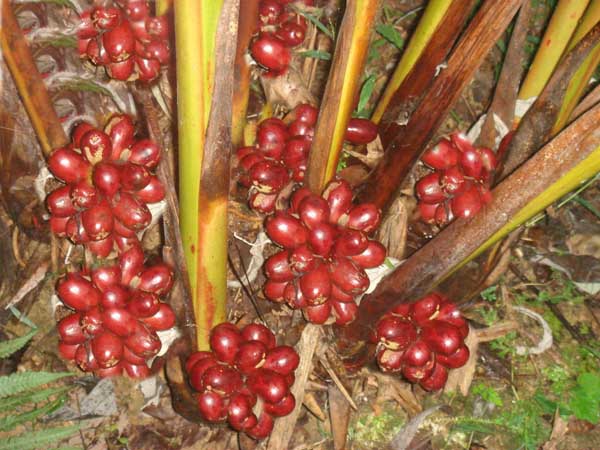
Amomum tsao-ko is a plant of the genus Amomum in the ginger family (Zingiberaceae), also known as caoguo kernel and caoguo fruit. The stems grow in clumps and can reach up to 3 m in height; the whole plant has a pungent aroma, and the underground part somewhat resembles ginger. The leaves are long-elliptic or oblong, 40-70 cm long. The spike inflorescence is unbranched, 13-18 cm long, with a red corolla. The capsules are densely borne, red when ripe and brown after drying, indehiscent, and long-elliptic. The seeds are angular and have a rich fragrance. The flowering period is April-June, and the fruiting period is September-December. It grows in shaded, humid forest areas of the tropics and subtropics; artificial cultivation is mainly carried out in Yunnan. Its dried fruit is used as a Chinese cooking seasoning and as a Chinese herbal medicine. It is distributed in Yunnan, Guangxi, Guizhou and other places in China. It has a distinctive aroma and a pungent, slightly bitter taste. Amomum tsao-ko is a seasoning spice with a particularly rich, pungent fragrance.
Botanical Morphology
The whole plant consists of seven parts: roots, rhizomes, erect stems, leaves, flowers, fruits and seeds.
1. Roots. The root system is divided into supporting roots (which are actually rhizomes) and nutrient roots. The supporting roots are the thick, knotted, horizontally creeping rhizomes that are swollen like ginger at the lower part of the main stem. The nutrient roots are the thinner pink fibrous roots growing on both sides and at the tips of the supporting roots; they penetrate 10-30 cm into the soil and can grow to 1-2 m in length, serving to absorb nutrients and water.
2. Stems. The stems are divided into erect stems and rhizomes. The erect stems emerge from the leaf buds on the creeping rhizome, grow in clumps, reach 2.5—4 m in height, are dark green with a purplish-red base, cylindrical and jointed, and grow upright or following the slope; they generally bear 12-16 leaves. The rhizomes creep and extend underground and are also called creeping stems; new creeping stems grow symmetrically from the swollen base of the erect stem and from the internodes of the rhizome toward both sides, serving to support the plant and store nutrients. When the rhizome grows to a certain extent, it sends up new shoots, which grow into new plants (erect stems) the following year. The dormant buds within the scales on the rhizome can sprout into flower buds and leaf buds; that is, a sprouted flower bud can grow into a flower spike, while a sprouted leaf bud grows into an erect stem.
3. Leaves. The leaves are arranged in 2 rows, with short petioles or sessile; the leaf blades are long-elliptic or narrowly oblong, about 55 cm long and up to 20 cm wide, with acuminate tips and tapering bases, entire margins, and both surfaces smooth and hairless; the leaf sheaths are open and clasp the stem.
4. Flowers. Amomum tsao-ko has a spike inflorescence that emerges from the rhizome and is spherical, with 60-120 flowers per spike. The flowers are bisexual and arranged spirally on the rachis of the flower spike; the small flowers are enclosed layer upon layer by purplish-red bracts, so the unopened flower spike appears purplish-red. When opening, the flowers bloom gradually from bottom to top in a clockwise spiral, and the first flowers to open also wither first.
5. Fruit. The fruit of Amomum tsao-ko is an indehiscent capsule; the fruit is rich in fiber and hard in texture after drying. The fruit shape is spindle-shaped, ovoid or nearly spherical, and the fruits are densely arranged in a spiral on a single rachis. Each spike has 15-60 fruits; each fruit is 2.5-4 cm long and 1.4-2 cm in diameter, with a short stalk at its base. Young fruits are bright red, turning purplish-red when mature and brown after roasting; they are indehiscent, tough and hard, with relatively neat straight fibrous lines.
6. Seeds. Each fruit of Amomum tsao-ko contains 20-66 seeds. The seeds are angular, about 0.4-0.7 cm long and about 0.3-0.5 cm wide, and each seed grain is wrapped in a white spongy membrane. The seed kernel is white and has a rich, fresh, pungent aroma. The average 1000-seed weight is 120-140 g, and each kilogram of fresh seeds contains about 6000-7000 grains.
Uses of Amomum tsao-ko
1. Edible value
Amomum tsao-ko is a seasoning spice and an indispensable necessity in the daily life of people in both urban and rural areas of our country. Amomum tsao-ko has a particularly rich, pungent aroma, can remove gamey odors and stimulate appetite, and is an excellent cooking condiment; it is praised by people as one of the "five spices" in food seasoning. When stewing beef and mutton, adding a little Amomum tsao-ko makes the dish fragrant and delicious while also driving off the mutton odor, so Amomum tsao-ko has always been a commodity in short supply. It is especially favored in regions such as **, Gansu, Inner Mongolia, Ningxia, Tibet and Shaanxi, where beef and mutton are commonly eaten.
2. Medicinal value
Amomum tsao-ko is pungent in taste and warm in nature; it functions to warm the middle, strengthen the stomach, promote digestion, regulate qi, and dispel cold-dampness, and it can also relieve alcohol toxicity and remove bad breath. The fruit, when used as medicine, can treat heart and abdominal pain, indigestion with food retention, diarrhea, vomiting, poor appetite, cough with copious phlegm, and chest fullness and abdominal distension. The medicinal functions of Amomum tsao-ko are recorded in ancient texts such as Bencao Qiuyuan and Bencao Gangmu.
3. Ecological value
Because Amomum tsao-ko grows in mountain hollows under evergreen broad-leaved forests, it does not compete with other crops for land, and it can also make full use of forest resources, protect evergreen broad-leaved forests, conserve water sources, protect soil and water, and create a good ecological environment for stable and high agricultural yields.
4. Economic value
Cultivating Amomum tsao-ko has many advantages: it can flower and bear fruit after three years of planting, enters the full fruiting period after seven years, continues bearing fruit for about 20 years, and generally can grow for several decades. In addition, its management is relatively extensive and the investment is low.
Planting Measures for Amomum tsao-ko
(1) Propagation techniques for Amomum tsao-ko. There are two propagation methods: seed propagation and division propagation.
1. Division propagation method (asexual propagation)
Division propagation involves cutting off a portion of rhizome with stems and fibrous roots from a fruit-bearing Amomum tsao-ko plant to serve as planting material. For the plant used as planting material, erect stems that are robust and have plump leaf buds should be selected. Division is generally carried out in winter and spring. When dividing, use a hoe or machete to cut a 20-40 cm section of rhizome from the base of the erect stem, and cut off the upper part of the erect stem (leaving about 30 cm) and trim it into a slanted cut. During transport, great care must be taken to prevent damage to or breaking of the leaf buds, so as to ensure that the plant retains a certain amount of nutrients and moisture before the new root system grows. When transplanting the divided plants, make a south-facing mark on the plant (marking the side of the stem that faces south); although it is a shade-tolerant plant, it still responds to light to some extent. Division propagation has strong growth vigor; it can rapidly form a population and flower and bear fruit in 2-3 years, and can enter the full fruiting period in 6-7 years.
2. Seed propagation method (sexual propagation)
In general, large-scale cultivation of Amomum tsao-ko mainly adopts seed seedling propagation. In order to cultivate strong seedlings and achieve the goals of rapid growth, stable yield and high yield, several main steps must be strictly carried out: seed collection, seed storage, correct selection of nursery land, land preparation and seedling-stage management.
(1) Fruit collection and seed selection. Seeds are the foundation for cultivating strong seedlings. Generally, the mother plants used for seed should be selected from plants 6-10 years old with complete populations or plants, good development, vigorous growth, abundant fruiting, and no pests, diseases or mechanical damage. For Amomum tsao-ko seeds, fully mature fruits with good peel luster, large size, plump seeds and no damage should be selected. The best seeds are those whose seeds inside the fruit are silver-gray and have a sweet taste. For each spike of fruit, the extra-large and extra-small fruits at the head and tail should be discarded, and the middle fruits selected; for the seeds of each fruit, the grains at both ends of the fruit should also be discarded, and plump middle grains with good luster selected as seeds. Seed collection is carried out in November—December. Generally, fresh fruits used for seed can be piled for only about 15 days at most after picking; if left too long, they are prone to mildew and spoilage, which affects the germination rate.
(2) Seed treatment. Because the seeds are wrapped in a white gelatinous, fibrous, thread-like membrane, water and oxygen can hardly penetrate into the embryo. If the thread-like membrane is not removed, seed germination will be affected. Therefore, wood ash or fine sand should be used to rub repeatedly to remove the membrane layer on the seed surface before sowing.
(3) Selection of nursery land. The quality of the nursery site conditions directly affects the growth of the seedlings. In order to allow the sown seeds to develop normally and to facilitate transplanting when the seedlings leave the nursery, the nursery land should be selected close to the transplanting site. Choose forest soil with good drainage and irrigation conditions, deep soil layers, loose texture and relatively high organic matter content; a slope of 5-15 degrees, with a northeast- or northwest-facing semi-shaded slope; a shade density of 30-60% is required. A nursery can be set up under evergreen broad-leaved forest, or an artificial shed can be used to meet the shading requirements. Do not raise seedlings on old nursery land that has been used for many years or on cultivated land where melons, fruits and vegetables have long been grown.
(4) Land preparation and sowing. Fine land preparation is the key to cultivating strong seedlings, and it helps improve soil permeability. As for the quality and method of land preparation, the general requirement is to turn the topsoil 10-20 cm deep, burn the soil clods, break up the clods, pick out weeds and stones, make the soil thoroughly fine and crumbly, and mix it thoroughly with base fertilizer before sowing.
According to seedling-raising experience, the nursery land should be given more decomposed organic fertilizer, together with an appropriate amount of phosphorus and potassium fertilizer. Sowing can be done by broadcast sowing or drilling. The best sowing time is December; seeds sown in winter have not been stored after picking, have strong germination ability, and after sowing have a high emergence rate and grow uniformly. For broadcast sowing, cover with a shallow layer of fine soil after sowing. For drilling, the row spacing is 5-6 cm and the spacing between seeds is 2 cm; after sowing, cover with a shallow layer of fine soil, preferably so that no seeds are exposed. The sowing rate is generally 5-10 kg per mu, the emergence rate reaches 60-80%, and 50000-60000 seedlings can be produced per mu; the seedlings raised on one mu of nursery land can supply 150-200 mu of large-area land for planting.
(5) Seedling-stage management
Weeding and thinning are the basic measures of seedling-stage management. The management standard is to remove all weeds so as to favor the growth and development of the seedlings. The number of weedings depends on the specific situation. The best time for thinning is when the seedlings are about 10 cm tall.
Seedling-stage management should also focus on preventing drought and strong sunlight, watering according to drought conditions, and keeping the seedbed moist at all times. If there is strong sunlight, a shade shed should be set up to prevent seedling scorching. When the seedlings reach about 45 cm (4-5 leaves), they can be transplanted. The best transplanting time is June-July, though they can also be transplanted in late autumn.
(2) Selection and preparation of Amomum tsao-ko plantation land;
1. Selection of plantation land. The conditions required for the growth of Amomum tsao-ko are an altitude of 1200-1800 m, a canopy density of 0.5-0.7, deep humus-rich forest yellow soil or brown soil on shaded slopes, soil that remains moist year-round, and an environment with relative air humidity maintained at 80%.
2. Preparation of plantation land. Time for land preparation. It should not affect the planting time. Generally, late summer and early autumn are suitable; this period has low rainfall, high temperature, long sunshine, large weed growth, and seeds that have not yet matured, which is more favorable for sun-exposing the dug planting holes and soil. This achieves the purpose of improving soil permeability and thoroughly eliminating diseases, insects and weeds. First clear the weeds, and adjust the canopy density by pruning branches according to the specific conditions of the forest land. Dig holes according to the planting specifications; backfill the holes 25-30 days after digging. When backfilling, first fill in weeds, dead branches and fallen leaves, and surface soil, accounting for about 20 cm of the hole depth, then backfill with the removed topsoil mixed with base fertilizer to form a turtle-back shape, ready for transplanting.
(3) Transplanting and routine management
1. Seedling transplanting. The general spacing between plants and rows is 1.5×2 m, and the specification of the planting holes is 80×80×40 cm. At this time, because the seedlings have already formed root systems and stems, they can quickly restore normal functions after planting, grow fast, and resist unfavorable conditions. Therefore, wherever conditions permit, this method should be adopted. In order to improve the transplanting survival rate and ensure quality, the seedlings used for transplanting should be robust, generally 35-40 cm tall, with a stem diameter of more than 1 cm, 8-12 roots, and no pests, diseases or mechanical damage. When transplanting, plant 2-3 seedlings per hole according to the planting density. The seedling roots should be allowed to spread naturally in the hole; after filling with soil, press with the foot so that the roots and soil are closely combined. During planting, care must be taken to protect the seedlings from damage; in particular, the roots must not be exposed to the sun or left bare for too long. Seedlings that cannot be planted in time should be heeled in under tree shade to avoid dehydration and wilting.
2. Division transplanting. The general spacing between plants and rows for division transplanting is 1.5×3 m, and the specification of the planting holes is 70×60×40 cm. Divide the plants in the manner described in the division propagation method; after division, transplant into the holes according to the south-facing mark. When transplanting, bury the stems and fibrous roots in the soil, 8-10 cm from the ground surface, press firmly with soil, and cover with fine soil.
(4) Management of the Amomum tsao-ko plantation
1. Management during the young stage of Amomum tsao-ko.
This period covers 2-3 years after transplanting the seedlings. During the young stage, because Amomum tsao-ko forms a population, it has poor adaptability and weak adaptive capacity and is susceptible to damage by weeds and shrubs. Therefore, during the young stage, weeding should be carried out three times each year. The first should be done before the rainy season arrives, to ensure that the plants absorb sufficient water during the rainy season. The second can be done in July-August; during this period, because of high temperatures and abundant rainfall, both plants and weeds grow vigorously, so weeds in the forest should be removed in time. The third should preferably be done in winter, in November-December, in conjunction with topdressing phosphorus and potassium fertilizer and wood ash; in this way, the surface capillaries are cut, which can retain soil moisture and reduce low-temperature cold damage and the impact of drought during the dry season. Each time weeds are removed, place the cut weeds between two plants or around them and let them rot, so as to increase soil fertility while also helping to retain moisture and promote the growth of fibrous roots.
In tending and management, for seedlings that have been planted incorrectly, soil should be added in time to straighten them; when dead seedlings are found, or where holes are missing plants, replanting should be done in time, so as to avoid too many missing holes affecting the yield per unit area.
2. Management during the mature stage of Amomum tsao-ko
Three to five years after planting, Amomum tsao-ko divides and grows relatively quickly; the mother plant continuously divides to form a population, then flowers and bears fruit, entering the mature stage. This period is the most economically valuable period in Amomum tsao-ko cultivation. In our township, most Amomum tsao-ko flowers in the third year after transplanting, bears fruit in the fourth year, and enters the full fruiting period after the seventh year. The length of this stage is closely related to the level of tending and management. If cultivation and management are done well, it can continue bearing fruit for more than 20 years; otherwise, the output value declines significantly after the 10th year. During this period, the water requirements of Amomum tsao-ko continuously increase. Therefore, carrying out timely tending and management according to the different growth and development stages of Amomum tsao-ko is the most important measure for regulating water and fertilizer supply in the plantation, increasing yield and prolonging the economic life.
Tending and management of mature-stage Amomum tsao-ko plantation land should be carried out at any time according to site environment conditions and plant growth conditions, including weeding, fertilizing, earthing up, and adjusting shade density. If drought occurs, ditches should be opened to lead in water for irrigation. If excessive rainfall causes flowers to drop and buds to rot, the surrounding grass can be cut clean or manual careful removal of debris around the flower buds can be done to improve ventilation and light penetration, so as to prevent tender fruits from rotting. When Amomum tsao-ko is flowering, attention should be paid to protecting the roots and flower seedlings and preventing rat damage. For larger tending and management operations, three times are still needed each year. The first is carried out in March-April; this period is exactly the flowering season of Amomum tsao-ko. In order to prevent weeds from competing for water and fertilizer and prevent dead branches and fallen leaves from covering the flower spikes and affecting flowering and insect pollination, weeds around the plants and dead branches and fallen leaves under the plants should be removed in time. The second should be carried out in July-August, mainly to remove weeds, concentrate nutrients, and promote fruit enlargement and plump seeds. The third should be carried out after fruit harvest in October-November; while removing weeds, the withered, residual and diseased stems of the year should be cut away, so as to improve ventilation and light conditions in the forest and promote the differentiation of flower buds and leaf buds.
Fertilization and Earthing Up of Amomum tsao-ko
1. Fertilization of Amomum tsao-ko forest land
Fertilization of Amomum tsao-ko forest land is divided into fertilization during the mature stage and fertilization during the young stage. Fertilization in both periods is very important. Generally, the young stage is from after planting to before flowering, about 3 years. During this period, the forest soil is relatively rich in humus, moist, loose and very fertile; after planting, the seedlings absorb nutrients on site, and the upper layer also continuously has fallen leaves that rot on the ground by themselves to form a new fertilizer source as a supplement, so the nutrients needed during the young stage are basically guaranteed. Therefore, according to the growth of the seedlings, it is only necessary to appropriately apply additional phosphorus and potassium fertilizer or wood ash in winter to enhance the cold resistance of the plants. However, for thin and barren soil, farmyard manure, chemical fertilizer, etc. must be applied frequently and lightly as nutrient supplements.
After Amomum tsao-ko enters the mature stage, it flowers and bears fruit every year. Because the plants grow fixed in one place, soil nutrients are continuously consumed to support plant growth, flowering and fruiting. When forest land nutrients are insufficient and not replenished in time, this directly affects the growth vigor of Amomum tsao-ko, and the yield declines year by year accordingly, greatly shortening the economic life of Amomum tsao-ko. Therefore, fertilizer must be applied in time. The fertilization time is generally after harvest in November-December. After cutting away the old plants, apply 1.5 kg of decomposed dry fine farmyard manure, 0.5 kg of calcium magnesium phosphate, and 3-5 kg of humus soil (mountain base soil) per clump, mix well, and broadcast directly under the Amomum tsao-ko clumps.
2. Earthing up of Amomum tsao-ko land
Because Amomum tsao-ko is a perennial evergreen herbaceous plant and its rhizomes spread along the ground surface, thorough loosening of the soil and deep digging cannot be carried out on the ground after cultivation; otherwise, the creeping fibrous roots are easily broken. For aging and "scattered clump" plants, an appropriate amount of soil should be earthed up every year to promote tillering and root growth. Generally, too much earthing up is not advisable; it is best not to cover the buds of the creeping rhizomes. Never earth up during the flowering season, otherwise the flower buds of Amomum tsao-ko will be covered, leading to rot and reduced yield. The time for earthing up should be around December after harvesting Amomum tsao-ko, and it can be combined with fertilization.
Pest and Disease Control
Amomum tsao-ko has relatively few pests and diseases. The relatively more serious hazard is damping-off disease, which harms seedlings; it occurs between March and April and, in severe cases, can cause large patches of seedlings to collapse. Control methods:
1. Do a good job of soil disinfection before sowing.
2. After the seedlings emerge, use 1:1:120 Bordeaux mixture for prevention.
3. After disease occurs, pull out the diseased plants, spread lime powder around the diseased plants, and spray with 50% carbendazim 1000-fold solution once every 7 days, for 2-3 consecutive sprays.
Timely Harvesting
Harvest must be carried out promptly after the fruits are fully mature; harvesting too early affects the main yield. After harvesting, bake and process in time to avoid mildew and spoilage that affect quality.
In order to improve the product quality of Amomum tsao-ko, the picked fruits should be sun-dried immediately or dried over a low fire; otherwise they are prone to mildew. When baking, the heat must be controlled: too strong a fire will scorch them, while too weak a fire will produce moldy Amomum tsao-ko. Therefore, when baking, the firepower should be uniform, and the stove temperature should preferably be maintained at 50℃—60℃; stir frequently so that the Amomum tsao-ko is heated evenly. The fruits can also be blanched in boiling water for 2—3 minutes, taken out and spread in the sun to dry, then dried over a gentle fire, or spread indoors for 5—7 days, until the color turns brown, at which point the dried fruit is obtained.