Master these 9 points in orchid cultivation to easily make orchids flourish with abundant leaves and flowers
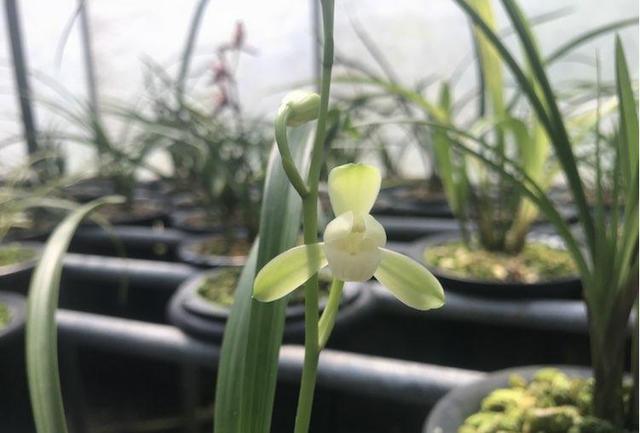
When people talk about orchids, the impression most people have is that they are expensive and difficult to grow, and there is a saying that goes: in the first year you look at the flowers, in the second year you look at the pot, in the third year you look at the pot. This is caused by not understanding the habits of orchids when planting them and by poor management. Orchids originally grew in secluded mountain valleys, in ventilated and shady places. The dense branches and leaves on the mountain could block the scorching sun for orchids, and after the leaves fell they could also provide orchids with sufficient nutrients. Over the years, orchids gradually formed the habit of "half shade and half sun, fearing dampness and liking wind." The roots of orchids are aerial fleshy roots, relying on the symbiotic relationship between the fleshy roots and fungi to obtain nutrients, and the leaves can also obtain moisture and nutrients from the air. Only by understanding these basic characteristics of orchids can we cultivate orchids well and easily make orchids flourish with abundant leaves and flowers!
First, orchids like loose growing medium and fear compaction.
Orchids originally grew on mountains in places rich in humus and fluffy. The soil in such places is very loose. Pick up a handful, squeeze it into a ball in your hand, then open your palm, and the mud ball immediately falls apart. It has strong air permeability, which makes it easy for the fleshy roots of orchids to breathe. Soil with poor structure that easily compacts after watering makes orchids suffocate and be unable to breathe, and orchids definitely cannot be grown well in it. Therefore, when cultivating orchids, we must break through the concept of soil. Do not directly use soil for planting. Instead, choose granular growing media that have strong cohesion themselves, do not compact, drain quickly, have good permeability, and are stable in nature. Only orchid growing media with these characteristics conform to the growth habits of orchids, and only when the orchid growing medium is chosen correctly can it be said that orchid growing is half successful. Most people are stuck at this hurdle and cannot step through the door. Commonly used orchid growing media can be roughly divided into two major categories: soft media and hard media, which are also what we often call organic media and inorganic media. Commonly used soft media include: Songli Wang, snake wood, coconut shell, peat, chestnut bark, pine bark, willow bark, etc.; hard media include: Zhijinshi, ceramsite, brick granules, tile granules, weathered stone, foam blocks, etc. During use, we can also mix soft media and hard media in a certain proportion. The most commonly used on the market now is Songli Wang and Zhijinshi mixed at 1:1. The effect is remarkable, management is convenient, operation is simple, pests and diseases are also fewer, orchids are less likely to die, and it is safe and efficient, making it easy to cultivate orchids well and make orchids flourish with abundant leaves and flowers.
Second, orchids like slight acidity and fear salinity and alkalinity.
Orchids are perennial slightly acidic flowers and like to grow in a slightly acidic environment with a pH value of 5-7. Therefore, when choosing orchid growing media and water for watering, we must not use alkaline orchid growing media or alkaline water for irrigation. We should choose slightly acidic growing media and water. If alkaline water is encountered, an appropriate amount of edible fragrant vinegar can be added (or oxalic acid or citric acid can be used for adjustment) to make it slightly acidic, and then it can be used to water orchids. If alkaline water is used to water orchids for a long time, orchids absolutely cannot grow well, because most fungi like to grow in a slightly acidic environment, and our orchid roots need to coexist symbiotically with fungi. Only by understanding this characteristic of orchids can we cultivate orchids well and easily make orchids flourish with abundant leaves and flowers.
Third, orchids like moisture and fear water accumulation.
An old saying goes: "Dry orchids, wet jasmine." The "dry" and "wet" here are relative. It means that when cultivating orchids, the potting medium should be a little drier and must not accumulate water. Keeping the pot moist is enough; it does not mean excessively dry. Being dry all the way through is called "parched," and "dry but not parched" is the best growing environment for orchids and is also the key to our watering. Too much water easily causes water accumulation in orchids, causing orchid roots to be unable to breathe fresh air and rot. If water enters the leaf core and does not evaporate in time, it easily breeds bacteria and causes rot in the core. If it is too dry, orchid roots easily become hollow or dehydrate, leading to poor growth. Therefore, watering orchids scientifically and reasonably is also the key to success or failure in orchid cultivation, and it requires us to observe and experience it carefully.
Fourth, orchids like diffused light and fear scorching sun.
Orchids are semi-shade plants, but they also like sunlight. They are suitable for growing in an environment with a light intensity of around 10000 and a temperature of 15-25°C. When the illuminance exceeds 30000 or the temperature is higher than 30°C, shading is necessary. In summer and early autumn, the sun before 7 o'clock in the morning is harmless to orchids, but after 7 o'clock shading is needed. In late autumn, winter, and spring, the soft sunlight can be allowed to shine all day so that photosynthesis can be carried out to produce and store nutrients.
Fifth, orchids like coolness and fear frost and snow
Orchids grow in cool secluded mountain valleys and have gradually developed the habit of liking wind and coolness. The best temperature suitable for orchid growth is 15°C-25°C. Only in this cool environment can orchids grow rapidly. When the temperature is lower than 15°C, orchids gradually stop growing and enter a "semi-dormant" state. When the temperature is higher than 30°C, orchids also gradually stop growing and enter a "semi-dormant" state. But we find that wild orchids can remain green and grow normally even in the severe cold season when heavy snow closes the mountains or in the extremely hot summer season. This is because they are protected by the ground temperature and night dew of nature. In winter, the land warms up at night, and in summer, night dew falls at night. But when planted in pots, the environment changes, and orchids lose the protection of ground temperature. When the temperature drops below 0°C, orchids will suffer frost damage to their roots and may even cause the orchid plant to die. Therefore, when the temperature is lower than 0°C, the temperature should be raised or the orchids should be moved indoors for cultivation.
Sixth, orchids like ventilation and fear smoke and dust
In the secluded mountain valleys with cool breezes, orchids have developed the habit of liking a ventilated environment. The ancients said: "For growing orchids, nothing is more important than ventilation." Orchids in a well-ventilated environment have fewer diseases, and most orchid problems occur because of poor ventilation. In order to ventilate and allow air to pass through, our orchid growing site should be ventilated on all sides. If there are windows, they need to be opened or exhaust fans installed. Orchids should be placed on racks. If there is a lack of orchid racks and they can only be placed flat on the ground, the orchid pots must also have feet, or several tiles can be used to fill the gap, so that the bottom holes can ventilate and allow air to pass through. During ventilation, do not let dust adhere to the leaf surface, because dust not only affects the ornamental value but also hinders the stomatal respiration and photosynthesis of the leaf surface, causing orchid diseases. Therefore, every 7-10 days, we must flush with plenty of water to wash dust off the orchids.
Seventh, orchids like light fertilizer and fear strong, turbid fertilizer
An old saying goes: "Clear orchids, turbid jasmine." It means that for the elegant and noble orchid, the water used to water orchids must be clean, and fertilizing must be light. One must definitely not apply strong fertilizer as one would for jasmine. If strong fertilizer is applied to orchids, it will increase the concentration of fertilizer in the pot and cause "root burn," that is, the original water in the orchid roots will "seep outward" into the pot, causing the orchid roots to turn black and shrivel, and the orchid leaves to show a state of dehydration, gradually withering to death. Therefore, when applying liquid fertilizer to orchids, if it is chemical fertilizer it needs to be diluted at a high ratio, and we should try not to use chemical fertilizers and organic fertilizers, because organic fertilizers are unsanitary and easily produce diseases. We should choose efficient and safe slow-release fertilizer. When placing slow-release fertilizer, it should be kept away from the roots of orchids; placing it too close easily causes fertilizer damage.
Eighth, orchids like clustering and fear separation from the mother
Orchids have developed the habit of liking group living and clustering in the secluded mountain valleys, but this does not mean that orchids cannot be divided. Division of orchids has conditions: either there are many orchid plants in the pot, the orchid roots are too dense, and there is no room in the pot for new seedlings to grow; or although there are only six or seven plants connected together, there are two "dragon heads" (with new seedlings on both sides), and after division the vigorous plants each still have more than 3 plants, so they can still maintain vigorous growth. A single orchid plant has poor ability to obtain nutrients and poor resistance to diseases, and it is also not easy to rejuvenate and not easy to survive. Therefore, when purchasing orchids, we must be cautious. Try not to buy single-plant orchids. We should choose orchids with more than 3 plants connected together. Only in this way will it be beneficial for our future cultivation and rejuvenation!
Ninth, orchids like care and fear pests and diseases.
Orchids like their owners to carry out scientific management according to their growth habits, including potting and planting, daily watering, supplementary light fertilizing, flowering period management, prevention and control of pests and diseases, and so on. Only when we carefully cultivate and maintain them during the process can orchids grow robustly, not only with a high seedling production rate but also with strong disease resistance, and can easily flourish with abundant leaves and flowers. However, pests and diseases in orchids are a common phenomenon, and we need to identify the cause accurately and "prescribe the right medicine." For orchid pests and diseases, the policy of "prevention first" should be carried out. Prevention is more important than treatment; do not wait until pests and diseases occur before treating them. Pesticides and fungicides should be sprayed regularly. In addition to spraying the front and back of orchid leaves with medicine, the orchid growing site and its surrounding environment should also be taken into account, striving to create an orchid growing environment free of pathogens and pests. Only then can we easily cultivate orchids well and make orchids flourish with abundant leaves and flowers. Author: Mei Fei. I publish orchid knowledge and pictures every day, taking you to understand orchids in depth and teaching you to easily grow orchids well. If there is anything you do not understand about orchids, you can ask me at any time or leave a message below. If you like it, you can click the top right corner to save or forward it to help others!