Detailed Guide to Garlic Cultivation Techniques: Planting Methods and Field Management Essentials
Garlic, also known as suan, belongs to the Liliaceae family and is a biennial plant. Its tender seedlings (green garlic), flower stalks (garlic scapes) and bulbs (garlic heads) are all used for food. It can be eaten raw, stir-fried, or pickled and processed into garlic powder, garlic flakes, etc. Garlic heads store and transport well, helping to fill gaps in supply during off-seasons and contributing to a balanced year-round supply of vegetables. Besides carbohydrates, protein and vitamins, garlic also contains allicin, a volatile sulfur compound with a distinctive pungent taste that stimulates appetite and has effects such as inhibiting and killing bacteria, dispersing swelling and pain, dispelling wind-evil and rheumatism, eliminating toxic qi, treating sores and ringworm, strengthening the spleen and stomach, tonifying kidney qi, and resolving pestilence. Refined and extracted garlic essence can be used for medicinal purposes.
Biological Characteristics
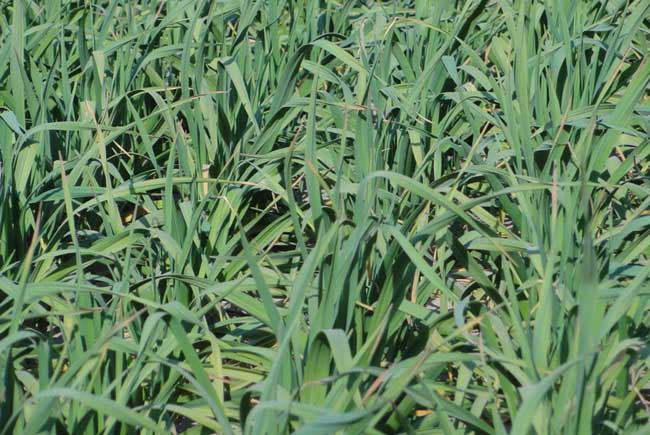
Garlic has fibrous roots distributed within the 5 cm to 25 cm tilled soil layer, with very few root hairs and weak absorption capacity. It requires loose, fertile soil with strong water and fertilizer retention. Garlic produced in sandy soil has a strong pungent taste, while garlic produced in clay soil has a mild taste. The stem is shortened into a bulb disc. The leaves are flat and lanceolate, and the leaf sheaths wrap together to form a cylindrical false stem. The base swells into a bulb composed of 7 to 10 or more cloves, which is the propagation material for garlic. Depending on the variety, garlic may or may not bolt, and may have purple or white skin (purple-skinned garlic has a long physiological dormancy period of 65-70 days, while white-skinned garlic is shorter at 35-45 days), and may have large or small cloves (cloves larger than 5 g are considered large-cloved garlic). The top of the flower stalk bears an involucre, which splits open to reveal an umbel. At the base of the pedicel, dozens of small bulbils are borne, called aerial bulbils, which are similar in morphology and structure to garlic cloves and can also be used as planting material. Garlic is not heat-tolerant but has relatively strong cold tolerance. Garlic cloves can sprout at 3°C to 5°C. After sprouting, the cloves pass through the vernalization stage under low-temperature conditions of 0°C to 4°C for 20 days, and then pass through the photoperiodic response under higher temperatures and long-day conditions the following spring. At this time, the terminal bud of the stem disc can turn to flower bud differentiation, and after the flower organ gestation period, it can rapidly bolt. The optimum temperature for plant growth is 12°C to 16°C. Bulb formation requires 16°C to 20°C and long-day conditions. After summer arrives and temperatures rise, the stems and leaves wither and the bulb enters dormancy.
Key Cultivation Techniques
(1) Variety Selection
China has abundant garlic variety resources, with famous production areas in both north and south, forming many excellent local varieties such as Chengdu Ershuizao, Cangshan garlic, Songcheng white-skinned garlic, Sichuan scape garlic, and garlic sprout garlic. Varieties can be selected according to local planting habits and production purposes.
(2) Land Preparation and Fertilization
Fine land preparation is required, with soil broken up finely and the ground level. The soil should be deep-plowed to about 20 cm, and the soil pH should be controlled at around 5.5 to 6.0 during land preparation. If too acidic, root tips become thickened and stop elongating; if too alkaline, seed cloves rot easily and growth is poor. Garlic likes complete organic fertilizer with nitrogen, phosphorus and potassium, so the fertilization method of "controlling nitrogen, increasing phosphorus, supplementing potassium, adding micronutrients" is advocated. Apply 2/3 of the nitrogen fertilizer as base fertilizer, appropriately increase phosphorus and potassium fertilizer, ensure uniform emergence, and prevent premature aging. Organic fertilizer must be decomposed and buried in the soil; especially cake fertilizer, if spread on the surface, will attract root maggots. At present, garlic production mostly uses plastic film mulching cultivation, and topdressing during garlic growth is not suitable. Therefore, before sowing, it is best to apply sufficient base fertilizer at one time in combination with land preparation: per 667 sq m, apply 6000 kg of decomposed high-quality barnyard manure, 80 kg of decomposed cake fertilizer, 50 kg of urea, 80 kg of calcium magnesium phosphate fertilizer, 25 kg of potassium sulfate compound fertilizer, and 1.5 kg of zinc sulfate. Use small raised beds, with bed height 8-12 cm, bottom width 100 cm, surface width 70 cm, and ditch width 20-30 cm.
(3) Sowing
The determination of the cultivation season should be based on the production purpose of garlic, the requirements of garlic at different growth stages for external conditions, and the climate conditions of each region. Generally, in northern regions, 35-38°N is the dividing line between spring sowing and autumn sowing. In areas south of 35°N, winters are not too cold, seedlings can overwinter in the open field, and harvest occurs in early summer of the following year, so autumn sowing is predominant. This mainly includes Henan, Shandong, the Guanzhong and southern Shaanxi areas of Shaanxi Province, southern Shanxi, and southern Hebei. In areas north of 38°N, winters are severely cold, seedlings cannot easily overwinter safely, so early spring sowing is suitable, with harvest around the summer solstice. This mainly includes the northeastern provinces, Inner Mongolia, Gansu, **, northern Shaanxi, and northern Shanxi and Hebei. In areas between 35-38°N, both spring and autumn sowing are possible, such as in northern Henan. The length of the garlic growth period varies greatly depending on sowing date and variety. Spring-sown garlic has a relatively short growth cycle, generally 90-110 days, while autumn-sown garlic has a longer growth cycle, generally 220-280 days. Selecting a suitable cultivation season is the key to obtaining a bumper harvest.
Select garlic heads that are large, with large and uniform cloves, firm cloves, no damage, no disease spots, and white and fresh color as seed. Generally, the 100-clove weight is required to be above 400 g. Before sowing, soak in 500 times dilution of 50% carbendazim wettable powder for 12-16 hours to prevent fungal diseases. Sowing garlic from early September to early October is relatively suitable. "Green garlic" is generally sown in August or earlier. In October, the temperature is 16.9°C and the 5 cm soil temperature is 18-19°C. By overwintering, garlic seedlings can reach over 25 cm in height, which is favorable for safe overwintering. To sow garlic, first open sowing furrows 10 cm deep at a row spacing of 20 cm, and scatter a small amount of seed fertilizer. When sowing, place the cloves in the furrow at a plant spacing of 10-15 cm for large cloves, 9-10 cm for medium cloves, and 7 cm for small cloves, keeping them upright with the back of the clove parallel to the sowing row (so that leaves are oriented consistently after emergence, which is favorable for ventilation and light, and increases yield), then cover with 3.3 cm of soil, water, and while the soil is moist, spray the herbicide acetochlor, then cover with film. When covering with film, the plastic film should be flat on the bed surface without wrinkles, with no gaps under the film, so that the film fits closely to the bed surface to prevent weed growth. Sowing "green garlic" should be denser, with 40,000-50,000 plants per mu retained, which is convenient for management, conducive to high yield, and can effectively suppress the occurrence of diseases, insects and weeds.
(4) Field Management
Autumn-sown garlic generally emerges 7-10 days after sowing. After full emergence, water a second time. Before the soil freezes (before Minor Snow), water once with antifreeze water. Several days later, cover with wheat straw to prevent cold and drought. In extremely cold conditions, windbreaks can be set up to ensure safe overwintering of garlic seedlings. In early to mid-March, promptly remove the covering straw and water on a clear, warm day, applying 15-20 kg of urea with the water to promote early green-up and growth of garlic seedlings. From early April to the end of April, water once every 5-7 days depending on soil moisture. From early May to around May 20, water once every 4-6 days, and apply fertilizer once with watering to shorten the period of yellow leaves when garlic mother bulb degenerates, and at the same time prevent one round of underground pests. Harvest scapes when they bend. Stop watering 3-4 days before scape harvest. After harvesting scapes, keep the soil moist frequently to promote rapid bulb enlargement, until 2-3 days before harvest, when watering should stop.
(5) Timely Harvest
1. Green garlic harvest. It can be harvested 60-70 days after emergence. The specific harvest time can be determined according to market conditions. Early harvest gives lower yield, but the benefit is not necessarily poor. Most harvesting methods involve pulling up by the roots, shaking off the soil and bundling for market. Generally, large-scale harvests are not washed. There is also harvesting by cutting at the base when the plant is about 40 cm tall, strengthening fertilizer and water management after cutting, and later pulling up the plants together with the regrown new leaves.
2. Scape harvest. One method is to cut open the false stem with a knife, cut off and pull out the scape, then twist the garlic leaves to cover the wound. The other is to pull out the scape directly by hand. The knife-cutting method gives higher scape yield, but the wound is prone to rotting after rain. The hand-pulling method gives lower yield and requires a certain technique, so it is used less. The method currently used most often is to pull scapes in the afternoon, pinching the base of the garlic plant by hand before pulling, or piercing the base of the garlic plant with a nail before pulling. In this way, the scape pulled out is longer, the wound caused to the garlic plant is smaller, and the impact on bulb growth is less.
3. Garlic head harvest. Timely scape harvest has no effect on garlic head growth. About 20 days after scape harvest, garlic heads can be harvested. If scapes are not harvested, it instead affects the speed of bulb enlargement and yield. Garlic heads should not be harvested only after all aboveground leaves have withered. In the rainy season, if not harvested in time, they rot easily, the cloves separate easily, they cannot be stored, and they are also unsuitable for seed.
Storage and Processing
(1) Storage
After harvesting, dry garlic heads, but do not expose them to strong sunlight to avoid high-temperature scorching. Then tie them into bundles or trim off leaf sheaths and fibrous roots, and store them in a cool place by piling, hanging or basket storage. To prevent sprouting during storage, spray the leaf surface with a 0.25% aqueous solution of maleic hydrazide half a month before harvest, or use cobalt-60 radiation treatment. After treatment, the garlic growing point is damaged, so it will not sprout, and it also cannot be used as seed.
(2) Processing
In Chinese folk practice, garlic processing mainly includes two types: pickled garlic and sweet-and-sour garlic.
1. Pickled garlic. Select garlic heads that are round and whole, with cloves that do not separate, white flesh, dry bulbs, and false stem length not exceeding 3 cm as raw material. The amount of salt used is generally 7 kg to 8 kg of salt per 100 kg of garlic heads, and the finished product rate is generally about 80%.
2. Sweet-and-sour garlic. Sweet-and-sour garlic is made by taking pickled garlic out of the brine, washing it clean, and soaking it in a sweet-and-sour solution for one week, so that the garlic heads fully absorb the sweet-and-sour flavor, thus becoming sweet-and-sour garlic.
In addition, it can also be processed into garlic powder, garlic flakes, and refined into garlic oil, etc.
Pest and Disease Control
(1) Variety Selection
When planting local varieties, single-plant purification and rejuvenation year by year, and selecting disease-free fields and disease-free plants as seed garlic, can be adopted. This is also a way to select disease-free, high-quality garlic seed. In addition, planting local excellent varieties after virus elimination is a fundamental measure for controlling viral diseases.
(2) Agricultural Control
1. Reasonable crop rotation. Pathogens of garlic leaf blight, purple blotch, and coal spot disease can all overwinter or oversummer in soil or diseased residues, causing the pathogen base to rise. Generally, garlic fields should be rotated with non-Liliaceae crops for 3-5 years to reduce the pathogen base, ensure the supplementation of certain nutrient elements in the soil, and reduce disease occurrence.
2. Reasonable irrigation and drainage. Garlic roots are neither drought-tolerant nor waterlogging-tolerant. When the soil is dry, water in time, which also helps suppress thrips. When rainfall is excessive, drain in time, and take this opportunity to scatter plant ash, lower field humidity, and increase potassium fertilizer, which can also effectively suppress gray mold and root maggots, achieving the purpose of increasing yield and preventing disease.
3. Timely cleaning of the field. This is especially important in areas or fields prone to pests and diseases. Removing diseased residues and promptly pulling out central diseased plants and carrying them out of the field for disposal is an important means of preventing disease epidemics.
(3) Chemical Control
When pests and diseases occur and spread over a large area, pesticides should be applied promptly for control.
1. Disease Control
① Viral disease. Spray at the early stage of disease, once every 7-10 days, for 2-3 consecutive times. Can use 1.5% plant disease spirit emulsion 1000 times, 20% virus A wettable powder 500 times, 83 resistance enhancer 100 times solution, antiviral agent No. 1 aqueous solution 250-300 times, etc.
② Coal spot disease. Use 65% zineb wettable powder 400-600 times solution or 1:1:100 Bordeaux mixture for control.
③ Leaf blight. Use 75% chlorothalonil wettable powder 600 times solution, 50% iprodione wettable powder 1500 times solution, 64% sandofan wettable powder 500 times solution, 60% hu, phosethyl-Al wettable powder 500 times solution, or 1:1:100 Bordeaux mixture for control.
④ Purple blotch. Use 75% chlorothalonil wettable powder 500-600 times, 64% sandofan wettable powder 500 times solution, 58% metalaxyl mancozeb wettable powder 500 times solution, or 50% iprodione wettable powder 1500 times solution for control.
⑤ Gray mold, downy mildew. Use 75% chlorothalonil wettable powder 600 times solution, 50% methyl copper wettable powder 800-1000 times solution, 64% sandofan wettable powder 500 times solution, 72.2% propamocarb aqueous solution 800 times solution, or 72% yi·manganese wettable powder 500 times solution for control.
⑥ Rust disease. Use 20% triadimefon emulsion 2000 times, 97% fenaminosulf wettable powder 300 times solution, or 25% propiconazole emulsion 3000 times solution for control.
2. Pest Control
① Onion thrips. Can spray with 6000 times solution of methomyl, 50% phoxim emulsion 1000 times solution, 50% dimethoate emulsion 1000 times solution, 10% pyrethrin·malathion emulsion 1500 times solution, or 25% synergized quinalphos emulsion 7000 times solution.
② Root maggots. Both adults and larvae should be controlled. For adults, use 6000 times solution of methomyl or 2.5% deltamethrin 3000 times solution once every 7 days, for 2-3 consecutive treatments. For larvae, use 50% phoxim 800 times solution, 90% trichlorfon crystal 1000 times solution, or 50% dimethoate 1000 times solution for root drenching.
③ Garlic maggot. If a major outbreak occurs, spray with 2000-4000 times solution of methomyl for control.
④ Coffee bean weevil. Can be fumigated with aluminum phosphide at 6 g/sq m.