Detailed Explanation of Key Points for Pepper Anthracnose Control Techniques
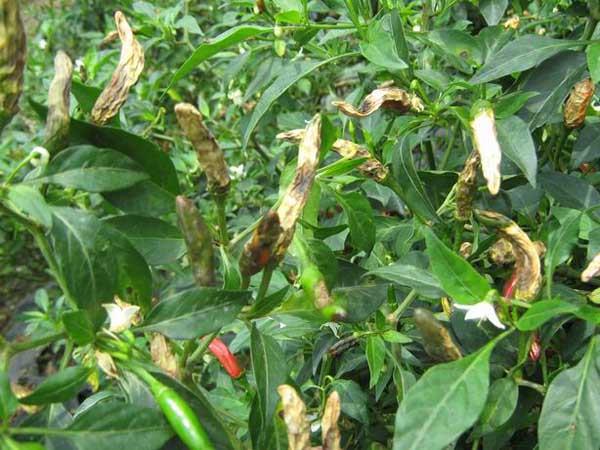
Anthracnose is a relatively common disease on hot (sweet) peppers, distributed worldwide. It can cause pepper leaf drop, fruit rot, and seedling death. It is generally not serious, but in rainy years, the disease can be severe. Based on symptom presentation, it can be divided into 3 types: black anthracnose, black spot anthracnose, and red anthracnose.
Black anthracnose occurs in Northeast China, North China, East China, South China, Southwest China and other regions, with a general diseased fruit rate of about 5%, and in severe cases the diseased fruit rate reaches 20%-30%, having a certain impact on pepper quality and yield. Black spot anthracnose occurs only in Zhejiang, Jiangsu, Guizhou and other places. Red anthracnose occurs less frequently.
Besides damaging peppers, this disease also infects eggplants and tomatoes. It mainly damages the fruit, especially fruit near maturity, and also infects leaves and fruit stalks. When fruit is affected, the initial lesion is water-soaked, brown, oblong or irregular; after expansion, the lesion becomes sunken, with raised irregular concentric rings on the surface, densely covered with small black or orange-red granules (acervuli). When humid, there is a moist discoloration halo around the lesion; when dry, the lesion often shrinks and cracks very easily. When leaves are affected, initially chlorotic water-soaked spots appear, which after expansion turn brown, round, with a grayish-white center, and later small black dots arranged in concentric rings form on the lesion. Stems and fruit stalks are sometimes damaged, forming brown sunken lesions, irregular in shape, prone to cracking when dry. In the field there is also a type of diseased fruit with symptoms similar to the above, but the black granules produced on the lesion surface are larger and darker, often called black spot anthracnose.
Control Measures for Pepper Anthracnose
1. Select resistant varieties: Resistant varieties can be selected according to specific local conditions. Generally, varieties with strong pungency are more resistant, such as Hangzhou Chicken Claw Pepper; among sweet pepper varieties, Changfeng, Qiejiao No. 1, Tiepiqing and others are relatively resistant.
2. Use disease-free seeds and seed disinfection: Establish disease-free seed production fields or save seeds from disease-free fruit. If seeds carry the pathogen, before sowing soak them in 55°C warm water for 10 min or in 50°C warm water for 30 min for disinfection. After removal, cool in cold water and sprout before sowing. Alternatively, soak seeds in cold water for 10-12 h, then soak in 1% copper sulfate solution for 5 min, remove and neutralize the acidity with a small amount of plant ash or quicklime, then sow.
3. Crop rotation and strengthened cultivation management: Severely affected plots should undergo crop rotation with solanaceous and leguminous vegetables for more than 2-3 years. Nitrogen, phosphorus, and potassium fertilizers should be applied together on the basis of sufficient organic fertilizer; avoid overly dense planting and planting in low-lying areas; use nutrient pot seedling raising to cultivate strong seedlings of the appropriate age; prevent fruit sunscald; remove diseased plant residues from the field to reduce sources of pathogen infection.
4. Chemical control: Spray at the early stage of disease or when fruit begins to color. Effective agents are: 50% Shibaogong, 80% Dacheng m-45, 75% Dakening, 65% zineb, 80% Punuo, 60% Tuofu, 70% thiophanate-methyl, 80% anthracnose Fumei, Bordeaux mixture (0.5:1:100), 50% carbendazim, etc., once every 7-10 d, spraying 2-3 times in succession.