What to Do When Cucumbers Get Downy Mildew? A Full Analysis of Control Techniques
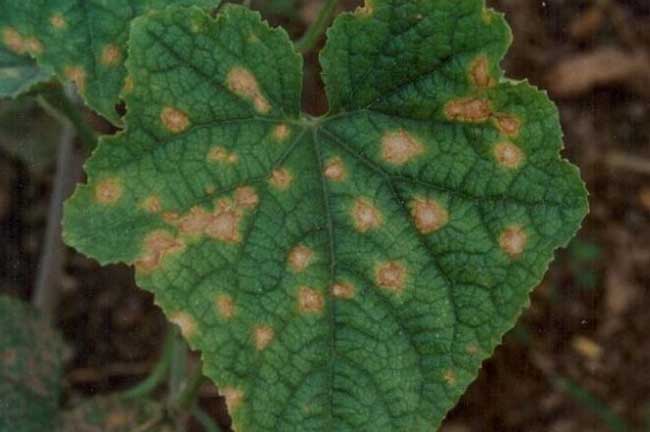
Cucumber downy mildew is the most widespread and most damaging disease in protected cucumber cultivation, commonly known as "running horse dry" or "dry leaves." Both the seedling stage and the mature plant stage can be affected, damaging leaves and stems, with tendrils and flower stalks less affected. The disease strikes suddenly, causes severe damage and spreads quickly. If not controlled in time, it will cause devastating losses to cucumbers. Let's take a look at the control techniques for cucumber downy mildew!
Symptoms of Cucumber Downy Mildew
Cucumber downy mildew mainly occurs on the leaves. When seedlings are affected, chlorotic spots first appear on the cotyledons and gradually become yellow irregular spots; when humid, a gray-black mold layer forms on the underside of the cotyledons, and as the disease develops, the cotyledons quickly turn yellow and wither. When mature plants are affected, light green water-soaked spots first appear on the leaves; after expanding, they are restricted by the leaf veins and become angular, turning from yellow-green to light brown; in the later stage, the lesions merge into patches, the entire leaf dries up and curls upward from the leaf margins, and when humid, a gray-black mold layer grows on the lesions on the underside of the leaves. In severe cases, the leaves of the whole plant wither and die. On resistant varieties, the lesions are fewer and smaller, and the mold layer on the underside of the leaves is also sparse.
Causes of Cucumber Downy Mildew
1. Pathogen: The pathogen of cucumber downy mildew is Pseudoperonospora cubensis, belonging to the genus Pseudoperonospora in the subphylum Mastigomycotina. The sporangia of this pathogen spread through airflow and rainwater. In greenhouses, human production activities are the main source of downy mildew infection. The most suitable temperature for cucumber downy mildew is 16-24°C; below 10°C or above 28°C, it is harder for the disease to occur; below 5°C or above 30°C, it basically does not occur. The suitable humidity for the disease is above 85%, and infection is most likely when there is a water film on the leaves. When humidity is below 70%, pathogen spores have difficulty germinating and infecting; below 60%, pathogen spores cannot be produced.
2. Transmission: The pathogen overwinters in protected areas and spreads in the following spring. It can also spread from the south with the monsoon. In summer, it can spread through airflow and rainwater. In the north, cucumber downy mildew spreads from greenhouses to plastic tunnels, then to spring open-field cucumbers, then to autumn open-field cucumbers, and finally back to greenhouse cucumbers.
3. Patterns: The pathogen is an obligate biotrophic parasitic fungus; seeds do not carry the pathogen. The pathogen mainly spreads through airflow and invades through leaf stomata. The occurrence of downy mildew is very closely related to the temperature and humidity environment around the plants. The initial occurrence temperature is about 16°C, while the suitable epidemic temperature is 20-24°C, and it requires relative humidity above 85%. The disease spreads very quickly; some call it "running horse dry." Once a central diseased plant appears, only 3-4 rounds of expanded reinfection can lead to a major disaster. Therefore, the key to controlling this disease is to discover the central diseased plant or diseased area as early as possible.
Control Techniques for Cucumber Downy Mildew
1. Resistant varieties: Cucumber varieties differ greatly in resistance to downy mildew, so choose relatively resistant varieties.
2. Disease-free seedlings: Isolate the cucumber seedling-raising area from the production area, and strictly eliminate diseased seedlings when transplanting.
6. Site selection: For open-field cucumber cultivation, choose plots with higher terrain and good drainage for planting.
4. Ecological control: Reform cultivation methods, improve the ecological environment, adopt plastic film mulching to reduce soil moisture evaporation, lower air humidity and increase ground temperature. Use subsurface irrigation under the film, water in the morning on sunny days, strictly prohibit watering on cloudy and rainy days, and prevent excessive humidity and leaf condensation. After watering, remove moisture in time to prevent leaf condensation at night. Strengthen temperature management: control the greenhouse temperature at 28-32°C in the morning, with a maximum of 35°C, and keep the relative air humidity at 60-70%. Do not vent too early each day.
5. Scientific fertilization: Apply sufficient base fertilizer, and do not apply too much nitrogen fertilizer during the growing period. Shuangbeier can improve plant disease resistance. Mix 70-100 ml plus 15 ml garlic oil plus 25 ml Wofengsu plus silicone, dilute with 30 jin of water, and spray 2-3 times continuously; after control, switch to prevention. Plant disease occurrence is often related to an imbalance in the plant's "carbon-nitrogen ratio," and plants are susceptible when the carbon content is relatively low. Based on this principle, spraying fertilizer on the leaves to increase the carbon proportion can improve the disease resistance of cucumbers.
6. High-temperature greenhouse sealing: Generally, seal the greenhouse tightly at noon for two hours so that the temperature in the upper part of the plants reaches 44-46°C, but do not exceed 48°C. This can kill the downy mildew pathogen in the greenhouse. Do this once every 7 days, and after 2-3 times, the development of the disease can basically be controlled.