Detailed Explanation of Key Points for High-Efficiency Lotus Root Cultivation Techniques
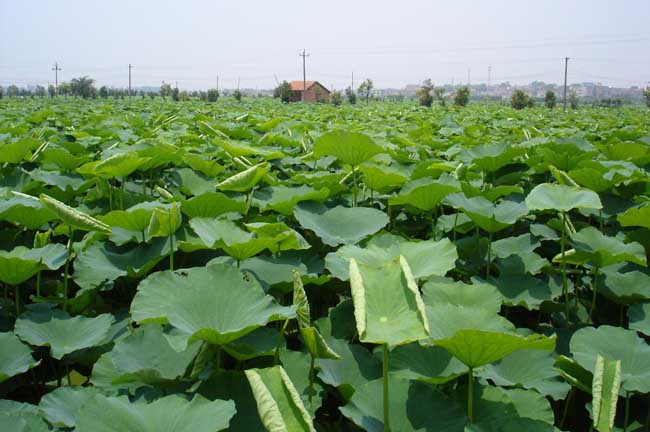
Lotus root belongs to the Nymphaeaceae family. The root is slightly sweet and crisp, can be eaten raw or cooked, and has considerable medicinal value. Every part of it - roots, leaves, flower stamens and fruits - is treasured and can be used as a tonic and medicine. Lotus root made into powder can aid digestion and stop diarrhea, stimulate appetite and clear heat, nourish the body, and prevent internal bleeding. It is an excellent liquid food and tonic delicacy for women, children, the elderly, and those who are weak and prone to illness. These key points specify variety selection, production site conditions, cultivation, water level control, routine management, and pest and disease control measures for lotus root cultivation.
Cultivated Varieties
Shallow-water lotus root: lotus root varieties suitable for cultivation in water depths of 5-30 cm.
1. Seed lotus root: lotus root used for planting. Mother lotus roots that possess the variety's characteristics, with plump root heads, intact terminal buds, thick and large root bodies, small root nodes, sturdy rear sections, free of pests and diseases, and bright in color; or daughter lotus roots that are sturdy, with at least 2 fully mature root sections and intact terminal buds.
2. Loam soil: high-quality humus-rich soil for planting.
3. Lotus rhizome: the initially thin and slender part of the rhizome.
Production Site Environmental Conditions
Requires loam soil with abundant water sources, flat terrain, convenient drainage and irrigation, and rich organic matter.
Production Management Measures
Variety selection: Select varieties with suitable maturity periods, high quality, high yield, strong stress resistance, and that meet the consumption habits of the target market.
(1) Soil Preparation
1. Application of base fertilizer. Before plowing (about 10 days before planting), apply 2500-3000 kg of decomposed manure per 667 sq m, and harrow level promptly. Apply 50 kg of quicklime per 667 sq m to disinfect the lotus pond and prevent pathogen invasion.
2. Select a good lotus field and prepare the land well. Early-maturing lotus root requires loam fields with good water sources, ample sunlight, excellent water quality, fertile soil, and deep soil layers. Prepare the land 10 d before planting in the field, with a plowing depth of 30-35 cm. Weeds should be turned under the soil, and the field surface should be harrowed level (flatness requirement within ±2 cm).
(2) Planting
1. Preparation before planting. Before planting, clean the ditches and canals thoroughly. The water level in drainage ditches should be lower than the field water level to facilitate drainage.
2. Planting time. Planting should be done when the daily average temperature reaches about 15°C, generally in early to mid-April.
3. Planting density. The planting density is about 250 plants per 667 sq m, with a plant-to-row spacing of 150 cm × 200 cm. 4. Planting method. First, place the seed lotus roots in the field at a spacing of 150 cm × 200 cm. Stagger the buds of adjacent plants between rows, with buds on the outer edge pointing inward, and the remaining rows aligned in the same direction. The buds in the field should be evenly oriented. When planting, insert the front part of the seed lotus root into the mud at a 25° angle, with the tail end exposed 1-2 cm above the water surface. Seed lotus roots should be planted immediately after digging.
(3) Field Management
1. Water depth management. Before plowing the land, control the water level at about 2-3 cm. After harrowing level, control the water level at about 5 cm. From planting to the sprouting stage, maintain a water depth of 5-8 cm. From the emergence of standing leaves to the start of harvest, maintain a water depth of 10-15 cm. Irrigate promptly during drought and drain promptly when there is excessive water, strictly controlling the water level.
2. Topdressing. Generally, lotus root should be topdressed two to three times: the first application when 1-2 standing leaves have grown after planting, applying 1000-1500 kg of decomposed manure. The second application at the row-closing stage (about 30 days after planting), applying 1000-1500 kg of decomposed manure. The third application in late June, applying 50 kg of compound fertilizer per 667 sq m.
3. Fertilization method. Before each fertilization, first adjust the water depth to 3-5 cm, mix the manure thoroughly with water, and after 1-2 days adjust the water to the required depth.
4. Weeding. Before planting, weeds should be removed in conjunction with plowing and land preparation. During cultivation, manual weeding should be carried out three times: at planting, at the emergence of standing leaves, and at the row-closing stage. The manual weeding method is to pull up the weeds, twist them into balls, and tread them entirely into the mud with the grass heads facing down.
5. Redirecting lotus rhizomes. In order to distribute the lotus rhizomes evenly in the field, or to prevent lotus rhizomes from crossing the field ridges, the lotus rhizomes from denser growing areas should be transplanted to sparser areas during the second weeding. Lotus rhizomes are tender, so extra care should be taken during operation to avoid breaking them.
6. Harvesting. Lotus root is generally harvested in mid-to-late July. About 10 days before harvesting, first cut off the lotus stems to reduce root rust. Adjust the water depth to 3-5 cm to facilitate harvesting.
Pest and Disease Control
(1) Control Principles
"Prevention first, integrated control." Priority should be given to agricultural control, physical control, and biological control, combined with scientific and rational use of chemical control, to achieve the goal of safe production and high-quality, pollution-free products. It is strictly prohibited to use pesticides with high toxicity, high residues, and high bioaccumulation, as well as their mixed formulations, that are explicitly banned by the state. Pesticide application shall strictly comply with the provisions of GB4286 and GB/T8321.
(2) Cultivation Control
1. Select disease-resistant varieties.
2. Pay attention to fertilizer and water management, cultivate strong seedlings, and improve plant disease resistance.
(3) Chemical Control
1. The main diseases of lotus root are lotus root rot and brown spot disease, which can be prevented by spraying with 50% carbendazim wettable powder at 500-800 times dilution.
2. The main pest is aphids, which can be controlled by spraying with avermectin (biological pesticide) at 400 times dilution or with Lvtudi No. 1 (biological pesticide) at 500 times dilution.
3. For leaf-mining chironomids, spray with 10% imidacloprid at 1500 times dilution for control. The pre-harvest interval is 15 days.
4. When using chemical pesticides, the relevant provisions of GB4285 and GB/T8321 (all parts) shall be implemented.
5. Reasonably mix and rotate the use of pesticides with different mechanisms of action to overcome and delay the development of pest and disease resistance.
6. Pesticides should generally be applied after 4 PM to prevent phytotoxicity.