Key Technical Points for Pollution-Free High-Efficiency Peanut Cultivation
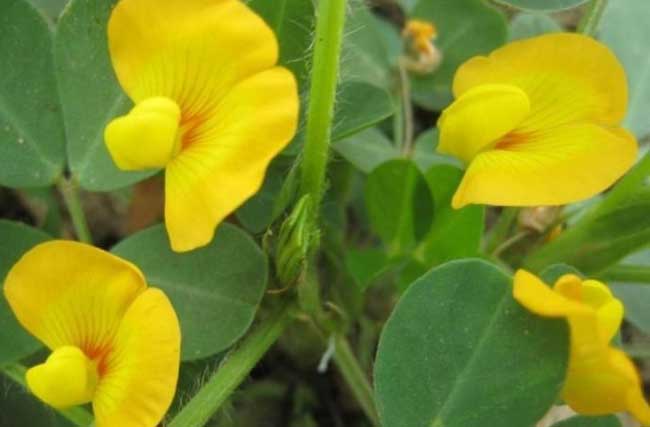
The peanut, originally named groundnut, belongs to the order Rosales and is an annual herbaceous plant of the Fabaceae family. Its stems are erect or prostrate, 30-80 cm long, with wing petals and keel petals separate. The pods are 2-5 cm long and 1-1.3 cm wide, inflated, with thick shells. The flowering and fruiting period is from June to August. It is mainly distributed in Brazil, China, Egypt and other places. It can be used as a raw material for making soap, hair oil and other cosmetics.
Pre-Sowing Preparations
1. Site selection. The peanut is a deep-rooted crop, suitable for cultivation in sandy loam or medium loam soil. It requires a soil layer more than 1 m deep, relatively loose soil, flat terrain, convenient irrigation and drainage, good soil aeration, and a relatively sunny plot.
2. Land preparation. Peanut fields should generally undergo deep and medium plowing of 20-25 cm, followed by timely harrowing and leveling to achieve "deep, level, and fine." In early spring of the following year, harrow and level the soil while it is still frozen to store water and preserve moisture. In areas with water access, 5-7 days before sowing, basal moisture irrigation can be done well, using 40-60 cubic meters of water per mu.
3. Film selection. For peanut cultivation, micro-film of 0.007-0.008 mm or "linear film" must be selected to facilitate the penetration of pegs and also reduce costs.
4. Seed selection. In areas with a frost-free period of about 120 days, generally for plots of medium fertility, select early-maturing varieties with early development and a relatively short growth period, such as "Lühua No. 1" and "Luhua No. 9." In areas with a frost-free period of more than 130 days and plots with better soil fertility, select superior varieties such as "Luhua No. 13," "Luhua No. 14," and "Huayu No. 16."
Implementation of Scientific and Safe Formula Fertilization Techniques
1. Scientific fertilization based on peanut yield. Before sowing, according to the fertilizer requirements of different peanut varieties, soil nutrients and fertilizer quality, scientific balanced fertilization techniques should be implemented through soil testing. A single fertilizer should not be used.
2. Generally, for plots with a yield of more than 500 kg per mu, more than 6000 kg of organic fertilizer per mu is required (organic fertilizer includes barnyard manure, green manure, plant ash, biogas residue, biogas slurry, crop straw fertilizer, cake fertilizer and other fully composted quick-acting organic fertilizers). Inorganic fertilizers include: mineral nitrogen, phosphorus, potassium fertilizers, and compound fertilizer formulated with nitrogen, phosphorus and potassium at 50 kg per mu, and superphosphate at 80-100 kg. The amount of fertilization should be determined according to peanut yield.
3. For peanut cultivation, applying sufficient basal fertilizer in one application gives better results.
Plastic Film Mulching Techniques
1. Film selection. For peanut cultivation, select micro-film of 85-90 cm, with a thickness between 0.008-0.009 mm, a light transmittance greater than 70%, easy penetration by pegs, good spreading performance, and non-stick rolling.
2. Sowing method. Irrigated land requires ridge mulching cultivation, with a ridge height of 10-15 cm, ridge width of 60 cm, flat ridge top, furrow width of 20 cm, and furrow depth of 50 cm. In dryland areas, prepare the land well 7-10 days before spring sowing, then seize the moisture to cover with film to preserve moisture, and sow by punching holes at the appropriate time; this method is called "mulching first, then sowing." In irrigated areas, water first before sowing, then prepare the land and cover with film, and then sow by punching holes. The punched holes generally require a diameter of 2 cm and a sowing depth of 4-5 cm. After punching, seal the holes tightly with moist soil to prevent moisture loss. For plots that are sown first and then mulched, punch holes in the film to release seedlings after emergence. This method is suitable for mechanical sowing and can be adopted in irrigated land, expanded irrigation land, and dryland with good moisture preservation.
3. Film laying method. The plastic film should be placed tightly against the ground, with 10 cm of width on each side, and pressed firmly with moist soil. On the film, make a soil belt every 5-10 cm to prevent wind from lifting the film. Where conditions permit, mechanical film laying can be used.
Sowing Techniques
1. Seed treatment. Peanuts should undergo "one selection and three dressings." "One selection" means careful selection, i.e., carefully selecting seeds and removing mixed seeds, blighted seeds, and small seeds. "Three dressings" means: first, dressing with insecticide, using 150 g of phoxim emulsifiable concentrate per 50 kg of seeds; second, dressing with fungicide, using 200 g of carbendazim per 50 kg of seeds; third, dressing with
2. Sowing time. When the soil temperature at 5-10 cm reaches 3-15°C, sowing begins. In our city, sowing is generally on April 25, with emergence in early May.
3. Sowing depth. Peanut sowing is generally 4-5 cm in sandy loam and 3-4 cm in medium loam.
4. Density. Generally, in high water and fertilizer land, about 9000-9000 hills per mu should be retained; in medium water and fertilizer land, 10000-12000 hills per mu, with two seeds per hill.
Scientific Management Measures
1. Check seedlings and repair film. For plots that are mulched first and then sown, if strong winds occur, check promptly, re-cover the film lifted by wind, and seal broken openings tightly with moist soil.
2. Punch holes to release seedlings. For plots sown first and then mulched, release seedlings promptly when peanut seedlings grow 2-3 leaves. Open a small hole in the micro-film to allow full ventilation and light. Let the seedlings grow in the film for 7-10 days to prevent low-temperature and windy weather from freezing and damaging the seedlings.
3. Clear seedlings and restrain growth. After peanut emergence, immediately scrape away the surrounding soil to expose the two leaves of the first pair of lateral branches. Clearing seedlings generally increases yield by more than 30% per mu compared with the control.
4. Foliar fertilizer spraying. If seedlings lack fertilizer, spray 40 kg of 0.3% potassium dihydrogen phosphate solution plus 1 kg of urea per mu, or 40 kg of 2% superphosphate solution on the leaves to promote robust seedling growth.
5. Growth regulation. In high water and fertilizer plots, peanut vegetative growth is excessive and prone to spindling. Foliar spraying of plant regulator B9 or mepiquat chloride can be used, with a suitable concentration of 0.05%-0.1%, spraying 40 kg per mu. Mepiquat chloride is used at 2-3 g per mu diluted in 40 kg of water and sprayed to control peanut vegetative growth, promote reproductive growth, and enable more pods and full pods.
6. Watering and topdressing: During the pegging stage of peanuts, if there is no rain and the moisture content of the 50 cm soil tillage layer is below 10%, watering should be carried out together with topdressing 7-10 kg of urea per mu. When watering, slowly infiltrate along the furrow, water evenly and thoroughly, and avoid flooding irrigation.
7. Timely harvest. Medium and early-maturing varieties are harvested in mid-to-late September, and late-maturing varieties are harvested promptly in early October. If harvesting is too late, peanuts will shed into the soil and reduce income. After harvest, dry the pods for 5-7 days, and when the moisture content drops below 10%, they can be stored. After peanut harvest, promptly remove residual film from the field.
Pest and Disease Control Techniques
1. In the late growth stage of peanuts, the common disease is leaf spot. Control measures include deep autumn plowing, avoiding continuous cropping, and selecting disease-resistant varieties. Chemical control: at the early stage of disease, spray with 1:2:150-200 Bordeaux mixture, or 50% carbendazim wettable powder at 1500-2000 times dilution, once every 10-15 days, continuously 2-4 times, using 50-60 kg of solution each time.
2. Aboveground pests are mainly aphids and red spider mites. Anti-aphid fog can be used for control.
3. After nematodes harm the peanut root system, plants become short, stems and leaves turn yellow, leaf edges at the bottom scorch, flowering is delayed and pods are small. Control methods: (1) Implement 2-3 year crop rotation; the longer the rotation period, the better the effect. (2) Deep plow and improve soil, and increase organic fertilizer. (3) Before sowing, treat the soil with phoxim granules, or dress seeds with phoxim emulsion.
4. Strictly prohibit the use of "three-no pesticides" that have not been inspected by relevant national and provincial departments, and strictly prohibit the use of highly toxic and high-residue pesticides such as methamidophos, 3911, omethoate, isocarbophos, demeton and other pesticides.