Detailed Explanation of Cucumber Grafting Techniques and Operation Methods
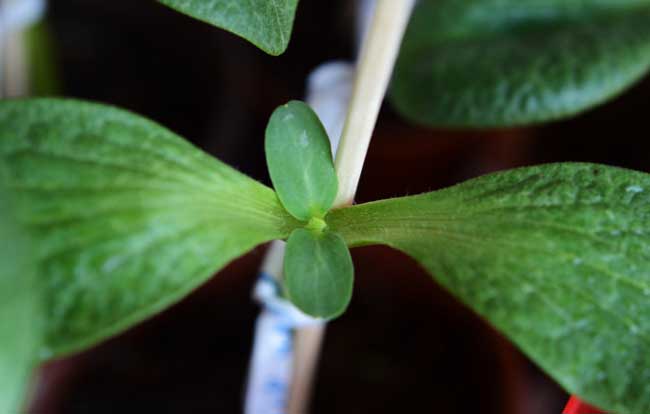
Cucumber grafting is a cultivation method in which the cucumber roots are replaced by pumpkin roots. Because pumpkin root systems are well developed, tolerant of low temperatures and resistant to high temperatures, and are not susceptible to soil-borne diseases, cucumber plants grow vigorously, and it provides preventive effects against various diseases, especially Fusarium wilt, while also achieving early maturity and high yields.
Variety Selection and Seed Soaking for Germination
The main variety is black-seeded pumpkin (Cucurbita ficifolia), with a seeding rate of 1.5 kg per mu, and 4400-4700 seeds per kg. Before germination, the seeds should be dried in the sun for 1-2 days, soaked in warm water for 6 hours, rubbed and washed 3-4 times, then after soaking, dried at room temperature of 12-14°C for 18 hours to make the seed coat dry, then germinated at 30°C, with sprouting beginning in 2 days.
Grafting Methods
1. Approach grafting. First sow cucumbers in beds, and sow pumpkins 5 days later. Pumpkins are sown in nutrient pots. The nutrient soil in the pots can be filled to 70% height. Pumpkin seedlings emerge in 2-3 days, and after about 10 days when the pumpkin has grown to one true leaf and one heart leaf, grafting can begin. Before grafting, a bamboo skewer must be made first, carved from a bamboo strip, with the handle being flat and the very tip being cylindrical, and the smooth surface of the bamboo strip below the tip sharpened into a blade. When grafting, first use the blade portion of the bamboo skewer or a razor blade to remove the pumpkin growing point from the cotyledon area, then use the tip of the bamboo skewer to score the lateral bud area at the base of the two cotyledons to prevent lateral buds from growing. At 0.5 cm below the pumpkin growing point, use a razor blade to cut downward at a slant about 1/2 of the stem diameter. For the cucumber, cut upward at 1.5 cm below the growing point at a slant of 2/3 of the stem diameter. The slanted cut surfaces of both cucumber and pumpkin should be about 1 cm long. Insert the two cut surfaces together to match. Clip a grafting clip at the junction, then add some bed soil into the nutrient pot, cover the cucumber root system, and water thoroughly, entering the post-grafting management stage. After 10 days, use a blade to cut off the cucumber roots and remove the clips.
2. Root-cut approach grafting. Wait until the pumpkins emerge before sowing cucumbers, which can save the root-cutting step. Graft when the pumpkin has grown to one true leaf and one heart leaf. The pumpkin cut and growing-point removal methods are the same as approach grafting. For the cucumber, make a cut at 1 cm below the growing point and insert it into the pumpkin cut to match. Clip a grafting clip at the junction or wrap and tie with a strip of plastic film.
3. Horizontal insertion grafting. This method also involves sowing cucumbers after the pumpkins emerge, saving the root-cutting and grafting-clip steps. When the pumpkin has grown to one true leaf and one heart leaf, remove the growing point, and at 0.5 cm below the growing point, use a bamboo skewer slightly thicker than the cucumber stem to pierce vertically through the pumpkin stem, with the skewer tip slightly exposed. For the cucumber seedling, when the cotyledons are fully expanded, cut at a 30-degree angle at 1-1.5 cm below the growing point, and insert the cut surface downward into the insertion hole in the pumpkin stem. Select thick, strong cucumber seedlings; do not use leggy seedlings.
4. Slant insertion grafting. The sowing of pumpkins and cucumbers and the seedling size are the same as for horizontal insertion grafting. First, use the tip of a bamboo skewer to make a slightly penetrating hole at a 45-degree angle to the stem on one cotyledon side of the pumpkin, then take a cucumber seedling with just fully expanded cotyledons, cut at about a 30-degree angle at 1 cm below the cotyledons, and insert it downward into the slant insertion hole in the pumpkin.
Post-Grafting Management
After grafting, the cucumber seedlings should preferably be placed on lower shelves in the greenhouse; if placed on the ground, first spread straw. Then water thoroughly and spray 800-times dilution chlorothalonil to prevent disease. Cover the seedlings with a small arch tunnel so that the humidity in the first 3 days can reach saturation, that is, water droplets form on the film on the second day after covering, and the film must be sealed tightly. Cover the small arch tunnel with paper for shading so that the seedlings do not see light for the first 3 days, but be careful to open the tunnel for inspection, re-match any cuts that have not aligned properly, and re-graft any wilted cucumber seedlings. Through heat preservation or heating, make the daytime temperature reach 25-30°C and nighttime 15-20°C for the first 3 days. On the 4th day after grafting
expose to light for 1 hour in the morning and evening each. On the 5th day, 2 hours each; on the 6th day, 3 hours each; and on the 7th day, full light exposure can begin. At this time, remove any lateral buds on the pumpkin cotyledons that were not cleaned off completely.
The survival rate of grafting is closely related to post-grafting management, especially the humidity in the first 3 days must reach saturation and no light should be given.
Precautions for Grafting
1. Sow early. Grafted cucumbers have a seedling recovery process, and pumpkin roots are tolerant of low temperatures and can be planted early, so sowing should be about 10 days earlier, otherwise early maturity will be affected.
2. Ethephon treatment. The temperature required for grafted seedling recovery is relatively high, which raises the node position of cucumber fruit setting and reduces the number of fruits. Therefore, ethephon treatment is needed to lower the fruit-setting node position and increase the number of fruits. The method is: when the cucumber has grown to 1-2 true leaves, spray the leaves with 100 ppm ethephon, and spray once more after 1 week. In addition, pay special attention that if it is a first-generation hybrid cucumber seed, ethephon treatment should not be used, because such varieties themselves usually have very strong fruit-setting ability, and treatment may instead cause the flower-topping phenomenon.
3. Use ecological control for downy mildew as much as possible. Grafting basically eliminates vine splitting disease (Fusarium wilt), but it does not provide direct control of other diseases such as downy mildew, so ecological control should be adopted, using four-stage variable temperature management to create temperature and humidity conditions unsuitable for the occurrence of downy mildew, combined with chemical control for integrated management.
4. Apply more compound fertilizer. Grafting allows continuous cropping for many years, but it often leads to an imbalance in soil nutrient ratios and deficiency of certain nutrients. Therefore, more farmyard manure and compound fertilizer should be applied. For example, add 1 tube of Yemianbao and 0.5 kg of urea to 50 kg of water for foliar topdressing.